
UAE-Qatar causeway could face a geopolitical challenge
15 April 2025
 Commentary
Edward James
Head of content and analysis
Register for MEED’s 14-day trial access
The news that early construction bids have been submitted for a new road causeway and ferry linking the UAE and Qatar could have a geopolitical impact in addition to potentially transforming transportation networks in the region.
The multibillion-dollar West Link project, tendered by the UAE’s Etihad Rail, will link the two states directly, enabling for the first time freight and car traffic to bypass the land connection in Saudi Arabia dividing them.
However, it could well provoke a diplomatic response from Riyadh if recent history is a guide.
In 2006, Saudi Arabia protested and ultimately blocked the planned Dolphin Energy gas pipeline between Qatar and the UAE from passing what it claimed at the time was its territorial waters. In the end, the pipeline alignment had to be rerouted to avoid any potential encroachment.
Riyadh’s intervention made global headlines and came at a time of some tension between the kingdom and the UAE. The latter has never ratified the 1974 Treaty of Jeddah that formally disconnected the UAE’s land connection with Qatar. While there is general consensus on the land borders between Abu Dhabi and Riyadh, the offshore maritime border has never been delimited.
The Treaty of Jeddah stipulates that the two parties have joint sovereignty in the general maritime area between the two nations until formal demarcation could be agreed. It also gave the kingdom the right to construct ‘general installations’ on Al-Qaffay and Makasib islands, which lie within UAE territory, although it is not believed to have ever done so.
More recently, last year Riyadh deposited a note verbale at the UN affirming its rejection of a 2019 UAE Amiri Decree that expanded the Yasat marine reserve to encompass Al-Qaffay Island, stating that the kingdom “does not recognise any actions or practices taken by the Government of the United Arab Emirates in the maritime area off the coast of Saudi Arabia, including the territorial sea of the Kingdom of Saudi Arabia, the joint sovereign area between the two countries and the islands of Makaseb and Qafai”.
The new road causeway and ferry project will start on the UAE-Saudi border at Ras Ghumais and then run 40km in a northeast direction to Makasib, presumably also passing through Al-Qaffay. From there a ferry will take road traffic onto Qatar.
It is unclear what Riyadh’s position will be on the new connection, but given its diplomatic protest over the Yasat marine reserve, it is likely to want to have some say on its development. At the same time, it remains to be seen what impact the project will have on prospects for the long-planned GCC railway link between Saudi Arabia and the UAE, which has not seen much signs of progress despite the UAE side having completed its line to the Saudi border two years ago.
Regardless, the project will be seen as another step in the closer integration of transport links in the GCC, offering an increasing number of options for traffic to flow between the economic bloc.
 READ THE APRIL 2025 MEED BUSINESS REVIEW – clck here to view PDF
Regional construction heads underground; Riyadh reaps both diplomatic and economic success; Luxury GCC hospitality projects drive tourism
Distributed to senior decision-makers in the region and around the world, the April 2025 edition of MEED Business Review includes:
|
> AGENDA 1: Traffic drives construction underground
> AGENDA 2: Muted public spending hinders global tunnelling
> TOURISM 1: Beaches and luxury drive regional tourism
> TOURISM 2: Region’s hotel projects pipeline balloons
> EDMOND DE ROTHSCHILD: Investing in Saudi Arabia’s infrastructure opportunities
> DATA CENTRES: GCC’s top five data centre projects
> SAUDI PPPs: Rise in PPPs reflects Saudi budgetary pragmatism
> SAUDI ARABIA REPORT: Riyadh enjoys buoyant fortunes
> GULF PROJECTS INDEX: Gulf index sees minor correction
> CONTRACT AWARDS: Project awards slump notably in February
> ECONOMIC DATA: Data drives regional projects
|

Register for MEED's guest program now to access this article.
Exclusive from Meed
-
 Kuwait awards $381m oil project
23 September 2026
-
 Kuwait refinery project on track for year-end completion
23 September 2026
-
 Contractor wins $208m Almoosa hospital MEP contract
23 September 2026
-
 UAE to develop integrated waste-to-resource pilot
23 September 2026
-
 Contractors prepare Oxagon Highway 55 bids
23 September 2026
All of this is only 1% of what MEED.com has to offer
Subscribe now and unlock all the 153,671 articles on MEED.com
- All the latest news, data, and market intelligence across MENA at your fingerprints
- First-hand updates and inside information on projects, clients and competitors that matter to you
- 20 years' archive of information, data, and news for you to access at your convenience
- Strategize to succeed and minimise risks with timely analysis of current and future market trends
Related Articles
-
Kuwait awards $381m oil project
23 September 2026
Register for MEED’s 14-day trial access
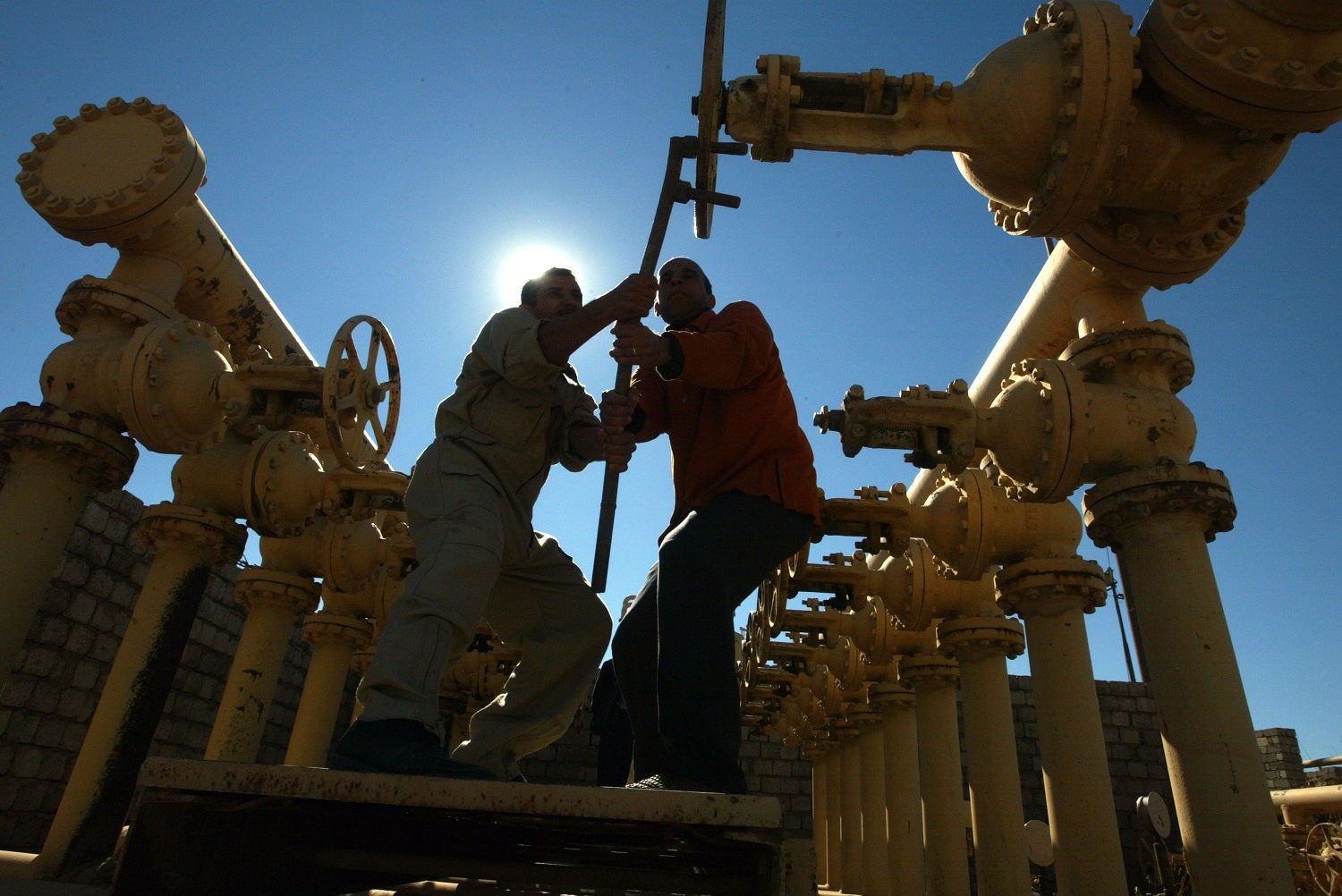
State-owned upstream operator Kuwait Oil Company (KOC) has awarded an oil project contract worth KD117m ($381m) to India’s Megha Engineering & Infrastructure (Meil).
The Supreme Purchasing Committee for Kuwait Petroleum Corporation (KPC) approved the contract last month, paving the way for the official award.
The project focuses on a water separation unit at the Al-Rawdatain facility in Kuwait.
The water separation facility will be developed at Gathering Centre 25 (GC-25), along with a pumping facility at GC-30.
The project will deliver a wide-ranging upgrade of processing and utility infrastructure, including new low-pressure separation and gas-handling equipment such as a three-phase wet separator package, a gas knock-out drum and associated low-pressure gas pipelines, as well as a high-integrity pressure protection system and a high-pressure flare.
Meil will develop the new three-phase low-pressure wet separation facility at GC-25.
The main process equipment will include two wet separator packages, each with a capacity of 150,000 barrels of liquid a day, and a low-pressure gas knock-out drum with a capacity of 53 million standard cubic feet a day, together with associated gas-handling facilities.
The facility will also incorporate an effluent water treatment and transfer system, including an effluent water balance tank equipped with microbubble flotation and induced gas flotation systems, as well as transfer pumps.
Additional GC-25 facilities will include fuel gas treatment, chemical injection, oil recovery and flare connections, along with firewater and deluge systems.
The scope also covers control and safety systems, substations, and associated civil, structural, mechanical, electrical and instrumentation works.
At GC-30, the project will focus on treated-water filtration and high-pressure injection infrastructure.
The scope includes nutshell filters and associated feed pumps with a combined capacity of approximately 500,000 barrels of water a day.
Booster and injection pumps will transfer treated effluent water to designated injection wells.
Additional facilities at GC-30 will include fuel gas treatment, sludge collection and disposal systems, oil recovery systems, control and safety systems, substations, laboratory and workshop facilities, and associated civil, structural, piping, mechanical, electrical and instrumentation works.
The project also includes transfer pipelines connecting GC-25, GC-15 and GC-30.
Meil will carry out modifications to existing tanks at GC-30, as well as process and utility tie-ins, electrical and instrumentation modifications and other infrastructure required to integrate the new facilities with KOC’s existing assets.
Meil’s responsibilities cover the project lifecycle from design and engineering through procurement, construction, testing, pre-commissioning, commissioning, start-up and performance testing.
The contract also includes operation, maintenance, repair and insurance responsibilities for the designated facilities during the applicable operations and maintenance period.
Seven companies submitted bids for the project last November.
The full list of bids was:
- Meil (India) – KD117m ($381m)
- Mechanical Engineering & Contracting Company (Kuwait) – KD130m
- Spetco (Kuwait) – KD158m
- Al-Kharafi (Kuwait) – KD164m
- China Oil HBP Science & Technology (China) – KD169m
- Alghanim International (Kuwait) – KD169m
- Jereh Oil & Gas Engineering (China) – KD191m
In October last year, KOC awarded Meil a separate contract for a project to develop a gas sweetening and recovery facility in west Kuwait.
Meil submitted the lowest bid for that tender, at KD69.2m ($225.5m), in February 2025.
https://image.digitalinsightresearch.in/uploads/NewsArticle/19911322/main.jpg -
Kuwait refinery project on track for year-end completion
23 September 2026

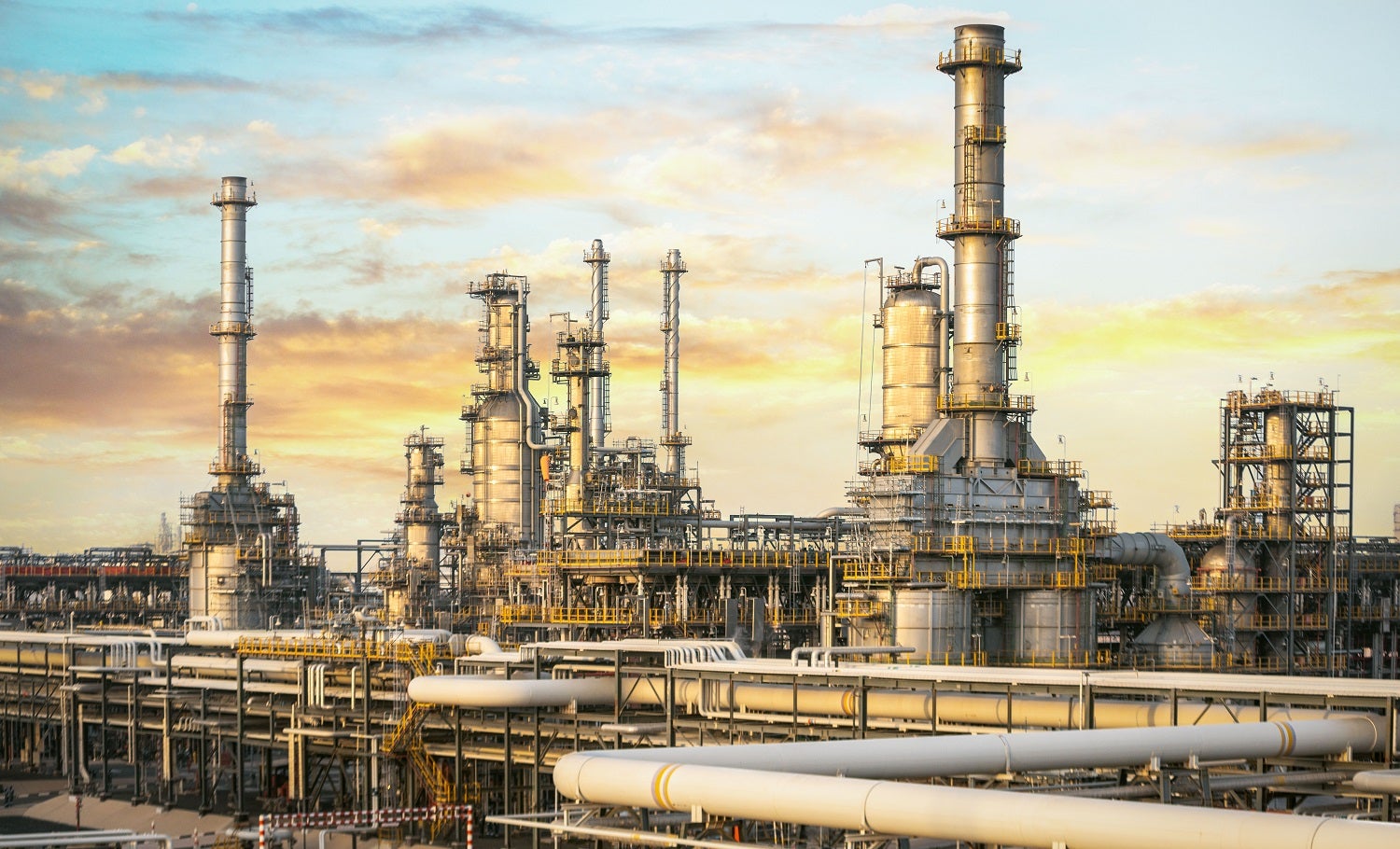
A $65m project to replace a substation at the Mina Al-Ahmadi (MAA) refinery is on schedule to be mechanically complete before the end of the year, according to industry sources.
The project is being executed by India’s Larsen & Toubro (L&T), which was awarded the contract in October 2024.
One source said: “This project is approaching completion and is currently on schedule to be completed before the end of the year, although it could still see delays related to the ongoing regional conflict.”
The client is state-owned downstream operator Kuwait National Petroleum Company (KNPC).
Kuwait’s Ministry of Electricity, Water & Renewable Energy (MEW) is also involved in the project and will provide final approvals and sign-off.
The scope of the project includes:
- Construction of a substation
- Installation of transformers
- Installation of medium-voltage switchgear
- Installation of low-voltage auxiliary systems
- Installation of network protection systems
- Installation of disconnecting switches
- Installation of surge arrestors
- Installation of feeder breakers and cubicles
- Installation of low-voltage A/C and D/C equipment
- Installation of battery banks and battery chargers
- Installation of related relay and control panel boards
- Installation of fire alarm and fire protection equipment
- Installation of a SCADA system
- Installation of cables
- Civil works
- Associated facilities
The current project to replace a substation at the MAA refinery closely resembles another project tendered by KNPC more than a decade ago, which L&T also won.
On 18 May 2015, KNPC signed a contract with L&T to build a new 240MW substation at the MAA refinery, valued at KD21.866m.
The new substation, known as M20, was designed to replace an existing substation that was considered old and obsolete.
Mohammed Al-Mutairi, who was KNPC’s chief executive at the time, said the substation building would be explosion-proof and use state-of-the-art control systems.
He said the station’s capacity would increase from 180MW to 240MW, supplying most of the refinery’s electricity needs.
Given the similarities between the two projects, L&T has been able to reuse some designs, creating efficiencies, according to industry sources.
https://image.digitalinsightresearch.in/uploads/NewsArticle/19911319/main.jpg -
Contractor wins $208m Almoosa hospital MEP contract
23 September 2026
Register for MEED’s 14-day trial access
Riyadh-based construction firm BEC Arabia has won a SR781m ($208m) contract for the mechanical, electrical and plumbing (MEP) works at Almoosa Hospital in Al-Khobar.
Saudi Arabia’s Almoosa Health Company awarded the contract.
The hospital complex consists of two towers: a 24-storey in-patient tower with 380 beds, and an 11-storey tower with 224 clinics and 113 additional treatment spaces.
It will be built on a 45,000-square-metre site.
A podium spanning the ninth and 10th floors will connect the two towers.
The hospital will also include parking for 1,700 cars.
BEC Arabia won the SR656m ($175m) main construction contract for the hospital in November last year.
In August 2025, MEED reported that Almoosa Health Company had announced it had secured a sharia-compliant credit facility worth SR650m ($173m) from Banque Saudi Fransi.
In a statement published on the Saudi stock exchange (Tadawul), the company said the seven-year facility would be used to support its expansion and growth strategy.
Lebanon’s Dar, US-based Perkins&Will and French design firm Pierre-Yves Rochon designed the project.
https://image.digitalinsightresearch.in/uploads/NewsArticle/19910889/main.jpg -
UAE to develop integrated waste-to-resource pilot
23 September 2026
Emirates Biotech and United Arab Emirates University (UAEU) have launched a pilot project in Al-Ain that could provide a model for larger waste-to-resource facilities.
The project involves developing the UAE’s first integrated organic-waste valorisation pilot plant, which will test whether food waste and compostable packaging can be processed together to recover resources and reduce waste sent to landfill.
Located near the UAEU campus, the 40kg-a-day facility will process organic waste to produce renewable biogas and nutrient-rich compost. The project is intended to generate technical and operating data that could support the development of larger-scale facilities.
Emirates Biotech and UAEU will design, build and operate the pilot plant as part of a two-year research project running from August 2026 to August 2028. Installation and commissioning are expected to be completed by August 2027.
The plant will combine anaerobic digestion and composting. Anaerobic digestion will convert the organic waste into renewable biogas, while the resulting digestate will be composted to produce nutrient-rich compost.
A laboratory-scale assessment will also examine the potential to convert the biogas into renewable hydrogen.
Food waste accounts for nearly 40% of daily municipal solid waste in the UAE, according to Emirates Biotech, and much of it is currently disposed of in landfills.
The pilot will therefore assess the technical and operational feasibility of recovering value from two waste streams through a single integrated process.
If successfully scaled, Emirates Biotech says an integrated organic-waste valorisation plant could reduce CO₂ emissions by 89% compared with landfilling.
The project is expected to provide a scalable and modular model for converting food waste and compostable packaging into renewable biogas and compost, with the findings intended to inform the development of larger waste-to-resource facilities.
https://image.digitalinsightresearch.in/uploads/NewsArticle/19908972/main.jpg -
Contractors prepare Oxagon Highway 55 bids
23 September 2026
Contractors are preparing to submit bids on 28 September for a design-and-build contract for permanent upgrade works on Highway 55 in the kingdom’s Oxagon region.
The first phase of the project includes constructing 14 kilometres of road, with two lanes in each direction. It also includes one bridge and three interchanges.
The project duration is 22 months.
Highway 55 connects the Red Sea coast with the mainland in northwestern Saudi Arabia. It is currently the only road providing north-south connectivity between Duba and the Neom region.
MEED reported exclusively in August 2025 that contractors had submitted responses to an expression of interest notice that Neom had issued earlier that month.
The project is expected to support cargo movement from Duba Port to other parts of the kingdom and the wider region.
Last year, Neom tested a pilot initiative by handling a shipment that travelled from Cairo via the Port of Safaga, across the Red Sea to the Port of Neom, and then inland to Erbil, Iraq.
In a statement, Neom said: “The shipment travelled through an intermodal corridor spanning over 900 kilometres, marking a significant milestone in the kingdom’s transformation into a regional and global logistics hub.”
The Port of Neom is located on the Red Sea near the Arar border, a key entry point into Iraq.
https://image.digitalinsightresearch.in/uploads/NewsArticle/19907876/main.jpg