
Saudi oil and gas spending to surpass 2024 level
26 March 2025

When Saudi Arabia’s Energy Ministry directed Saudi Aramco in January 2024 to abandon its campaign to expand oil production spare capacity from 12 million barrels a day (b/d) to 13 million b/d by 2027, there were concerns that it would lead to a slow year for oil and gas project spending.
Indeed, as a consequence of that government decision, Aramco cancelled the tendering process for at least 15 contracts involving the engineering, procurement, construction and installation (EPCI) of structures at offshore oil and gas fields.
Since then, however, the Saudi energy giant has gone the other way. In its financial results for 2024, Aramco reported that it increased its capital investment last year to $53.3bn, which includes $50.4bn of organic capital expenditure (capex), marking a rise of 27% compared to 2023.
 Offshore spending
The capex figure for 2024 includes an estimated $5bn that Aramco spent on EPCI contracts for maintenance, modification and upgrade of infrastructure at its offshore oil and gas fields.
Italian contractor Saipem was the biggest beneficiary of Aramco’s offshore spending, winning five of the eight Contracts Release and Purchase Orders (CRPOs) awarded last year.
In early May 2024, Aramco awarded Saipem the contract for CRPO 143, which involves replacing an oil line between the Berri and Manifa oil fields in the kingdom’s Gulf waters. Aramco then awarded Saipem the contract for CRPO 138, which involves laying a trunkline at the Abu Safah offshore field. The contract is estimated to be worth $500m.
The Milan-listed contractor then scooped three CRPOs in August, starting with CRPOs 132 and 139, the combined value of which is estimated to be about $1bn. In early September, Saipem began work on the two contracts, which involve the EPCI of structures to upgrade the Marjan, Zuluf and Safaniya offshore field developments.
Aramco also awarded the Italian contractor CRPO 127 in September. The $2bn contract involves the EPCI of topsides and jackets for wellhead platforms, a tie-in platform jacket and topside, rigid flowlines, submarine composite cables and fibre optic cables at the Marjan oil and gas field.
In late November, Aramco awarded three further CRPOs, worth more than $500m. China Offshore Oil Engineering Company won CRPOs 149 and 152, which are estimated to be valued at $30m and $250m-$300m, respectively. UK-based Subsea7 secured CRPO 153, which is understood to be valued at $200m-$250m.

Upstream increase
Saudi Aramco is expected to increase spending even further in 2025, based on its capital investment guidance in the range of $52bn-$58bn for 2025, excluding about $4bn of project financing.
It is anticipated that the majority of this capex budget will be allocated to upstream schemes, as Aramco is still responsible for maintaining Saudi Arabia’s spare oil production capacity at 12 million b/d. With Riyadh set to raise its oil production from April as part of a wider Opec+ plan, Aramco will be required to tap into its spare output capacity.
In its financial statement for 2024, Aramco said its spare capacity of 12 million b/d “provides flexibility to help meet potential oil demand growth”, adding that if necessary, using 1 million b/d of existing spare capacity could “generate an additional $12bn in operating cash flow, based on 2024’s average price” of $80.2 a barrel.
In addition, Amin Nasser, Aramco’s president and CEO, was quoted in the financial statement as saying that “global oil demand reached new highs in 2024, and we expect further growth in 2025”.
“With dependable and more sustainable energy key to global economic growth, we continue to make progress on projects to maintain our maximum sustainable crude oil capacity, expand our gas capabilities, achieve further integration of our upstream and downstream businesses to capture additional value, and help mitigate greenhouse gas emissions,” Nasser said.
Saudi Arabia’s offshore fields contain most of the kingdom’s hydrocarbons reserves and it has therefore been forecast that offshore EPCI projects will dominate Aramco’s upstream spending in 2025.
Aramco is in the bid evaluation and tendering stages for a total of 12 additional offshore tenders, including four CRPOs – numbers 145, 146, 147 and 148 – for work on the expansion of the Zuluf field development.
In December, contractors in Aramco’s Long-Term Agreement (LTA) pool of offshore service providers submitted bids for the four tenders, which are estimated to be worth a total of $6bn. The contract awards are due in the second quarter of this year.
LTA contractors also submitted bids in December for CRPO 150, a $350m-$400m tender involving the installation of structures at Aramco’s Northern Area Oil Operations.
Also in December, Aramco issued seven further CRPOs to its LTA pool of contractors. Bids for CRPOs 157, 158, 159 and 160 – relating to the EPCI of several structures at the Abu Safah, Berri, Manifa and Zuluf fields – are due to be submitted by 13 April.
CRPOs 154, 155 and 156 cover the next expansion phase of the Safaniya field. Offshore LTA contractors are due to submit bids for these three tenders by 31 July.
 Gas focus
In line with its aim of increasing gas production by 60% by 2030, with 2021 as its baseline, Aramco is on course to further advance its Jafurah unconventional gas production programme. Located in Saudi Arabia’s Eastern Province, the Jafurah basin holds the largest liquid-rich shale gas play in the Middle East, with an estimated 200 trillion cubic feet of gas in place. This shale play covers an area of 17,000 square kilometres.
The Jafurah project is a key component of Aramco’s long-term gas production strategy. The company expects the overall lifecycle investment at Jafurah to exceed $100bn.
In February 2020, Aramco received a capex grant of $110bn from the Saudi government for the long-term phased development of the Jafurah unconventional gas resource base.
Aramco is estimated to have spent a total of $25bn on three development phases of the Jafurah unconventional gas reserve. Most recently, in July 2024, a consortium of Spanish contractor Tecnicas Reunidas and China’s Sinopec Group was awarded a $2.24bn contract to perform engineering, procurement and construction (EPC) works on the third expansion phase.
The fourth Jafurah expansion phase is estimated to be valued at about $2.5bn. The main scope of work involves the EPC of three gas compression plants, each with a capacity of 200 million cubic feet a day (cf/d).
Bids for the fourth phase of Jafurah were submitted in mid-January and are being evaluated by Aramco, with the contract award due in the second quarter of 2025.
Looking ahead, Aramco is preparing to start the tendering process for the fifth Jafurah expansion phase later this year. The project, which is in the front-end engineering and design stage, is expected to add another 200 million cf/d of output capacity at the Jafurah master development.
MEED’s April 2025 report on Saudi Arabia also includes:
> DOWNSTREAM: Aramco’s recalibrated chemical goals reflect realism
> POWER: Saudi power sector enters busiest year
> WATER: Saudi water contracts set another annual record
> CONSTRUCTION: Reprioritisation underpins Saudi construction
> TRANSPORT: Riyadh pushes ahead with infrastructure development
> BANKING: Saudi banks work to keep pace with credit expansion

Register for MEED's guest program now to access this article.
Exclusive from Meed
-
 Chinese firm wins $265m Saudi hospital contract
24 June 2026
-
 Kuwait extends deadline for $718m drainage tender
24 June 2026
-
 Contractor wins Emaar Dubai Harbour project deal
24 June 2026
-
-
 Kuwait tenders oil manifold project
24 June 2026
All of this is only 1% of what MEED.com has to offer
Subscribe now and unlock all the 153,671 articles on MEED.com
- All the latest news, data, and market intelligence across MENA at your fingerprints
- First-hand updates and inside information on projects, clients and competitors that matter to you
- 20 years' archive of information, data, and news for you to access at your convenience
- Strategize to succeed and minimise risks with timely analysis of current and future market trends

Related Articles
-
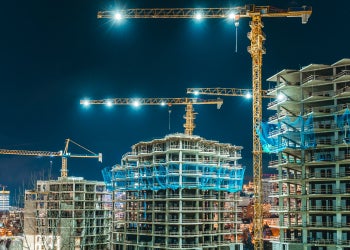
Chinese firm wins $265m Saudi hospital contract
24 June 2026
Zhejiang Construction International, the local subsidiary of Chinese contractor Zhejiang Construction Investment Group, has won a $265m contract to build the Prince Mohammed Bin Fahd University Speciality Hospital in Al-Khobar.
Construction is expected to take three years from the start date.
Prince Mohammed Bin Fahd University awarded the contract.
Located in Al-Raja district, Al-Khobar, in Saudi Arabia’s Eastern Province, the hospital project will cover about 60,000 square metres.
The contract covers the construction of a 10-storey hospital building, two five-storey auxiliary buildings connected by corridors and a basement.
Work will include civil works, mechanical and electrical installation, curtain walling, landscaping, detailed design and the procurement of medical equipment.
The award is the latest in a series of contracts secured by Chinese contractors from Saudi entities in recent months.
Last week, MEED reported that Saudi Arabia’s Ministry of Municipalities & Housing awarded contracts worth more than SR1.9bn ($506m) to Chinese contractors for two residential developments in the kingdom.
China Architectural Construction Corporation won the first contract, valued at SR875m ($233m), to build 2,010 housing units at the Al-Ruba residential project in Riyadh.
China State Construction Engineering Corporation secured the other contract, valued at more than SR1bn ($266m), for the Al-Rasha Al-Faisaliah residential project in Dammam, comprising 2,426 housing units.
GlobalData expects Saudi Arabia’s construction industry to record average annual growth of 5.2% in 2025-28, supported by investments in transport, electricity, housing and tourism infrastructure, as well as the $850bn-plus gigaprojects programme.
https://image.digitalinsightresearch.in/uploads/NewsArticle/17412846/main.jpg -
Kuwait extends deadline for $718m drainage tender
24 June 2026
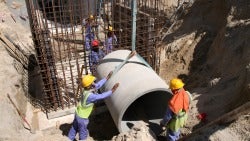
Kuwait’s Ministry of Public Works (MPW) has extended the deadline for a major drainage tender estimated to be worth about KD222m ($718m).
The new bid submission deadline is 19 July.
The tender scope covers the construction of rainwater drainage networks across the residential areas of Sabah Al-Ahmad, South Sabah Al-Ahmad, Al-Khairan and Al-Wafra.
The MPW floated the tender on 22 March. The most recent deadline was 21 June.
According to regional projects tracker MEED Projects, the works include the construction of a major concrete sewer, three collection basins and extensive stormwater drainage basins.
Rainwater collection tanks will be connected through an independent network, with outlets to the sea via the Nuwaiseeb exit to manage overflow.
The infrastructure will also filter pollutants such as oils, minerals and sediments to protect water quality and support environmental sustainability.
The project aims to reduce surface runoff, prevent street and urban flooding, and improve groundwater recharge.
Kuwait’s MPW currently has several contracts out for tender for infrastructure works across various parts of the country.
Also, in March, the client released two additional tenders covering the construction of a treated water system in Kuwait’s southern region and another in Kuwait’s northern region.
Bids for both projects are due by 28 June.
Meanwhile, the MPW is planning to begin construction of the $3.3bn North Kabd sewage treatment plant, which has a planned capacity of up to 1 million cubic metres a day.
China State Construction Engineering Corporation (CSCEC) won the contract to build the plant earlier this year.
> Be recognised among the best in the industry at the MEED Projects Awards 2026 …
 https://image.digitalinsightresearch.in/uploads/NewsArticle/17411675/main.jpg
 -
Contractor wins Emaar Dubai Harbour project deal
24 June 2026
Register for MEED’s 14-day trial access
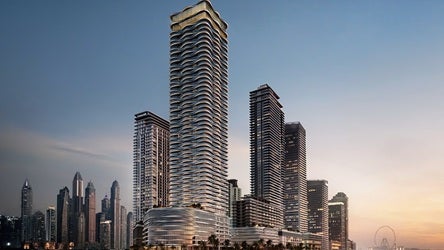
Local construction firm Al-Sahel Contracting Company has won a contract to build The Bristol Luxury Hotels & Resorts project in Dubai.
The contract was awarded by local real estate developer Emaar Properties.
The Bristol Luxury Hotels & Resorts is located at Emaar Beachfront in Dubai Harbour.
The project comprises a 54-storey mixed-use building with about 150 hotel keys and 227 one- to four-bedroom apartments.
Enabling works have been completed by local firm Dutch Foundation.
Dubai-based Mirage Leisure & Development is the project’s consultant.
Construction is expected to be completed by 2028.
The contract award follows Emaar’s appointment of Dubai-based Aroma International Building Contracting to build the Address Grand Downtown tower.
The award also comes shortly after Emaar reported strong operating momentum in 2025, led by record property sales of AED80.4bn ($21.9bn), up 16% year on year.
The company’s revenue backlog from property sales rose to AED155bn ($42bn), supporting visibility on future revenue recognition.
Total revenue for 2025 reached AED49.6bn ($13.5bn), a 40% year-on-year increase. Earnings before interest, taxes, depreciation and amortisation grew 33% to AED25.6bn ($7bn), while net profit before tax rose 36% to AED25.7bn ($7bn).
Emaar’s platform continued to support performance across property development, malls, hospitality, leisure and international operations.
> Be recognised among the best in the industry at the MEED Projects Awards 2026 …
https://image.digitalinsightresearch.in/uploads/NewsArticle/17411104/main.jpg -
Saudi Arabia launches new mineral exploration licensing round
24 June 2026
Register for MEED’s 14-day trial access
Saudi Arabia’s Ministry of Industry & Mineral Resources (MIMR) has launched its tenth round of a mineral exploration licensing competition, qualifying 24 local and international companies and consortiums to participate.
The exploration opportunities offered under Round 10 cover about 13,000 square kilometres across the regions of Medina, Mecca, Riyadh, Qassim and Hail. They encompass several highly prospective mineralised belts that are said to contain significant deposits of gold, copper, silver, zinc and nickel.
One of the key areas offered in the round is the Nabithah-Ad Duwayhi (Dahlat Shabeb) Belt, which hosts the Ad-Duwayhi Mine, one of Saudi Arabia’s largest gold-producing operations, with annual production of approximately 180,000 ounces of gold.
Other notable exploration zones include the Sukhaybarat-Al-Safra Belt, recognised for its gold and base metals potential and home to the Sukhaybarat and Bulghah mining operations, as well as the Al-Nuqrah Belt, known for substantial gold resources and volcanogenic massive sulphide mineralisation rich in copper and zinc.
According to MIMR, 17 companies that previously qualified under Round 9 have retained their eligibility, while seven additional companies and consortiums successfully completed the Round 10 prequalification process.
The newly qualified bidders in Round 10 are:
- Anaam Al-Qarat for Trading / Sahara Mining Company consortium
- Danakali / Masadar Al-Zamarda for Mining consortium
- Power Metallic Mines
- PT ANTAM Tbk
- Saudi Arabian Mining Company (Maaden)
- Thurb Al-Hayya for Trading Company
- Wildsky Resources
The previously qualified participants from Round 9 are:
- Al-Ghazal Al-Arabi Mining Company
- Almasar Minerals Holding
- Al-Tasnim Enterprises
- Aurum Global Group
- Batin Al-Ard for Gold Company
- China National Geological and Mining Corporation
- DesertEx
- Eqleed-Indotan Mining Company
- Helderberg
- Jacaranda Minerals
- Midana Exploration
- Royal Road Arabia
- Saudi Gold Refinery
- Sierra Nevada Gold
- Sun Peak Metals
- The Distinguished Consortium Mining Company
- Vedanta
In a statement carried by the official Saudi Press Agency, MIMR said exploration licence competitions are conducted through a structured three-stage process designed to ensure transparency, competitiveness and equal opportunity for all participants.
The process begins with prequalification assessments covering technical expertise and financial capability, followed by a site-selection phase through the ministry’s digital mining platform, Taadeen. Where multiple bidders compete for the same exploration site, the process advances to a public, multi-round bidding stage, with licences awarded based on exploration expenditure commitments and predefined evaluation criteria.
The next phase of Round 10 will allow qualified bidders to select available exploration sites via the Taadeen platform, in accordance with established procedures that promote fair competition and enable companies to pursue opportunities aligned with their technical capabilities and investment strategies.
ALSO READ: Aramco and Maaden seek to form joint venture
“The continued participation of major international and regional mining companies reflects growing confidence in Saudi Arabia’s mining sector and the effectiveness of its transparent licensing framework,” MIMR said in its statement.
Jarrah Aljarrah, a ministry spokesperson, said increasing participation in successive exploration licensing rounds demonstrates growing investor confidence in the kingdom’s mining ecosystem, supported by regulatory reforms, improved availability of geological data, transparent licensing mechanisms and a steadily expanding pipeline of exploration opportunities.
Saudi Arabia’s metals and mining sector is pivotal to the country’s non-oil growth trajectory. Commercial exploitation of the kingdom’s mineral resource base – most of which remains untapped – is a key component of the Saudi Vision 2030 socio-economic transformation strategy.
The kingdom took a first step towards realising the commercial potential of its mineral resources when it enacted the Mining Investment Law in 2021. Since the law came into effect, MIMR has awarded about 3,248 mining permits to local and foreign firms under its accelerated exploration initiative, including alone.
Addressing the Future Minerals Forum in Riyadh in January 2024, Bandar Alkhorayef, the kingdom’s minister of industry and mineral resources, said Saudi Arabia’s natural resources are worth $2.5tn – an increase of more than 90% compared to the 2016 estimate.
This near-doubling of natural resource estimates – which exclude fossil fuels and include phosphate, gold and rare earths – is expected to provide a stimulus to the kingdom’s nascent mining industry.
ALSO READ: Maaden mineral resources grow by 7.8 million ounces
https://image.digitalinsightresearch.in/uploads/NewsArticle/17398549/main.jpg -
Kuwait tenders oil manifold project
24 June 2026
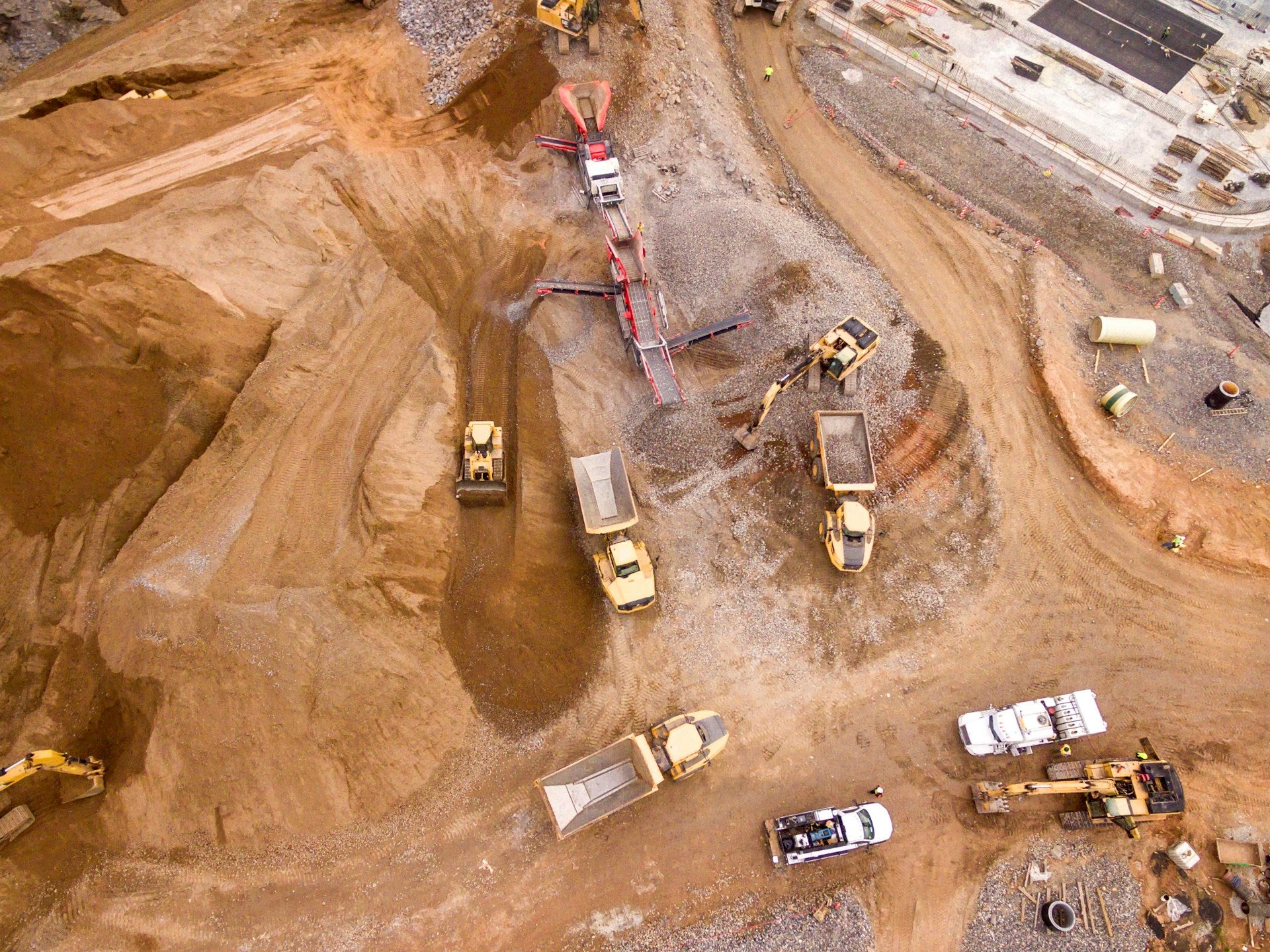
State-owned upstream operator Kuwait Oil Company (KOC) has tendered a contract to construct remote header manifolds and associated works in the southern and eastern regions of Kuwait.
A meeting with prospective contractors has been scheduled for 21 July 2026, and bids are due to be submitted ahead of a deadline on 20 September 2026.
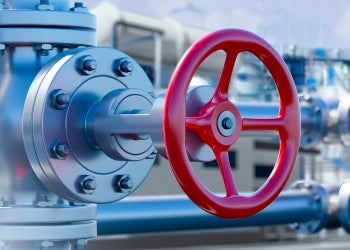
Manifolds are devices used in the oil sector to divide the flow of liquids from a single source to several outlets, or to collect liquids, or vice versa.
Previously, a project with a similar scope in the same region was awarded to the Kuwaiti contractor Al-Ghanim International General Trading & Contracting.
In 2016, it signed a contract worth $435m to construct remote header manifolds and associated works in the south and east Kuwait areas.
The scope of that contract included design, procurement, construction and commissioning of 25 remote manifold stations and associated pipelines in south and east Kuwait using multi-phase pumps to deliver liquids to gathering centres.
Kuwait’s oil fields are connected to more than 25 gathering centres, which serve as collection points for crude oil produced by several wells connected by flowlines, providing initial treatment by separating associated gas and removing salt.
 READ THE JUNE 2026 MEED BUSINESS REVIEW – click here to view PDF
GCC looks beyond the Strait; Iraq’s reform window narrows as fiscal assumptions shatter; MEED Top 100 companies.
Distributed to senior decision-makers in the region and around the world, the June 2026 edition of MEED Business Review includes:
> AGENDA: Gulf races to reroute trade> EXPORT ROUTES: Regional war boosts oil and gas pipeline project activity> CURRENT AFFAIRS: UAE’s Opec departure fulfils multiple ends> MEED TOP 100: Middle East stocks recover unevenly> LEADERSHIP: Building the infrastructure that makes net zero possible> TRADE DEAL: UK-GCC trade deal talks concludeTo see previous issues of MEED Business Review, please click herehttps://image.digitalinsightresearch.in/uploads/NewsArticle/17409564/main.jpg