
Saudi Arabia to expand grid by 60% by 2030
21 March 2025
State utility Saudi Electricity Company (SEC) aims to expand its power transmission network to approximately 160,000 kilometres (km) by 2030, up 60% over its existing network of about 99,800km.
An increased subscriber base and higher electricity consumption, as well as the integration of renewables, underpin plans to expand the SEC network over the next five years.
"By 2030, SEC aims to expand its transmission network to encompass approximately 160,000km of transmission lines, [and] install nine new high-voltage, direct current lines between regions and neighbouring countries," SEC said in its 2024 earnings report.
"These targets are underscoring our commitment to building a robust and future-ready grid infrastructure."
MEED understands that SEC energised 26 new transmission substations, increasing the kingdom's transmission network to 1,260, a 2.1% increase over 2023.
These new substations increased the cumulative substation capacity to 497,902 megavolt-amperes, a 2% growth over the previous year.
Of the total, SEC installed and energised 10 substations and added 148.5km of transmission lines, integrating 6.6GW of renewables in 2024.
An additional 24 substations and 4,327km of transmission lines are under construction to integrate about 34.4GW of renewable energy capacity into the grid by 2027.
Generation
SEC said generation capacity connected to the grid reached 92.15GW in 2024, up 6.9% over 2023, when installed capacity stood at 86.23GW.
The firm said its directly owned capacity of the total now stands at 56.4GW, representing 61% of the kingdom's total capacity.
Electricity production at SEC's plants surged 7.5% to 236.4 terawatt-hours in 2024.
The firm said that 1,580MW of generation capacity was added or restored to SEC's power plant fleet in 2024, while the liquid-to-gas conversion of the Riyadh power plant 10 (PP10) and phase one is expected to be completed this year.
SEC is working with local contracting company Alfanar, in addition to US-based original equipment manufacturer GE Vernova, to convert the plant's fuel feedstock to natural gas, a lower carbon intensity fuel compared to the crude oil and distillate that currently power the plant.
According to the Energy Institute, Saudi Arabia's total electricity generation in 2023 reached 422.9 terawatt-hours (TWh). Oil accounted for 152.1TWh, or about 36% of the total, while natural gas accounted for 265TWh, or 63%, and renewables made up 5.8TWh or 1%.
"Eight projects with a total capacity of 22.3GW are under transition by 2030," SEC said in its report.
It added: "SEC is currently developing 11 generation projects with an aggregate 23.4GW of capacity. These will be across directly owned capacity projects (10.476 GW), expansion and partnerships (5.324GW) and joint venture projects (7.610GW)."
Battery storage
SEC has been procuring battery energy storage system (bess) plants, with the aim of boosting the reliability and flexibility of the kingdom's electricity grid.
The first 500MW bess project in Bisha has been completed, while work is under way for 22 gigawatt-hours of bess capacity across five projects that are under development.
SEC is also prequalified to bid for the first round of independent bess projects in the kingdom, which is being produced by Saudi Power Procurement Company.
Related reads:
- Saudi power projects hit record high
- Riyadh joins global battery storage race
- Saudi Electricity Company profit falls by 33%
MEED’s April 2025 report on Saudi Arabia includes:
> UPSTREAM: Saudi oil and gas spending to surpass 2024 level
> DOWNSTREAM: Aramco’s recalibrated chemical goals reflect realism
> POWER: Saudi power sector enters busiest year
> WATER: Saudi water contracts set another annual record
> CONSTRUCTION: Reprioritisation underpins Saudi construction
> TRANSPORT: Riyadh pushes ahead with infrastructure development
> BANKING: Saudi banks work to keep pace with credit expansion

Register for MEED's guest program now to access this article.
Exclusive from Meed
-
 Lebanon sets October deadline for power generation projects
23 September 2026
-
 Jedco maps next phase of Jeddah airport expansion
22 September 2026
-
 Contractor wins $105m Medina university hospital deal
22 September 2026
-
 Fourteen contractors bid for Oman dam drainage project
22 September 2026
-
 Oman tenders Thumrait Industrial City infrastructure
22 September 2026
All of this is only 1% of what MEED.com has to offer
Subscribe now and unlock all the 153,671 articles on MEED.com
- All the latest news, data, and market intelligence across MENA at your fingerprints
- First-hand updates and inside information on projects, clients and competitors that matter to you
- 20 years' archive of information, data, and news for you to access at your convenience
- Strategize to succeed and minimise risks with timely analysis of current and future market trends

Related Articles
-
Lebanon sets October deadline for power generation projects
23 September 2026

Lebanon’s Electricity Regulatory Authority (ERA) has extended the deadline for private sector companies to submit expressions of interest (EoIs) for several upcoming power generation projects.
The new deadline is 15 October. The original deadline was 30 September.
The regulator said the extension follows “requests received from interested applicants for additional time to finalise and submit the required documentation”.
The EoI covers up to five grid-connected solar photovoltaic projects with a combined installed capacity of 350 megawatts-peak. The projects are also expected to include battery energy storage systems with a combined capacity of 1,000 megawatt-hours.
The regulator is also seeking proposals for distributed dual-fired thermal power plants with net capacities ranging from 20MW to 100MW. The plants are expected to run on natural gas as the primary fuel and heavy fuel oil as a backup.
The ERA invited companies to submit EoIs at the beginning of August.
On 11 August, the ERA issued its first set of clarifications following queries regarding the EoI. The clarifications confirmed that “proposed dual-fired plants should be gas-ready”, with natural-gas infrastructure planned but no implementation timeline yet available.
The ERA also said key power purchase agreement (PPA) terms, including duration, tariff structure and indexation mechanisms, will be determined “during a future procurement process”.
Electricity reforms
The EoI comes as the government advances wider reforms to Lebanon’s electricity sector. On 4 September, the Higher Council for Privatisation and Partnership discussed steps to transform the state utility Electricite du Liban (EDL) into a company, including creating a new entity, transferring its assets, and taking measures to protect employees’ rights during the transition.
The government said the restructuring aims to improve the financial sustainability of the electricity sector, recover costs and improve electricity supply.
On 18 September, the council discussed a draft decree to establish the new EDL company, evaluate its assets and separate its activities. However, it deferred a decision for further study.
The ERA was established earlier this year, more than two decades after it was envisaged under Law No. 462/2002 but not implemented due to political delays. The Energy & Water Ministry and EDL previously oversaw the electricity sector.
Lebanon’s electricity sector continues to face insufficient generation capacity, fuel supply constraints, ageing generation assets and limited grid flexibility. These challenges have led to prolonged electricity shortages and increased reliance on private diesel generation and distributed solar systems, prompting the government to seek additional private investment in new generation capacity.
According to the EoI document, the projects are expected to be structured as independent power producer (IPP) schemes. The competent public authority will determine any future contractual arrangements, including PPAs, under the applicable legal framework.
The ERA said the EoI is open to private investors, IPP operators, engineering, procurement and construction contractors, equipment suppliers and consortiums. It aims to assess market interest, identify potential generation projects, and evaluate the technical and financial capabilities of prospective developers.
Respondents must provide information on their technical and financial capabilities, proposed project locations, grid connection plans and relevant project experience.
https://image.digitalinsightresearch.in/uploads/NewsArticle/19906210/main.jpg -
Jedco maps next phase of Jeddah airport expansion
22 September 2026
Jeddah Airports Company (Jedco) has outlined plans for the next phase of expansion at King Abdulaziz International airport (KAIA) in Jeddah.
The programme comprises six upcoming contractor packages spanning airside works, terminal upgrades and utilities as Jedco advances its long-term expansion plans.
The opportunities include airfield rehabilitation; a five-year construction framework covering multiple workstreams and facility types; a Terminal 3A (T3A) package; Terminal 1 (T1) optimisation; a fuel farm; and Concourse C works.
The packages cover terminal buildings and ancillary facilities, runways, taxiways and aprons, hangars, fuel systems, airside facilities, supporting infrastructure and utility networks.
Tendering and award activity will be staggered over the next two years. Airfield rehabilitation is targeted for Q3 2026. The construction framework is scheduled for Q4 2026 and will run for five years.
The T3A package is planned for Q1 2027 and will be delivered under an early contractor involvement contract. Local contractors are encouraged to bid as part of a joint venture with an experienced international partner.
T1 optimisation is planned for Q4 2027, the fuel farm for Q2 2027, and Concourse C – currently the latest of the six milestones – for Q2 2028.
The new packages add detail to Jedco’s wider expansion plans disclosed in 2023, when it was reported that the company would invest SR115bn ($31bn) to increase KAIA’s capacity to 114 million passengers a year, with an overall completion target of 2031.
Jedco has recently awarded several significant contracts linked to the airport’s upgrade programme.
In November 2024, a joint venture of local Algihaz Contracting and Turkey’s TAV was awarded a contract to rehabilitate the South Terminal to serve Umrah and Hajj pilgrims, with Singapore’s Surbana Jurong acting as consultant.
Earlier that year, Jedco also awarded France’s Alstom a contract to increase the capacity of the Innovia automated people mover at Terminal 1, including new cars and upgrades to signalling, communications and controls.
Surbana Jurong is expected to play a leading role in future KAIA expansion plans and is currently providing technical advisory and project management consultancy for more than 100 capital projects for Jedco, valued at over SR6bn ($1.6bn).
These upgrades are expected to boost KAIA’s annual capacity in line with Saudi Arabia’s Vision 2030 and National Aviation Strategy, enhancing the experience for domestic travellers and millions of Hajj and Umrah pilgrims.
https://image.digitalinsightresearch.in/uploads/NewsArticle/19877992/main.jpg -
Contractor wins $105m Medina university hospital deal
22 September 2026
Riyadh-based construction firm Al-Mansouria General Contracting Company has been awarded a SR396m ($105.6m) contract to complete the remaining construction works on the Taiba University Hospital project in Medina.
The contract scope includes structural completion, remaining civil works, mechanical, electrical and plumbing installations, specialised clinical fit-outs and medical gas infrastructure to bring the long-stalled facility into operation.
Located on King Khalid Road along Medina’s Third Ring Road, the teaching hospital will have a capacity of 563 beds.
The contract duration is three years, with delivery targeted for late 2029.
The latest award follows a prolonged procurement cycle that began more than a decade ago as part of a public budget drive to expand Saudi Arabia’s higher education infrastructure.
The project’s first phase was initially signed in December 2011 with local firm Al-Muhaidib Contracting under a SR500m ($133.3m) contract.
Groundbreaking for the eight-storey complex took place in July 2013. The project covers a gross floor area of more than 200,000 square metres.
Progress stalled shortly thereafter due to reported structural delays and the reallocation of public capital budgets across the kingdom’s social infrastructure pipeline.
 READ THE SEPTEMBER 2026 MEED BUSINESS REVIEW – click here to view PDF
Nuclear power ambitions gather pace; Kuwait keeps dealmaking alive despite war; Region invests in raising gas processing capacity.
Distributed to senior decision-makers in the region and around the world, the September 2026 edition of MEED Business Review includes:
> AGENDA: Gulf nuclear revival takes shape> MARKET FOCUS: Kuwait keeps dealmaking alive under fire> INDUSTRY REPORT: Gas processing takes centre stage in Mena regionTo see previous issues of MEED Business Review, please click herehttps://image.digitalinsightresearch.in/uploads/NewsArticle/19870032/main.jpg -
Fourteen contractors bid for Oman dam drainage project
22 September 2026
Fourteen contractors have submitted bids for a major drainage project designed to manage flows downstream of Oman’s Al-Khawd Recharge Dam and strengthen flood protection in Al-Seeb, Muscat Governorate.
The proposed works will manage flows downstream of the Al-Khawd Recharge Dam and reduce flood and erosion risks around Al-Khawd village and surrounding assets. The project site includes remote wadi reaches, with access constraints expected to affect construction logistics and temporary access arrangements.
Oman’s Ministry of Agriculture, Fisheries & Water Resources (MAFWR) is the project client.
Bidders submitted their main contract bids on 14 September, with prices ranging from about $126m to $390m.
The bidders and their prices are:
- China International Water & Electric Corporation: $125.94m
- Eksen Project Construction Tourism & Trade (Turkiye): $149.09m
- Ozkar Construction (Turkiye): $149.71m
- United Thumtait Lines (Oman): $149.80m
- Portex Construction Industry & Trade (Turkiye): $154.67m
- Galfar Engineering & Contracting (Oman): $154.80m
- The Arab Contractors (Egypt): $159.70m
- Yildizlar Grup (Turkiye): $172.03m
- Hindustan Construction Company (India): $182.15m
- Strabag Oman (Oman): $205.80m
- AZ Engineers (Oman): $231.19m
- Sarooj Construction Company (Oman): $232.33m
- The Egyptian Contracting Company (Egypt): $239.25m
- Al-Adrak Trading & Contracting (Oman): $389.93m
The project scope includes a drainage network, channel lining and bed protection works, pipelines and concrete box culverts.
MAFWR appointed Muscat-based ARQ and Partners Consulting Engineers to carry out the design works in July 2025. The main contract tender was subsequently issued in May 2026.
Dam pipeline
In parallel, Oman continues to advance a pipeline of major flood protection schemes across the sultanate.
In August, MAFWR received bids from nine contractors to construct the Wadi Rijma flood protection dam (R2A) in Liwa, North Batinah Governorate.
The Wadi Rijma dam project is one of four flood protection dams being planned in the sultanate to intercept floodwaters flowing from the northern Omani mountain range into the coastal plain.
In June 2025, MEED reported that the Islamic Development Bank (ISDB) had extended a $632m loan to the ministry to fund the construction of four major flood protection dams in the sultanate.
The four projects are:
- Wadi Al-Khoud Flood Protection Dam (AK01) in Seeb
- Wadi Rijma Flood Protection Dam (R2A) in Liwa
- Wadi Majlas Flood Protection Dam in Qurayat
- Wadi Ahin Flood Protection Dam in Saham North
In June, the ministry invited contractors to bid to construct the Wadi Al-Khoudh flood protection dam in Wilayat Al-Seeb, Muscat Governorate, reviving a project that had been on hold since 2019.
The design review and supervision services contracts have been awarded for both the Wadi Majlas Flood Protection Dam and Wadi Ahin Flood Protection Dam projects.
The contracts were awarded to local firms Al-Abraj Consulting Engineering and Atlas International Engineering Consultants, respectively. The main contract tenders for these projects are expected to be released by the end of the year.
https://image.digitalinsightresearch.in/uploads/NewsArticle/19868201/main.jpg -
Oman tenders Thumrait Industrial City infrastructure
22 September 2026
Oman’s Public Establishment for Industrial Estates (Madayn) has tendered an estimated RO15m ($39m) contract to develop infrastructure for Thumrait Industrial City.
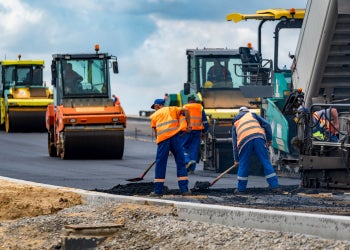
The tender was issued on 14 September, with bids due by 12 November.
The scope covers site-wide utilities and services, including an internal road network, stormwater channels and culverts. It also includes installing sewerage and water networks, along with landscaping works.
In addition, Madayn intends to build plug-and-play industrial units and a facilities building.
The first phase of the development will cover about 120,000 square metres (sq m).
Thumrait Industrial City is located in Oman’s Dhofar Governorate and spans an area of more than four million sq m.
The project location is close to concession blocks, quarry sites and the Najd agricultural areas. It is positioned to attract industrial investments in sectors such as mining and minerals processing (including gypsum and cement), food production, and a range of light and general manufacturing activities.
In March, Madayn said it is preparing to invest more than RO245m ($637m) to upgrade and expand infrastructure across its industrial cities between 2026 and 2030, as part of efforts to attract new investment and advance economic diversification.
According to media reports, Madayn chief executive Dawood Bin Salim Al-Hadabi said the programme is part of an expanded, phased plan aligned with Oman Vision 2040 and the authority’s long-term Madayn 2040 strategy.
The objective is to deepen Oman’s industrial base and spread growth across the sultanate’s governorates.
Madayn said the pipeline comprises about 90 strategic projects to improve industrial-city infrastructure, extend serviced land and increase the overall ease of doing business for investors.
https://image.digitalinsightresearch.in/uploads/NewsArticle/19866218/main.jpg