
GCC battery storage pipeline hits over 55GWh
28 February 2025
 Analysis
Jennifer Aguinaldo
Energy & technology editor

The battery energy storage system (bess) plant project pipeline in the GCC region – mainly in Saudi Arabia and the UAE – has reached 55.4 gigawatt-hours (GWh) of estimated rated capacity.
Data from MEED and regional projects tracker MEED Projects indicates that schemes with a total capacity of about 21.7GWh are under construction, primarily in Saudi Arabia, while bess plants in the pre-execution phase have an estimated cumulative rated capacity of 33.8GWh.
This substantial pipeline has been built over the past two to three years, when a total of 3.9GWh of capacity was built in Saudi Arabia through the 1.3GWh Red Sea multi-utility project and the recently completed 2.6GWh battery energy storage plant by Saudi Arabia's National Grid.
"The main energy storage driver across the GCC region is the rapid deployment of low-cost solar power to meet growing demand," notes Marek Kubik, a Saudi Arabia-based industry expert.
"As photovoltaic (PV) produces power only in the day and is a non-synchronous form of power, this brings with it certain balancing, ramping and stability challenges.
"Bess is needed for storing and shifting solar power from day to night, to reduce congestion and improve utilisation on the transmission system, as well as providing stability services to support stable grid operations," says Kubik.
Capacity ramp-up
With an estimated 775MW/3.9GWh of deployed capacity at the end of 2024, the GCC region accounts for a small proportion of the global deployment of about 160GW or 363GWh, according to the Volta Foundation.
The global not-for-profit group said global bess installations last year accounted for more than 45% of the total cumulative global capacity.
The region is poised to catch up with the rest of the world, however. Saudi Arabia's Bisha bess plant is one of 17 projects globally with a capacity of over 1GWh that entered operations in 2024.
A total of 21.7GWh of capacity is under construction in Saudi Arabia and is expected to be completed by the end of the year, with more under way.
Such growth will likely overtake the 55% year-on-year growth observed by the Volta Foundation.
The GCC region’s first major bess independent power producer (IPP) scheme was integrated into Red Sea Global’s multi-utility package in Saudi Arabia.
Developed by Saudi utility developer Acwa Power and built by China’s Huawei Digital, the 1,300 megawatt-hour (MWh) facility caters to the 28,000 square-kilometre “regenerative” tourism project on the west coast of the kingdom, which is being powered 100% by clean energy.
A bess facility with a capacity of 760MWh is also included in a similar multi-utility package for Red Sea Global’s sister development, Amaala.
The 2.6GWh Bisha represents an important milestone, ushering the kingdom onto the list of the world's top locations for lithium iron phosphate (LFP)-based bess.
So far, every utility or grid operator in the GCC, Morocco and Jordan plans to procure or has started to procure bess capacity independently, to balance their grid as electricity demand and renewable energy capacity increase, or as part of a solar power plant scheme.
In the absence of viable hydropower capacity, which is the main energy storage capacity in non-water-scarce regions, or thermal energy storage systems like molten salt, bess is emerging as the best alternative to enhance the flexibility of existing energy or electricity systems as sources increasingly diversify.
Abu Dhabi state utility Emirates Water & Electricity Company (Ewec) received 93 expressions of interest and prequalified more than two dozen companies to bid individually or as members of consortiums for its first pair of bess plants, which will have a capacity of up to 800MWh.
In January, Ewec and Abu Dhabi Future Energy Company (Masdar) announced a project that aims to convert solar power into base load capacity by coupling a 5GW solar PV plant with a 19GWh battery energy storage facility in Abu Dhabi.
Falling lithium prices and oversupply
The need for grid flexibility and a steep fall in the price of lithium – the main raw material for the dominant battery technology – has helped utilities to move forward with their plans to procure bess, which was considered cost-prohibitive until a year ago.
According to a BloombergNEF (BNEF) report in December, lithium-ion battery pack prices dropped 20% from 2023, to a record-low of $115 a kilowatt-hour.
Factors driving the decline include cell manufacturing overcapacity, economies of scale, low metal and component prices, the adoption of lower-cost LFP batteries and a slowdown in electric vehicle (EV) sales growth.
In the past two years, battery manufacturers have expanded production capacity in anticipation of surging demand for batteries in the EV and stationary storage sectors.
According to BNEF, overcapacity is rife, with 3.1 terawatt-hours of fully commissioned battery-cell manufacturing capacity globally, which is more than 2.5 times the annual demand for lithium-ion batteries in 2024.
It added that while demand in all sectors saw year-on-year growth, the EV market – the biggest demand driver for batteries – grew more slowly than in recent years.
In contrast, stationary storage markets have taken off, with strong competition in cell and system providers, especially in China.
Completed and under-construction bess plants in the GCC are all supplied by Chinese battery cell and system providers. BYD and Sungow account for 59% and 36% of completed and under-construction battery energy storage plants in Saudi Arabia, respectively, while Huawei accounts for the rest.
Contemporary Amperex Technology Company (CATL) will be supplying the battery cell and systems for Abu Dhabi's round-the-clock 1GW solar project.
Prices are expected to fall further, which will likely accelerate GCC deployments.
Some experts predict the prices could drop to as low as $50/kWh-$25/kWh and, at best, to as low as $10/kWh by the end of the decade, subject to extrapolating current battery learning rates of about 25% for every doubling of capacity.
Longer-duration battery cells
Despite their expected widespread deployment, there are concerns that batteries providing up to six hours of storage may not be sufficient to address the peak electricity demand in most GCC states.
Demand in the GCC states peaks between 6pm and 6am, when air-conditioning systems, street lighting and other home appliances are turned on, and where there is little wind capacity to supply renewable power.
Nevertheless, a staged approach to bess deployment is necessary to get to a fully net-renewable electricity system, says Kubik.
"Around the world, this is approached in a staged manner and bess of increasing duration is added over time, as the depth of renewable penetration increases," he says.
"The GCC has, to an extent, leapfrogged other markets by starting with four-hour to six-hour bess, but over time this need will grow to about eight- to 10-hours, which is enough to move to more or less a ‘baseload’ around-the-clock solar profile. As LFP costs continue to fall, longer-duration systems are rapidly becoming more economic."
 READ MEED’s YEARBOOK 2025
MEED’s 16th highly prized flagship Yearbook publication is available to read, offering subscribers analysis on the outlook for the Mena region’s major markets.
Published on 31 December 2024 and distributed to senior decision-makers in the region and around the world, the MEED Yearbook 2025 includes:
|
> PROJECTS: Another bumper year for Mena projects
> GIGAPROJECTS INDEX: Gigaproject spending finds a level
> INFRASTRUCTURE: Dubai focuses on infrastructure
> US POLITICS: Donald Trump’s win presages shake-up of global politics
> REGIONAL ALLIANCES: Middle East’s evolving alliances continue to shift
> DOWNSTREAM: Regional downstream sector prepares for consolidation
> CONSTRUCTION: Bigger is better for construction
> TRANSPORT: Transport projects driven by key trends
> PROJECTS: Gulf projects index continues ascension
> CONTRACTS: Mena projects market set to break records in 2024
|

Register for MEED's guest program now to access this article.
Exclusive from Meed
-
 SAR prepares phosphate rail second section contract award
25 September 2026
-
 Meraas awards $272m Nad Al-Sheba Gardens villas deal
25 September 2026
-
 KBR opens new office in Libya
25 September 2026
-
 Contractors submit bids for jet fuel pipeline to Doha airport
25 September 2026
-
 Saudi projects hold steady
24 September 2026
All of this is only 1% of what MEED.com has to offer
Subscribe now and unlock all the 153,671 articles on MEED.com
- All the latest news, data, and market intelligence across MENA at your fingerprints
- First-hand updates and inside information on projects, clients and competitors that matter to you
- 20 years' archive of information, data, and news for you to access at your convenience
- Strategize to succeed and minimise risks with timely analysis of current and future market trends

Related Articles
-
SAR prepares phosphate rail second section contract award
25 September 2026
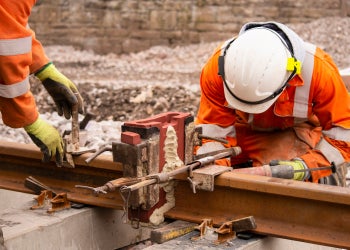
Saudi Arabian Railways (SAR) is preparing to formally award another multibillion-riyal contract to double the tracks on the existing phosphate transport railway network connecting the Waad Al-Shamal mines to Ras Al-Khair in the kingdom’s Eastern Province.
The contract covers construction works on the second section of the railway line, spanning more than 150 kilometres (km).
The scope of work includes civil works, alignment modifications, track and loop construction, and associated infrastructure such as bridges and culverts, as well as enhancements to signalling and telecommunications systems.
SAR floated the tender in February, and bids were submitted in April.
SAR is making significant progress on its Phosphate 3 rail programme. Last month, MEED exclusively reported that SAR had awarded an estimated SR4bn-plus ($1.1bn) contract to add another track to the first section of the existing phosphate transport railway network.
The contract was awarded to local firm Alomaier Trading & Contracting Company.
The scope includes track doubling, alignment modifications, utility bridges, culvert widening and hydrological structures, as well as the conversion of the AZ1 siding into a mainline track. It also covers support works for signalling and telecommunications systems.
The existing railway runs from the Waad Al-Shamal mines to Ras Al-Khair. The first-section works will cover about 100km, connecting the AZ1/Nariyah Yard to Ras Al-Khair.
Switzerland-based engineering firm ARX is the project consultant.
Formerly known as the North-South Railway, the North Train is a 1,550km freight line running from the phosphate and bauxite mines in the far north of the kingdom to the Al-Baithah junction. From there, it diverges into a line south to Riyadh and another line east to downstream fertiliser production and alumina refining facilities at Ras Al-Khair on the Gulf coast.
Adding a second track and freight yards will significantly increase the network’s cargo-carrying capacity and support growth in industrial production. Project implementation is expected to take four years.
State-owned SAR is also considering increasing the localisation of railway materials and equipment, including developing a cement sleeper manufacturing facility.
https://image.digitalinsightresearch.in/uploads/NewsArticle/19983928/main.jpg -
Meraas awards $272m Nad Al-Sheba Gardens villas deal
25 September 2026
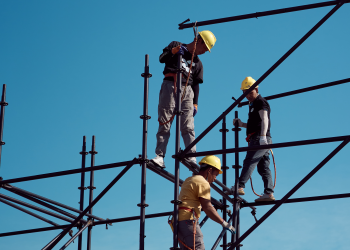
Dubai-based real estate developer Meraas Holding, part of Dubai Holding, has awarded a AED1bn ($272m) contract for the construction of the seventh phase of the Nad Al-Sheba Gardens community.
The contract, which covers the delivery of 272 villas and townhouses, was awarded to local firm GCC Contracting.
The scope of work includes 130 villas, 142 three-bedroom townhouses, and associated utilities and infrastructure.
Construction has started, and the project is slated for completion in 2028.
Last year, Meraas awarded a AED690m ($188m) contract for the construction of the fourth phase of the Nad Al-Sheba Gardens community in Dubai.
Meraas awarded the contract to local firm Bhatia General Contracting.
The scope of that contract covers the construction of 92 townhouses, 96 villas and two pool houses.
In December last year, Meraas announced the eleventh and final phase of its Nad Al-Sheba Gardens residential community. This phase includes the development of 210 new villas and townhouses, as well as a school, located in the northwest corner of the development.
According to UK analytics firm GlobalData, the UAE’s construction industry will register annual growth of 3.9% between 2025 and 2027, supported by investments in infrastructure, renewable energy, oil and gas, housing, industrial and tourism projects.
The residential construction sector is expected to record an average annual growth rate of 2.7% between 2025 and 2028, supported by private investment in residential housing, along with government initiatives to meet rising demand.
https://image.digitalinsightresearch.in/uploads/NewsArticle/19983032/main.png -
KBR opens new office in Libya
25 September 2026
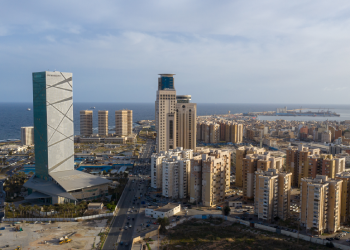
US-based KBR has opened a local branch office in Libya as it seeks to expand operations in the country, according to industry sources.
The local branch opening follows several significant contract wins in the country.
In March, KBR announced that it had been awarded a contract by Zallaf Exploration, Production & Refining of Oil & Gas Company to provide project management and technical services for the South Refinery Project in Libya’s southern city of Ubari.
Under the terms of the contract, KBR will provide contract management, project management and supporting technical services throughout the engineering, procurement and construction (EPC) phases of the project, according to a company statement.
The EPC work is expected to be executed over a 50-month period.
In its statement, KBR said that the project was aligned with its “long-standing commitment to advancing vital oil and gas infrastructure in Libya”.
KBR is currently re-evaluating the front-end engineering and design (feed) for the project to develop the J6 North Gialo field in Libya.
In February this year, KBR officials said registration procedures to open a local branch were being finalised and that the company was seeking the necessary operating permits.
KBR has previously provided engineering services for major national projects in Libya, but was forced to shut down its office in the country several times amid political instability and security issues.
When the company was known as Brown & Root, it worked on the Great Man-Made River Project in Libya, which is widely recognised as the largest irrigation project in the world.
https://image.digitalinsightresearch.in/uploads/NewsArticle/19981331/main.png -
Contractors submit bids for jet fuel pipeline to Doha airport
25 September 2026
Contractors have submitted technical bids for a QatarEnergy project to build a pipeline that will supply Jet A-1 fuel from its tank farm in Mesaieed Industrial City to Hamad International airport in Doha, a distance of approximately 53 kilometres.
According to information obtained by MEED Projects, the following locally based contractors are understood to have submitted technical bids for the project earlier in September:
- Doha Petroleum Construction Company (Dopet)
- Qatar Engineering & Construction Company (QCon)
- CAT Group (Qatar branch of Lebanese contractor)
- MedGulf Construction Company
Following the receipt of technical bids, QatarEnergy has requested commercial proposals for the project in October, according to MEED Projects.
The scope of work includes:
- Installation of a fully welded 53km steel pipeline, including pressure testing and non-destructive testing inspection
- Trenching, bedding, laying, backfilling, reinstatement, erosion control, landscaping and restoration works
- Construction of a pumping station, including motors and drives, redundancy provisions, safety systems, instrumentation and controls
- Implementation of a pigging system, including launchers and receivers, and provision for inspection, purging and isolation
- Installation of instrumentation and metering for flow, pressure and temperature monitoring and control
- Construction of electrical supply infrastructure, including substations, switchgear, earthing and emergency shutdown provisions
- Integration of a leak detection system, sectional block valves, SCADA communications and redundancy provisions
QatarEnergy operates crude oil refining facilities, including natural gas liquids units, petrochemical production complexes and other assets across the hydrocarbon value chain in Mesaieed Industrial City, located about 45km south of Doha.
https://image.digitalinsightresearch.in/uploads/NewsArticle/19957351/main.jpg -
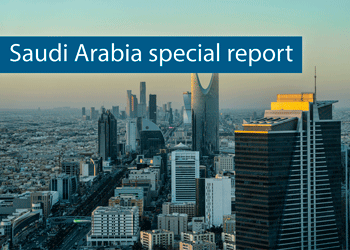
Saudi projects hold steady
24 September 2026
 Commentary
Colin Foreman
EditorSaudi Arabia’s project market is holding steady in 2026, with contract awards reaching $68bn in the year so far. The resilience is notable given the regional conflict that began in February and ongoing security threats that have disrupted shipping through key maritime chokepoints.
The kingdom’s investment strategy has also shifted. After years of aggressive project spending through sovereign wealth vehicle the Public Investment Fund, Riyadh has moved towards event-driven procurement with fixed deadlines: the 2034 Fifa World Cup, Expo 2030 Riyadh and non-negotiable housing and healthcare commitments, together with a focus on the future economy with major investments earmarked for data centres.
The approach is leaner than the sprawling gigaproject model that characterised early Vision 2030 years, and more focused on achieving tangible milestones.
Construction contract awards hit $20bn in the first half of this year, maintaining momentum against the backdrop of geopolitical uncertainty and a GDP contraction in the second quarter.
Saudi Aramco’s upstream investment programme remains substantial, with $50bn-$55bn committed for 2026, split about 65%-70% towards oil and gas. Major projects including the Dorra gas field development and the Jafurah unconventional gas expansion are progressing, underpinned by the company’s strategy of maintaining oil production at 12 million barrels a day while expanding gas capacity.
Downstream activity is also contributing. Chemicals giant Saudi Basic Industries Corporation (Sabic) approved $3.6bn in projects this year, led by the San VII ammonia and urea complex, which was awarded to South Korea’s Samsung E&A for $3.47bn. The company is returning to significant capital investment after several years of constrained spending.
Power sector activity is shifting towards transmission and battery storage infrastructure to support renewable energy targets. The kingdom’s infrastructure pipeline encompasses $175bn of projects in the transport, rail, aviation and roads segments.
Private sector participation is expanding through public-private partnership (PPP) structures, with the National Centre for Privatisation & PPP managing about 200 projects in 17 sectors, worth approximately $190bn.
The market needs more awards. Project completions have reached $91.5bn in 2026, outpacing awards by 35%. While this reflects successful execution of work awarded in prior years, it also indicates that new deals are required in the coming months to maintain activity levels into 2027.
MEED’s September 2026 report on Saudi Arabia includes:
> GOVERNMENT: Riyadh looks to reset its regional defence outlook
> ECONOMY: Conflict bolsters case for Saudi economic diversification
> BANKING: Saudi lenders readjust to lower lending and deposit climate
> UPSTREAM: Aramco upstream spending gathers pace
> DOWNSTREAM: Sabic steps up Saudi petchems investment
> POWER: Saudi Arabia’s power award activity slows
> WATER: Saudi water sector hits sharp slowdown
> CONSTRUCTION: Saudi construction defies the headwinds
> TRANSPORT: Saudi infrastructure pushes forward amid conflictTo see previous issues of MEED Business Review, please click herehttps://image.digitalinsightresearch.in/uploads/NewsArticle/19794535/main.gif