
Abu Dhabi’s MGX signs up for $500bn Stargate project
23 January 2025
Register for MEED's 14-day trial access
Abu Dhabi-based artificial intelligence (AI)-focused fund MGX has teamed up with US technology firms Oracle and ChatGPT creator OpenAI, and Japan's Softbank, to form the Stargate project, which aims to invest $500bn to build AI infrastructure in the US.
On 22 January, US President Donald Trump announced the project as "the largest AI infrastructure project by far in history".
Backed by Abu Dhabi sovereign wealth fund Mubadala, MGX was formed in 2024.
MGX aims to build $100bn in assets under management within a few years, along with US-headquartered Global Infrastructure Partners and Microsoft, the fund's key partners.
In September 2024, it was announced that technology investment platform Global AI Infrastructure Investment Partnership aims to invest in new and expanded data centres, chiefly in the US, to meet the growing demand for computing power, as well as energy infrastructure to create new sources of power for these facilities.
The same month, Sheikh Tahnoon Bin Zayed Al-Nahyan, deputy ruler of Abu Dhabi and national security adviser, and Jake Sullivan, US national security adviser, sealed an agreement on the common principles for cooperation on AI in Washington, following a meeting between UAE President Mohammed Bin Zayed Al-Nahyan and then-US President Joe Biden.
No money
Following the launch of the Stargate project, Tesla co-founder and head of the newly formed US Department of Government Efficiency, Elon Musk, who was kept out of the project, remarked in a social media post that the joint venture "don't [sic] actually have the money ($500bn)".
He followed up by saying that Softbank had well under $10bn secured.
Softbank's Masayoshi Son pledged to invest $100bn in the US in December.
The Stargate project's planned investment is greater than the investment in data centres planned by Emirati billionaire Hussain Sajwani, who together with President Trump, announced a plan to invest at least $20bn over four years in building data centres in several US states.
On 13 January, days before President Trump took office, the White House issued a brief of a regulation by the Department of Commerce imposing controls on the export of advanced computing integrated circuits.
The regulation's final draft splits countries into three tiers. Chip exports to the top-tier countries, comprising 18 of the closest allies of the US, are "without limit".
According to reports, the third tier comprises countries of concern, including Macau (China) and Russia.
All other nations and states, including those in the GCC, are presumed to be mid-tier countries, where a cap of approximately 50,000 graphics processing units (GPUs) between 2025 and 2027 will apply.
Individual companies from these countries will be able to achieve higher computing capability if they comply with US regulations and obtain validated end-user status.
The White House brief is no longer available online, but a copy of the regulation can still be found in the Federal Register, the US government's daily journal.

Register for MEED's guest program now to access this article.
Exclusive from Meed
-
 Kuwait halves drilling contractor pool
22 September 2026
-
 Abu Dhabi expects 45% emissions cut as electricity demand rises
21 September 2026
-
 Seven bid for Bahrain highway upgrade
21 September 2026
-
 Teams prepare bids for Oman PPP wastewater project
21 September 2026
-
 Oman reveals Sohar airport and Salalah Thumrait Road plans
21 September 2026
All of this is only 1% of what MEED.com has to offer
Subscribe now and unlock all the 153,671 articles on MEED.com
- All the latest news, data, and market intelligence across MENA at your fingerprints
- First-hand updates and inside information on projects, clients and competitors that matter to you
- 20 years' archive of information, data, and news for you to access at your convenience
- Strategize to succeed and minimise risks with timely analysis of current and future market trends

Related Articles
-
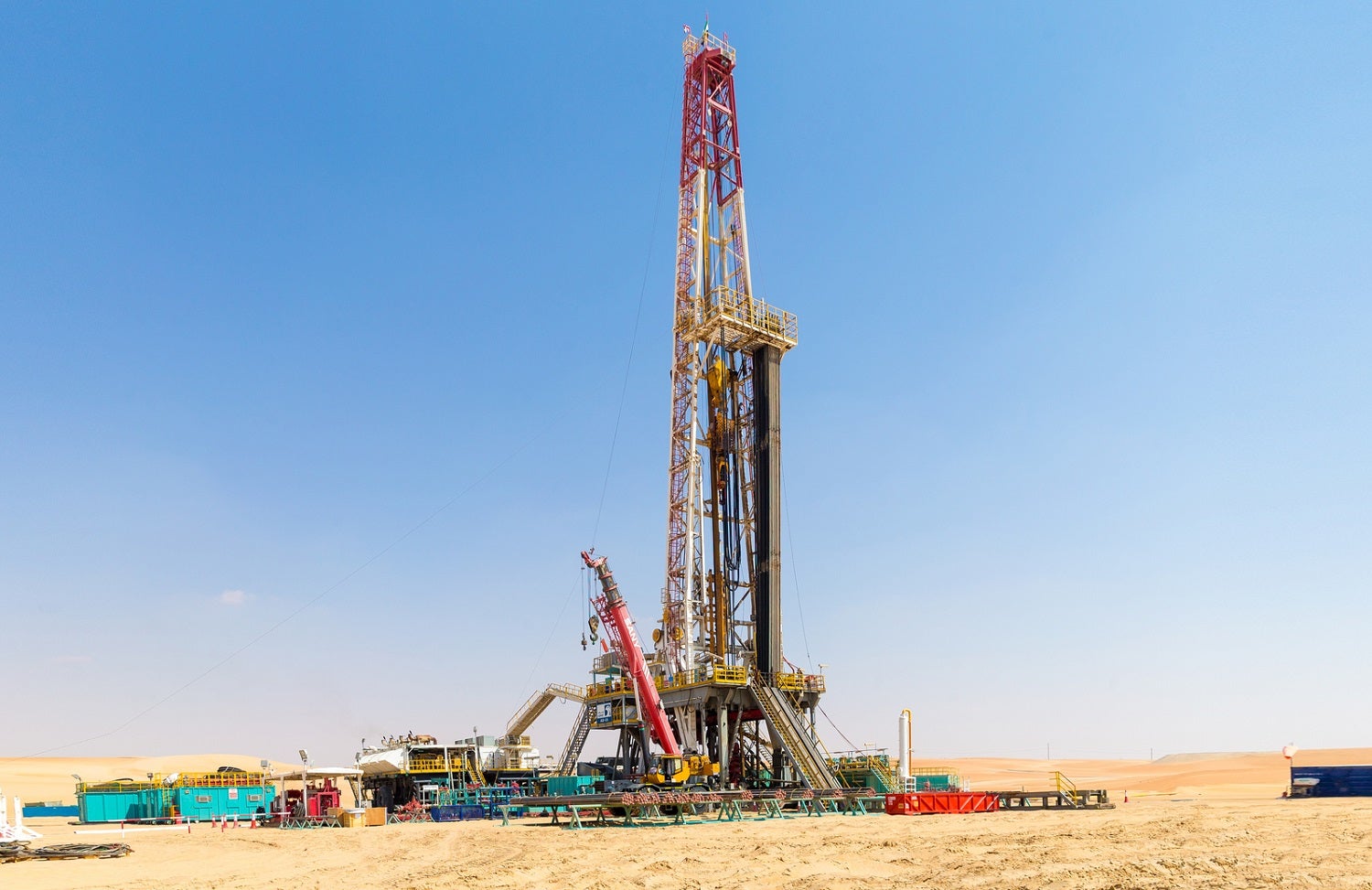
Kuwait halves drilling contractor pool
22 September 2026

State-owned upstream operator Kuwait Oil Company (KOC) has reduced the number of approved contractors for onshore drilling and shallow-well maintenance from 51 to 24.
Firms that are no longer qualified include major contractors such as Italy’s Saipem, Oklahoma-based Helmerich & Payne and Houston-based Patterson-UTI Energy.
The latest list still includes a wide range of Kuwaiti, regional and international companies, according to the latest update on its electronic system, published on 21 September 2026.
The full list of contractors that are now qualified to participate in tenders is:
- Burgan Company for Well Drilling, Trading & Maintenance (Kuwait)
- Kuwait Drilling Company (Kuwait)
- Sun Drilling Kuwait (Kuwait)
- TDL Kuwait for Oil Rigs & Natural Gas Extraction Activities, Services and Facilities (Kuwait)
- United Precision Drilling (Kuwait)
- Abraj Energy Services (Oman)
- Adnoc Drilling Company (UAE)
- Arabian Drilling Company (Saudi Arabia)
- Anton Oilfield Services (China)
- China Oilfield Services (China)
- Egyptian Drilling Company (Egypt)
- CNPC Bohai Drilling Engineering Company (China)
- Great Wall Drilling Company (China)
- John Energy (India)
- Kerui Oilfield Service (China)
- KCA Deutag Drilling (Germany)
- Mohammed Al-Barwani Petroleum Services (Oman)
- Nabors Drilling International (US)
- National Drilling & Services Company (Oman)
- Sea & Land Drilling Contractors (Oman)
- Sinopec International Petroleum Service Corporation (China)
- Karamay Jianye Energy (China)
- Modern Drilling Company (Egypt)
- Grey Wolf Drilling International (US)
An earlier list, which was published on 11 February, included 51 qualified companies.
The reduction in qualified drilling contractors follows KOC’s notice on 27 April this year, informing existing qualified contractors that they would need to reapply.
https://image.digitalinsightresearch.in/uploads/NewsArticle/19863744/main3435.jpg -
Abu Dhabi expects 45% emissions cut as electricity demand rises
21 September 2026
Register for MEED’s 14-day trial access
Abu Dhabi-based Emirates Water & Electricity Company (Ewec) expects carbon emissions from power and water production to fall by more than 45% by 2035 as the UAE expands renewable energy and reverse osmosis (RO) desalination.
The state offtaker's latest long-term system planning forecasts emissions will decline from about 42 million tonnes in 2019 to approximately 23 million tonnes in 2035.
The reduction is expected despite annual electricity demand that is forecast to rise by about 70% in 2026-33.
Ewec said the expansion of renewable energy and the shift towards RO desalination will be the principal drivers of the reduction.
The company plans to increase Abu Dhabi's solar capacity to 14GW by 2030 and more than 35GW by 2035. This will be supported by up to 15GW of battery storage capacity.
According to regional project tracker MEED Projects, Ewec has over $16bn-worth of power and water projects in the execution stage as part of its long-term procurement programme to increase renewable energy and low-carbon water production capacity.
This includes a 5.2GW Abu Dhabi solar and battery energy storage system (bess) round-the-clock renewable energy project, as well as three 1.5GW solar photovoltaic independent power projects (IPP): Al-Ajban, Al-Khazna and Al-Zarraf.
It also comprises the 1GW Al-Dhafra open-cycle gas turbine power plant, the 2.5GW Taweelah C combined-cycle gas turbine (CCGT) plant and a separate 400MW bess IPP.
As previously reported, it is expected that the developer's agreement for the 3.3GW Al-Nouf 1 CCGT IPP will be signed by the end of the year, while contractors are preparing to submit bids for a separate 2.6GW power plant project in Ajman.
The expansion of solar and battery storage is expected to reduce the system's reliance on gas-fired generation. However, gas-fired generation will continue to provide flexibility to support the system and balance intermittent renewable power output, according to Ewec.
The offtaker also expects RO desalination to account for more than 95% of total water production by 2035, with the procurement programme supporting the Abu Dhabi Department of Energy's Clean Energy Strategic Target 2035 for electricity production and the UAE Net Zero by 2050 Strategy.
 READ THE SEPTEMBER 2026 MEED BUSINESS REVIEW – click here to view PDF
Nuclear power ambitions gather pace; Kuwait keeps dealmaking alive despite war; Region invests in raising gas processing capacity.
Distributed to senior decision-makers in the region and around the world, the September 2026 edition of MEED Business Review includes:
> AGENDA: Gulf nuclear revival takes shape> MARKET FOCUS: Kuwait keeps dealmaking alive under fire> INDUSTRY REPORT: Gas processing takes centre stage in Mena regionTo see previous issues of MEED Business Review, please click herehttps://image.digitalinsightresearch.in/uploads/NewsArticle/19849749/main.jpg -
Seven bid for Bahrain highway upgrade
21 September 2026
Register for MEED’s 14-day trial access
Seven contractors have submitted bids for the next phase of the Sheikh Jaber Al-Ahmed Al-Sabah Highway upgrade project.
According to results published by the Bahrain Tender Board, the firms that have submitted bids include:
- Nass Contracting Company
- Haji Hassan Group
- Almoayyed Contracting Group
- Mohammed Abdulmohsen Al-Kharafi & Sons
- Eastern Asphalt & Concrete Production
- Cebarco Bahrain
- Kingdom Asphalt
The contract scope includes expansion works on 2 kilometres of the highway. It consists of a four-lane dual carriageway with service roads on both sides.
The scope of works also includes excavation and backfill work, construction of stormwater drainage networks, a pumping station, installation of ducts for future utilities, upgraded street lighting, traffic signs and directional signage.
The project aims to improve traffic capacity, reduce congestion and enhance safety along the transport corridor linking Manama with industrial zones.
In April, MEED reported that Bahrain had approved a financing agreement framework to fund the construction of the next phase of the Sheikh Jaber Al-Ahmed Al-Sabah Highway upgrade.
In March last year, the Kuwait Fund for Arab Economic Development and the Bahraini government signed a KD10m ($32.4m) loan agreement to fund the second phase of the project, which is expected to cost about $404m.
This was followed in September 2025 by the appointment of US-based Parsons Corporation on a $1.5m contract to provide pre-contract engineering consultancy services for the project.
According to data from regional project tracker MEED Projects, construction of the first phase was completed in 2020.
A joint venture of local firm Nass Contracting and Kuwait’s KCC Engineering & Contracting undertook the main construction works.
READ THE SEPTEMBER 2026 MEED BUSINESS REVIEW – click here to view PDFNuclear power ambitions gather pace; Kuwait keeps dealmaking alive despite war; Region invests in raising gas processing capacity.
Distributed to senior decision-makers in the region and around the world, the September 2026 edition of MEED Business Review includes:
> AGENDA: Gulf nuclear revival takes shape> MARKET FOCUS: Kuwait keeps dealmaking alive under fire> INDUSTRY REPORT: Gas processing takes centre stage in Mena regionTo see previous issues of MEED Business Review, please click herehttps://image.digitalinsightresearch.in/uploads/NewsArticle/19847073/main.png -
Teams prepare bids for Oman PPP wastewater project
21 September 2026
At least three consortiums are preparing bids for a contract to develop and operate two major sewage treatment plants (STPs) in Oman.
The public-private partnership (PPP) project covers expanding two Muscat-based plants: the Al-Ansab STP (phase three) and the Al-Amerat STP (phase two). It will be delivered under a build-own-operate-transfer model.
At Al-Ansab, capacity will increase from 125,000 cubic metres a day (cm/d) to 207,000 cm/d. At Al-Amerat, capacity will rise from 18,000 cm/d to 54,000 cm/d.
According to sources, the bidders for the project include:
- Etihad Water & Electricity (UAE) / Metito (UAE)
- Lamar Holding (Bahrain) / Tawzea (Saudi Arabia)
- Civil Works Company (CWC, Saudi Arabia) / Suez (France)
The bid submission deadline is 5 January 2027.
State-owned Nama Water Services (NWS) issued a request for proposals for the project in July, as exclusively reported by MEED.
It is understood that Veolia (France), Miahona (Saudi Arabia) and Samsung E&A (South Korea) are also among the firms that prequalified for the project after the request for qualifications was issued last November.
The project scope includes the design, financing, construction, operation and maintenance of the new facilities, alongside the long-term operation of the existing facilities.
It has been over a decade since the Al-Ansab STP first entered full operation at a capacity of about 54,000 cm/d. In 2015, South Korea’s Doosan Ennerbility, formerly Doosan Heavy Industries, was awarded the main engineering, procurement, and construction contract for the phase two expansion, which increased the facility’s maximum flow capacity to 125,000 cm/d. This phase was completed in 2017.
Phase one of the Al-Amerat STP was awarded to a joint venture of France’s Degremont (Suez) and local contractor Al-Ansari Trading Enterprise under a design, build and short-term operation contract valued at about €50m ($58.1m). The plant was developed for Haya Water and commissioned in 2019 as part of the Muscat wastewater scheme.
Haya Water, the former wastewater utility, was later incorporated into NWS following a government restructuring programme.
https://image.digitalinsightresearch.in/uploads/NewsArticle/19794912/main.jpg -
Oman reveals Sohar airport and Salalah Thumrait Road plans
21 September 2026
Oman is planning a new passenger terminal at Sohar Airport to expand regional air connectivity and strengthen the airport’s role in the national aviation network.
According to Said Bin Hamoud Al-Maawali, Oman’s minister of transport, communications and information technology, new routes are expected to be announced before the end of the year. Potential destinations include Dammam in Saudi Arabia, Gwadar in Pakistan, and southern Iran.
The planned terminal and additional routes will give residents of northern Oman more travel options.
Al-Maawali also provided an update on the long-delayed Salalah-Thumrait truck road, saying the project will be procured through a conventional tendering model rather than a public-private partnership (PPP).
In August 2023, Oman shortlisted five of eight prequalified teams to compete for the Salalah-Thumrait truck road project, which was set to be the sultanate’s first PPP road project.
The 67-kilometre road project is specially designed for heavy vehicles.
The road is a key link in Dhofar’s transport network, connecting Thumrait with Salalah and supporting movement between the interior and the governorate’s main urban and economic centre.
READ THE SEPTEMBER 2026 MEED BUSINESS REVIEW – click here to view PDFNuclear power ambitions gather pace; Kuwait keeps dealmaking alive despite war; Region invests in raising gas processing capacity.
Distributed to senior decision-makers in the region and around the world, the September 2026 edition of MEED Business Review includes:
> AGENDA: Gulf nuclear revival takes shape> MARKET FOCUS: Kuwait keeps dealmaking alive under fire> INDUSTRY REPORT: Gas processing takes centre stage in Mena regionTo see previous issues of MEED Business Review, please click herehttps://image.digitalinsightresearch.in/uploads/NewsArticle/19794881/main.jpg