
UAE maintains regional economic edge
14 January 2025

Heading into 2025, the UAE and Saudi Arabia continue to maintain their significant lead in the MEED Economic Activity Index. These opportune markets sit alongside three of their GCC peers – Oman, Qatar and Kuwait – as economies whose real GDP is supported by relatively robust hydrocarbon revenues.
In 2025, the GCC economies are forecast to grow by an unweighted real GDP growth rate average of 3.3%, compared to just 1.4% in 2024, according to the latest IMF estimates. Across the countries featured in the index, the figure for 2025 was 3.2%, compared to 1.8% in 2024.
One significant reason for this uptick is the subsiding of the Red Sea shipping disruption. Risks remain, but a year of intensive maritime patrols by several international naval coalitions has reduced the risk to commercial vessels. The shipping route has not seen a sinking since the first half of 2024, and there has not been a serious incident involving a Houthi strike on a vessel since September.
At the same time, logistical workarounds by the commercial transport sector have mitigated the disruption and overall risk to regional trade activity.
In terms of the hydrocarbons sector, the IMF expects the average price of oil to be $72.84 a barrel in 2025, compared to $81.29 a barrel in 2024. Alongside continuing Opec+ restrictions on oil production, this points to a slight weakening of oil revenues this year. Government spending plans among the region’s oil exporters are unlikely to be duly affected in the short term however, as such variables have already been factored into near-term expenditures.
Strong lead
The UAE tops the January 2025 MEED Economic Activity Index, with a forecast real GDP growth rate of 4.5%, broad fiscal surplus and strong non-oil growth backed by the ongoing strengthening of its projects market, which saw the award of $82bn-worth of contracts in 2024. This value exceeded project completions in the market in 2024 by almost $50bn and sits well above the long-term average.
Looking ahead, there are projects worth an estimated $8bn in the bidding phase.
Saudi Arabia’s real GDP is projected to grow by a similarly buoyant 4.6% in 2025. Although the kingdom is expected to run a fiscal deficit this year, this is largely a function of the government’s expansionary spending on strategic projects and development programmes.
Riyadh’s project spending hit new heights in 2024, with contract awards reaching a record value of $142bn and exceeding the value of project completions in the market by almost $90bn. The country also has an extraordinary $250bn-worth of project value currently under bid.
Moderate activity
Fellow GCC members Oman, Qatar and Kuwait follow in the index in a tight cluster, supported by real GDP forecasts in the 2-3% range, fiscal projections for top-line surpluses and moderate projects market activity.
Oman’s projects market is the most buoyant, with contract awards growing to $11bn in 2024 – double the $5.5bn in completions.
Qatar’s project award activity meanwhile dipped to $16bn in 2024, below the country’s long-term averages, though it still outpaced the $9bn in project completions last year.
Kuwait’s project activity grew from $6.3bn in awards in 2023 to $9bn in 2024, outpacing completions by $3.5bn and broadly matching long-term contract award averages.
All three countries have strong project pipelines, with $15bn-$25bn-worth of tenders each in the bidding phase.
Much improved
Morocco, Algeria and Iraq follow with sharply improved scores compared with mid-2024, in part due to more buoyant economic projections, including real GDP growth forecasts in the 3%-4% range in 2025.
Though weighed upon by serious fiscal imbalances, all three countries have strongly improved project markets, with contract awards surging from $2.4bn to $8bn in Morocco between 2023 and 2024, from $3.7bn to $21bn in Algeria, and from $14bn to $24bn in Iraq. The awards in all three countries also surpassed last year’s project completions and historic award averages.
Market stragglers
Bahrain comes next in the index as the lowest-performing GCC nation for reasons unrelated to its real GDP performance, which sits around 3%, but instead due to its fiscal and project sector weakness.
Manama is overspending, but not on critical infrastructure. The result is a projects sector that saw just $2.6bn-worth of awards in 2024, well below the $7.5bn in completions, which included the end of work on the $4bn Sitra Refinery, and below the $3.8bn long-term average.
The index is rounded out by Jordan, Egypt and Tunisia, whose economic situations are all fragile.
Jordan has a 2.5% growth projection, but high fiscal imbalance and unemployment. Subdued project activity in the country barely recovered to long-term averages in 2024 – after a dismal performance in 2023 – due to a $1bn liquefied natural gas terminal contract award.
Egypt, while projected for 4.1% growth in 2025, is grappling with 30% inflation, a deep fiscal deficit and a contracting projects sector. There were $19bn of awards in 2024, falling below both the 2023 figure and the long-term average for the market.
Tunisia, with a growth projection of just 1.6%, is failing across most metrics as it continues to grapple with a political and economic crisis. The country’s projects activity is no exception, with the value of contract awards in 2024 falling below 25% of the long-term average.
ABOUT THE INDEX
MEED’s Economic Activity Index, first published in June 2020, combines macroeconomic, fiscal, social and risk factors alongside data from regional projects tracker MEED Projects on the project landscape, to provide an indication of the near-term economic potential of Middle East and North African markets.

Register for MEED's guest program now to access this article.
Exclusive from Meed
-
 SAR prepares phosphate rail second section contract award
25 September 2026
-
 Meraas awards $272m Nad Al-Sheba Gardens villas deal
25 September 2026
-
 KBR opens new office in Libya
25 September 2026
-
 Contractors submit bids for jet fuel pipeline to Doha airport
25 September 2026
-
 Saudi projects hold steady
24 September 2026
All of this is only 1% of what MEED.com has to offer
Subscribe now and unlock all the 153,671 articles on MEED.com
- All the latest news, data, and market intelligence across MENA at your fingerprints
- First-hand updates and inside information on projects, clients and competitors that matter to you
- 20 years' archive of information, data, and news for you to access at your convenience
- Strategize to succeed and minimise risks with timely analysis of current and future market trends

Related Articles
-
SAR prepares phosphate rail second section contract award
25 September 2026
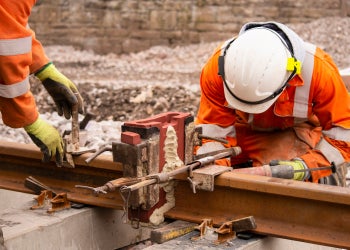
Saudi Arabian Railways (SAR) is preparing to formally award another multibillion-riyal contract to double the tracks on the existing phosphate transport railway network connecting the Waad Al-Shamal mines to Ras Al-Khair in the kingdom’s Eastern Province.
The contract covers construction works on the second section of the railway line, spanning more than 150 kilometres (km).
The scope of work includes civil works, alignment modifications, track and loop construction, and associated infrastructure such as bridges and culverts, as well as enhancements to signalling and telecommunications systems.
SAR floated the tender in February, and bids were submitted in April.
SAR is making significant progress on its Phosphate 3 rail programme. Last month, MEED exclusively reported that SAR had awarded an estimated SR4bn-plus ($1.1bn) contract to add another track to the first section of the existing phosphate transport railway network.
The contract was awarded to local firm Alomaier Trading & Contracting Company.
The scope includes track doubling, alignment modifications, utility bridges, culvert widening and hydrological structures, as well as the conversion of the AZ1 siding into a mainline track. It also covers support works for signalling and telecommunications systems.
The existing railway runs from the Waad Al-Shamal mines to Ras Al-Khair. The first-section works will cover about 100km, connecting the AZ1/Nariyah Yard to Ras Al-Khair.
Switzerland-based engineering firm ARX is the project consultant.
Formerly known as the North-South Railway, the North Train is a 1,550km freight line running from the phosphate and bauxite mines in the far north of the kingdom to the Al-Baithah junction. From there, it diverges into a line south to Riyadh and another line east to downstream fertiliser production and alumina refining facilities at Ras Al-Khair on the Gulf coast.
Adding a second track and freight yards will significantly increase the network’s cargo-carrying capacity and support growth in industrial production. Project implementation is expected to take four years.
State-owned SAR is also considering increasing the localisation of railway materials and equipment, including developing a cement sleeper manufacturing facility.
https://image.digitalinsightresearch.in/uploads/NewsArticle/19983928/main.jpg -
Meraas awards $272m Nad Al-Sheba Gardens villas deal
25 September 2026
Dubai-based real estate developer Meraas Holding, part of Dubai Holding, has awarded a AED1bn ($272m) contract for the construction of the seventh phase of the Nad Al-Sheba Gardens community.
The contract, which covers the delivery of 272 villas and townhouses, was awarded to local firm GCC Contracting.
The scope of work includes 130 villas, 142 three-bedroom townhouses, and associated utilities and infrastructure.
Construction has started, and the project is slated for completion in 2028.
Last year, Meraas awarded a AED690m ($188m) contract for the construction of the fourth phase of the Nad Al-Sheba Gardens community in Dubai.
Meraas awarded the contract to local firm Bhatia General Contracting.
The scope of that contract covers the construction of 92 townhouses, 96 villas and two pool houses.
In December last year, Meraas announced the eleventh and final phase of its Nad Al-Sheba Gardens residential community. This phase includes the development of 210 new villas and townhouses, as well as a school, located in the northwest corner of the development.
According to UK analytics firm GlobalData, the UAE’s construction industry will register annual growth of 3.9% between 2025 and 2027, supported by investments in infrastructure, renewable energy, oil and gas, housing, industrial and tourism projects.
The residential construction sector is expected to record an average annual growth rate of 2.7% between 2025 and 2028, supported by private investment in residential housing, along with government initiatives to meet rising demand.
https://image.digitalinsightresearch.in/uploads/NewsArticle/19983032/main.png -
KBR opens new office in Libya
25 September 2026
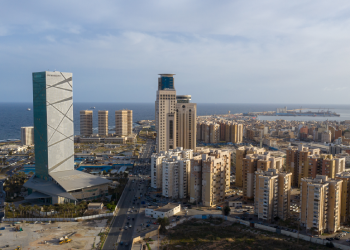
US-based KBR has opened a local branch office in Libya as it seeks to expand operations in the country, according to industry sources.
The local branch opening follows several significant contract wins in the country.
In March, KBR announced that it had been awarded a contract by Zallaf Exploration, Production & Refining of Oil & Gas Company to provide project management and technical services for the South Refinery Project in Libya’s southern city of Ubari.
Under the terms of the contract, KBR will provide contract management, project management and supporting technical services throughout the engineering, procurement and construction (EPC) phases of the project, according to a company statement.
The EPC work is expected to be executed over a 50-month period.
In its statement, KBR said that the project was aligned with its “long-standing commitment to advancing vital oil and gas infrastructure in Libya”.
KBR is currently re-evaluating the front-end engineering and design (feed) for the project to develop the J6 North Gialo field in Libya.
In February this year, KBR officials said registration procedures to open a local branch were being finalised and that the company was seeking the necessary operating permits.
KBR has previously provided engineering services for major national projects in Libya, but was forced to shut down its office in the country several times amid political instability and security issues.
When the company was known as Brown & Root, it worked on the Great Man-Made River Project in Libya, which is widely recognised as the largest irrigation project in the world.
https://image.digitalinsightresearch.in/uploads/NewsArticle/19981331/main.png -
Contractors submit bids for jet fuel pipeline to Doha airport
25 September 2026
Contractors have submitted technical bids for a QatarEnergy project to build a pipeline that will supply Jet A-1 fuel from its tank farm in Mesaieed Industrial City to Hamad International airport in Doha, a distance of approximately 53 kilometres.
According to information obtained by MEED Projects, the following locally based contractors are understood to have submitted technical bids for the project earlier in September:
- Doha Petroleum Construction Company (Dopet)
- Qatar Engineering & Construction Company (QCon)
- CAT Group (Qatar branch of Lebanese contractor)
- MedGulf Construction Company
Following the receipt of technical bids, QatarEnergy has requested commercial proposals for the project in October, according to MEED Projects.
The scope of work includes:
- Installation of a fully welded 53km steel pipeline, including pressure testing and non-destructive testing inspection
- Trenching, bedding, laying, backfilling, reinstatement, erosion control, landscaping and restoration works
- Construction of a pumping station, including motors and drives, redundancy provisions, safety systems, instrumentation and controls
- Implementation of a pigging system, including launchers and receivers, and provision for inspection, purging and isolation
- Installation of instrumentation and metering for flow, pressure and temperature monitoring and control
- Construction of electrical supply infrastructure, including substations, switchgear, earthing and emergency shutdown provisions
- Integration of a leak detection system, sectional block valves, SCADA communications and redundancy provisions
QatarEnergy operates crude oil refining facilities, including natural gas liquids units, petrochemical production complexes and other assets across the hydrocarbon value chain in Mesaieed Industrial City, located about 45km south of Doha.
https://image.digitalinsightresearch.in/uploads/NewsArticle/19957351/main.jpg -
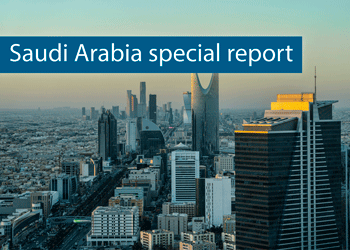
Saudi projects hold steady
24 September 2026
 Commentary
Colin Foreman
EditorSaudi Arabia’s project market is holding steady in 2026, with contract awards reaching $68bn in the year so far. The resilience is notable given the regional conflict that began in February and ongoing security threats that have disrupted shipping through key maritime chokepoints.
The kingdom’s investment strategy has also shifted. After years of aggressive project spending through sovereign wealth vehicle the Public Investment Fund, Riyadh has moved towards event-driven procurement with fixed deadlines: the 2034 Fifa World Cup, Expo 2030 Riyadh and non-negotiable housing and healthcare commitments, together with a focus on the future economy with major investments earmarked for data centres.
The approach is leaner than the sprawling gigaproject model that characterised early Vision 2030 years, and more focused on achieving tangible milestones.
Construction contract awards hit $20bn in the first half of this year, maintaining momentum against the backdrop of geopolitical uncertainty and a GDP contraction in the second quarter.
Saudi Aramco’s upstream investment programme remains substantial, with $50bn-$55bn committed for 2026, split about 65%-70% towards oil and gas. Major projects including the Dorra gas field development and the Jafurah unconventional gas expansion are progressing, underpinned by the company’s strategy of maintaining oil production at 12 million barrels a day while expanding gas capacity.
Downstream activity is also contributing. Chemicals giant Saudi Basic Industries Corporation (Sabic) approved $3.6bn in projects this year, led by the San VII ammonia and urea complex, which was awarded to South Korea’s Samsung E&A for $3.47bn. The company is returning to significant capital investment after several years of constrained spending.
Power sector activity is shifting towards transmission and battery storage infrastructure to support renewable energy targets. The kingdom’s infrastructure pipeline encompasses $175bn of projects in the transport, rail, aviation and roads segments.
Private sector participation is expanding through public-private partnership (PPP) structures, with the National Centre for Privatisation & PPP managing about 200 projects in 17 sectors, worth approximately $190bn.
The market needs more awards. Project completions have reached $91.5bn in 2026, outpacing awards by 35%. While this reflects successful execution of work awarded in prior years, it also indicates that new deals are required in the coming months to maintain activity levels into 2027.
MEED’s September 2026 report on Saudi Arabia includes:
> GOVERNMENT: Riyadh looks to reset its regional defence outlook
> ECONOMY: Conflict bolsters case for Saudi economic diversification
> BANKING: Saudi lenders readjust to lower lending and deposit climate
> UPSTREAM: Aramco upstream spending gathers pace
> DOWNSTREAM: Sabic steps up Saudi petchems investment
> POWER: Saudi Arabia’s power award activity slows
> WATER: Saudi water sector hits sharp slowdown
> CONSTRUCTION: Saudi construction defies the headwinds
> TRANSPORT: Saudi infrastructure pushes forward amid conflictTo see previous issues of MEED Business Review, please click herehttps://image.digitalinsightresearch.in/uploads/NewsArticle/19794535/main.gif