
BP in oil and gas talks across the Middle East
26 November 2024
Register for MEED's 14-day trial access
UK-headquartered BP is engaged in oil and gas talks with countries across the Middle East as it looks to boost upstream production, according to the company’s chief executive, Murray Auchincloss.
Speaking at a conference in London, he said: “We’re back accessing the Middle East.”
He added: “We’re in advanced conversations in Iraq and we continue to talk to Abu Dhabi, Oman, Kuwait, Iraq – for further opportunities … let’s see how we do in those places.”
Commenting on the country’s potential return to the Kirkuk region in northern Iraq, he said: “I hope we come to an agreement with the nation fairly soon. I would like to see that by the end of February, but let’s see how that goes.
“It’s five domes, 20 billion barrels yet to produce [and] very competitive terms internationally now – and a government that is going to work with you and a much-stabilised security situation as well.”
In August, BP signed a memorandum of understanding (MoU) with the government of Iraq to develop oil fields in the Kirkuk region.
At the time, BP said that it had signed a non-binding agreement to “negotiate a material integrated redevelopment programme for the Kirkuk region”.
It said the scope of work would include oil and gas investment, power generation and solar, and “wider exploration activities”.
Plans in Iraq
The MoU signed for Kirkuk includes the Baba and Avanah domes and three adjacent fields – Bai Hassan, Jambur and Khabbaz – in Federal Iraq, which are operated by Iraq’s North Oil Company (NOC).
In its statement, BP said: “Rehabilitation of existing facilities, where required, and the construction of new facilities – including gas expansion projects – together with a drilling programme at the Kirkuk fields, has the potential to stabilise production and reverse decline, returning production from this nationally important oil field to a growth path.
“The integrated redevelopment programme has the potential to bring opportunity and investment into the Kirkuk region – unlocking future downstream growth while also bringing tangible benefits to the local population, with job creation and local supply requirements.”
In 2020, BP pulled out of Iraq’s giant Kirkuk oil field after its $100m exploration contract expired with no agreement on the field’s expansion, dealing a blow to Iraq’s hopes of increasing its oil output.
The move came as Western energy companies reassessed their operations in Iraq amid political turmoil following months of anti-government protests and a flare-up in tensions between the US and Iran in the country.
The UK-headquartered oil company’s 2013 service contract expired at the end of 2019.
Kirkuk was discovered in 1927 and marks the birthplace of Iraq’s oil industry. BP and Iraq’s Oil Ministry signed the letter of intent to study the development of the field in 2013, with a planned spending of $100m.
BP’s work included a three-dimensional seismic study of the field’s reservoir to expand on the existing 2D data.
BP already has a 50% stake in Iraq’s Rumaila oil field near the southern border with Kuwait, where it has operated for over a century.
Kuwait investments
The London-based company is also considering investing in Kuwaiti fields. In March 2016, BP signed a framework deal with state-owned Kuwait Petroleum Corporation (KPC), paving the way for joint investment and increased cooperation on oil and gas projects.
A statement released by BP at the time said both companies had agreed “to explore possible joint opportunities for investment and cooperation in future oil, gas, trading and petrochemicals ventures”.
The agreement involves collaborating on enhancing oil and gas recovery from Kuwait’s existing resource base.
It includes cooperation on studying opportunities for joint investment in future hydrocarbons exploration both inside Kuwait and globally, as well as possible future trading deals, including trading liquefied natural gas (LNG).
Cooperation on midstream and petrochemicals projects will also be covered by the deal, including potentially deploying BP’s proprietary paraxylene technology as part of KPC’s chemicals schemes.
BP was one of the founders of the original Kuwait Oil Company (KOC), which first discovered oil at Kuwait’s Burgan field in 1938.
In 1992, BP was the first oil company to be invited by the Kuwaiti government to assist in the redevelopment of Kuwait’s oil industry.
BP currently participates in the Greater Burgan field, which accounts for about 50% of Kuwait’s total output.
It participates through an enhanced technical service agreement (ETSA) with KOC, under which it provides support to sustain production, develop capabilities and deploy new technologies.
In 2018, BP signed a five-year technical services agreement with Kuwait Integrated Petroleum Industries Company (Kipic) to develop and implement an operational readiness programme for the Al-Zour refining complex and LNG terminal – some of the largest capital projects in Kuwait.
The oil refining facility reached mechanical completion in 2021. However, several factors prolonged the commissioning phase, including the Covid-19 pandemic and related measures designed to reduce the spread of the virus.
In May this year, Kuwait inaugurated the Al-Zour refinery with a ceremony to mark its completion.
The $2.9bn Al-Zour LNG facility came online in July 2021.
Expansion in Oman
In Oman, production from phase one of Block 61, Khazzan, started in 2017. In October 2020, production from phase two, Ghazeer, started ahead of schedule.
Combined, Khazzan and Ghazeer produce 1.5 billion cubic feet of gas a day and more than 60,000 barrels a day of associated condensate.
BP has been an investor in Abu Dhabi since 1939. It has partnerships in oil and LNG in Abu Dhabi and has a lubricants, aviation fuel and trading businesses that is managed from Dubai.
In Abu Dhabi, BP’s interests include joint-venture partnerships with Abu Dhabi National Oil Company (Adnoc) and shareholdings in Adnoc Onshore (BP’s share is 10%); Adnoc LNG (BP’s share is 10%); and the National Gas Shipping Company (BP’s share is 10%).
Before becoming the CEO of BP, Auchincloss was interim CEO from September 2023 to January 2024 after the sudden resignation of Bernard Looney due to failing to reveal relationships with colleagues.
In October, it was reported that BP had abandoned a target to cut oil and gas output by 2030 as CEO Murray Auchincloss scaled back the firm’s energy transition strategy to regain investor confidence.

Register for MEED's guest program now to access this article.
Exclusive from Meed
-
 Oman awards exploration blocks to state upstream firm
28 September 2026
-
 Saudi Arabia qualifies firms for gas-fired IPPs
28 September 2026
-
 Dewa completes $2.7bn refinancing of Noor Energy 1
28 September 2026
-
 BP to drill new well in Egypt as part of $700m campaign
28 September 2026
-
 Oil company talks shape Libya licensing round
28 September 2026
All of this is only 1% of what MEED.com has to offer
Subscribe now and unlock all the 153,671 articles on MEED.com
- All the latest news, data, and market intelligence across MENA at your fingerprints
- First-hand updates and inside information on projects, clients and competitors that matter to you
- 20 years' archive of information, data, and news for you to access at your convenience
- Strategize to succeed and minimise risks with timely analysis of current and future market trends

Related Articles
-
Oman awards exploration blocks to state upstream firm
28 September 2026
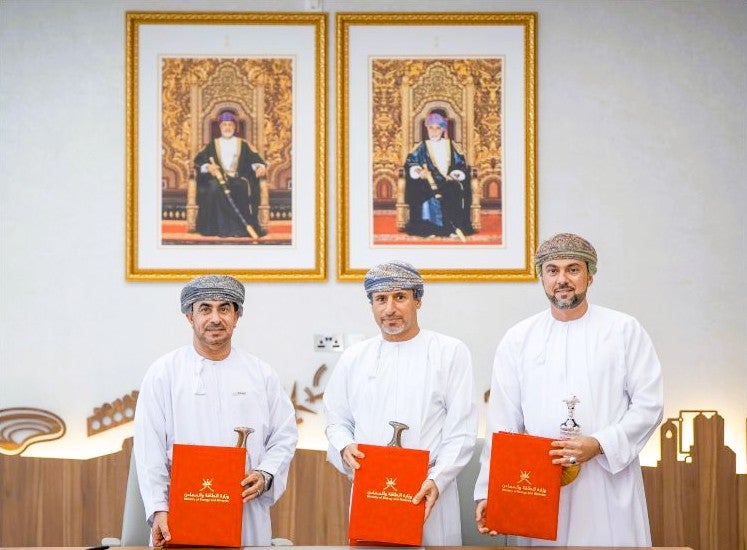
Oman’s Ministry of Energy & Minerals (MEMR) has awarded state-owned upstream firm OQ Exploration & Production (OQEP) exploration rights for three hydrocarbon blocks in the sultanate.
OQEP, which is 75% owned by Omani state energy group OQ, has secured rights for Blocks 36, 43A and 66.
Under the agreements, OQEP will conduct geological and geophysical surveys, analysis and modelling, and drill exploratory wells at the three blocks, with the aim of developing recoverable reserves.
Neither MEMR nor OQEP disclosed the blocks’ locations, areas or prospective reserves in their statement.
OQEP’s portfolio comprises 14 upstream oil and gas exploration and production assets in Oman, covering onshore and offshore operations and assets held under service contracts.
Formerly known as Oman Oil Company Exploration & Production, OQEP’s flagship assets include Block 60, which contains the Abu Tubul and Bisat oil fields, and Block 48. The company also holds strategic interests in gas-producing Blocks 9, 10 and 61.
Offshore expansion
OQEP has been expanding its offshore exploration portfolio. In February, the company acquired a 30% participating interest in offshore Block 18, following MEMR’s award of exploration rights to a joint venture between OQEP subsidiary OQ Exploration & Production Al-Batinah Offshore and PC Oman Ventures, a wholly owned subsidiary of Malaysia’s Petronas.
Located off Oman’s northeastern coast, Block 18 covers more than 21,000 square kilometres in the Sea of Oman, with water depths ranging from 50 metres to 3,000 metres. No confirmed discoveries have previously been reported in the block.
ALSO READ: Concession deals boost momentum in Oman mining
Under the concession agreement, Petronas holds a 70% participating interest and operatorship, while OQEP holds the remaining 30%.
OQEP has also expanded its producing portfolio through the acquisition of a 35% interest in onshore Block 27 from Japan's Mitsui E&P Middle East in April. The transaction was valued at RO28.8m ($75m).
Block 27 is operated by US-based Occidental Petroleum, which holds a 65% participating interest under an exploration and production-sharing agreement valid until 2035.
OQEP expects its interest in the block to contribute approximately 3,500 barrels of oil equivalent a day (boe/d) in additional net production this year.
In June, MEMR signed an with OQEP and state-owned Turkiye Petroller AO (TPAO), granting the companies exclusive exploration, appraisal, development and production rights for offshore Block 80.
The block covers approximately 5,737 sq km in the Gulf of Oman, near the Strait of Hormuz and off Musandam governorate. It includes the producing Bukha and West Bukha oil and gas fields.
The agreement stipulates a minimum exploration investment commitment of $90m over an initial eight-year exploration period. The work programme is divided into two phases to evaluate the block’s hydrocarbon potential.
https://image.digitalinsightresearch.in/uploads/NewsArticle/20063097/main2825.jpeg -
Saudi Arabia qualifies firms for gas-fired IPPs
28 September 2026
Register for MEED’s 14-day trial access
Principal buyer Saudi Power Procurement Company (SPPC) has qualified 13 companies to bid for the third round of Saudi Arabia’s combined-cycle gas turbine (CCGT) independent power producer (IPP) programme.
The projects will comprise new CCGT plants developed on a build-own-operate basis. Each project will be implemented through a special-purpose project company wholly owned by the successful bidder.
The qualified firms are:
- Abu Dhabi National Energy Company [Taqa] (UAE)
- Acwa (Saudi Arabia)
- Al-Bawani Capital (Saudi Arabia)
- Al-Jomaih Energy & Water (Saudi Arabia)
- EDF (France)
- Etihad Development Company (UAE)
- Kepco (South Korea)
- Marafiq (Saudi Arabia)
- Mitsubishi Power (Japan)
- Nesma Renewable Energy (Saudi Arabia)
- PowerChina (China)
- Saudi Energy (Saudi Arabia)
- Sumitomo Corporation (Japan)
Developers submitted statements of qualification for the round on 23 August, as exclusively reported by MEED.
Some have already begun “the process of forming consortiums to bid” for the project, with up to three or four groups likely to make offers.
Also in September, MEED exclusively reported that US-based GE Vernova was close to finalising a turbine reservation agreement with SPPC for the plants.
The new plants will use advanced H-class or J-class gas turbine technology. Each IPP is expected to comprise two or three gas turbine generators, corresponding heat recovery steam generators with duct firing, and one or two steam turbine generators.
The request for qualifications released by SPPC in July did not specify the number, locations or capacities of the projects, which mark the next stage of its CCGT IPP programme.
The first round comprises Taiba 1, Taiba 2, Qassim 1 and Qassim 2, with a combined capacity of 7,200MW.
The second round comprises Rumah 1, Rumah 2, Nairyah 1 and Nairyah 2, also with a combined capacity of 7,200MW.
Saudi Arabia’s Acwa recently said it had begun initial commercial operations at the Taiba 1 and Qassim 1 CCGT power plants.
US/India-based Synergy Consulting is the financial adviser for the procurement; Germany’s Fichtner is the technical adviser; and UK-headquartered Eversheds Sutherland is the legal adviser.
 READ THE SEPTEMBER 2026 MEED BUSINESS REVIEW – click here to view PDF
Nuclear power ambitions gather pace; Kuwait keeps dealmaking alive despite war; Region invests in raising gas processing capacity.
Distributed to senior decision-makers in the region and around the world, the September 2026 edition of MEED Business Review includes:
> AGENDA: Gulf nuclear revival takes shape> MARKET FOCUS: Kuwait keeps dealmaking alive under fire> INDUSTRY REPORT: Gas processing takes centre stage in Mena regionTo see previous issues of MEED Business Review, please click herehttps://image.digitalinsightresearch.in/uploads/NewsArticle/20055392/main.jpg -
Dewa completes $2.7bn refinancing of Noor Energy 1
28 September 2026
Dubai Electricity & Water Authority (Dewa) has completed a $2.7bn refinancing of the 950MW Noor Energy 1 project, the fourth phase of Dubai’s Mohammed Bin Rashid Al-Maktoum Solar Park.
Noor Energy 1 reached commercial operation in 2024. The project company was established to design, build and operate the plant. It is owned by Dewa (51%), Acwa (25%) and China’s Silk Road Fund (24%).
The project combines 700MW of concentrated solar power (CSP) with 250MW of photovoltaic (PV) capacity. The CSP component comprises a 600MW parabolic trough facility and a 100MW solar tower.
It has up to 15 hours of thermal energy storage, allowing it to supply dispatchable electricity beyond daylight hours. Dewa describes Noor Energy 1 as the world’s largest single-site CSP project.
According to Dewa, the transaction strengthens the project’s financial structure and is expected to generate savings over the operational life of the plant. Saeed Mohammed Al-Tayer, managing director and CEO of Dewa, added that the refinancing demonstrates confidence from international, regional and local financial institutions.
Abu Dhabi National Future Company (Masdar) is expected to commission the 1,800MW sixth phase of the MBR Solar Park by the end of this year.
The $1.5bn facility is being implemented by Shuaa Energy 4, a special purpose vehicle jointly owned by Masdar (40%) and Dewa (60%).
In August, MEED exclusively reported that Masdar is also likely to be awarded the contract to develop the seventh phase of the MBR Solar Park after submitting the lowest bid for the project.
Phase seven will add 2,000MW from PV solar panels and include a 1,400MW battery energy storage system with a six-hour capacity, providing a total storage capacity of 8,400 megawatt-hours.
READ THE SEPTEMBER 2026 MEED BUSINESS REVIEW – click here to view PDFNuclear power ambitions gather pace; Kuwait keeps dealmaking alive despite war; Region invests in raising gas processing capacity.
Distributed to senior decision-makers in the region and around the world, the September 2026 edition of MEED Business Review includes:
> AGENDA: Gulf nuclear revival takes shape> MARKET FOCUS: Kuwait keeps dealmaking alive under fire> INDUSTRY REPORT: Gas processing takes centre stage in Mena regionTo see previous issues of MEED Business Review, please click herehttps://image.digitalinsightresearch.in/uploads/NewsArticle/20055739/main.jpg -
BP to drill new well in Egypt as part of $700m campaign
28 September 2026
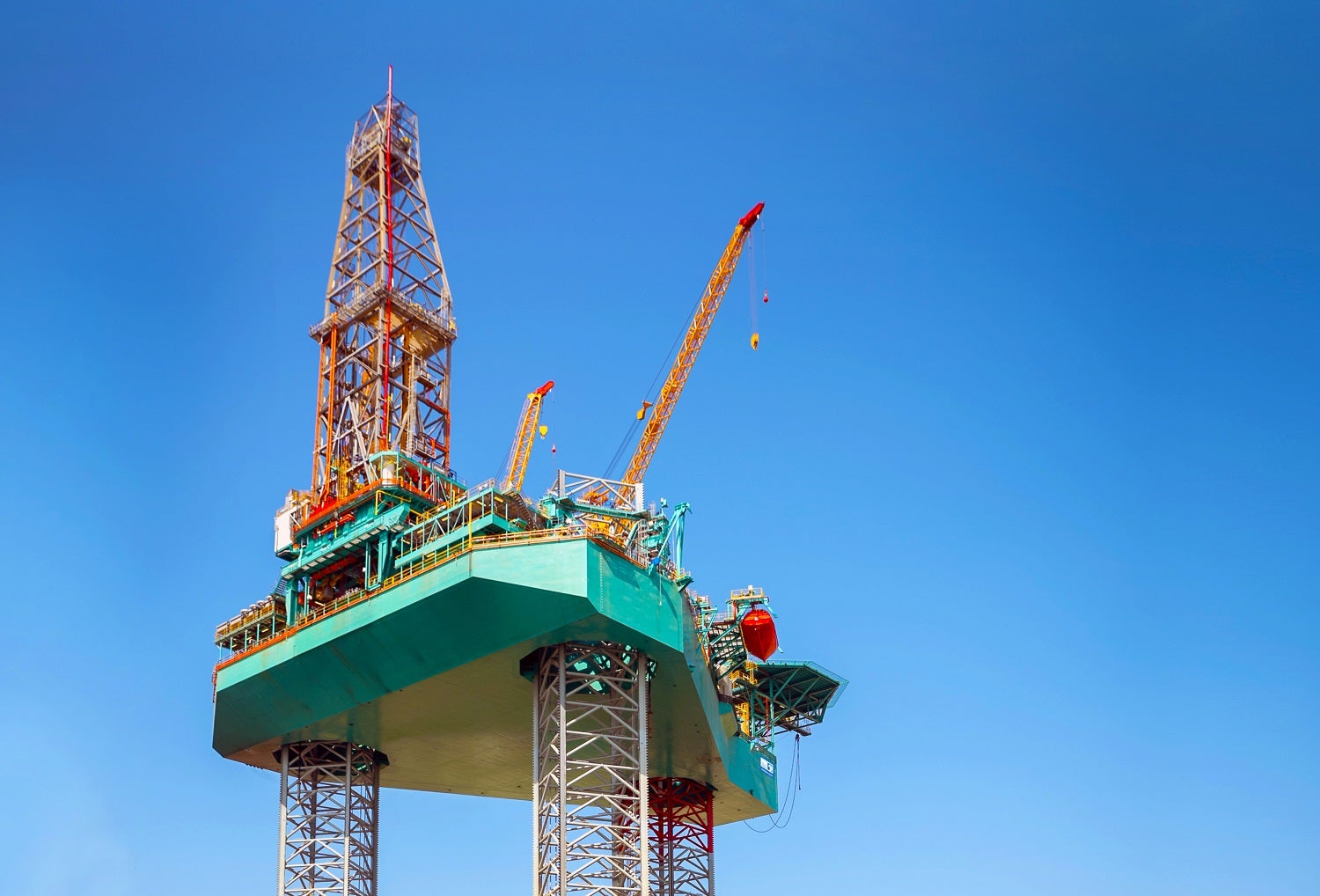
London-headquartered BP has moved the Valaris DS-12 drilling rig to a new position ahead of drilling the planned Ghorab-1 exploration well, according to a statement from Egypt’s Ministry of Petroleum & Mineral Resources.
The Ghorab-1 exploration well will be drilled in the offshore West Nile Delta (WND) concession and is part of a $700m drilling campaign that started in April this year.
The rig was moved to the new position after drilling the Fayoum-4 well.
The Ministry of Petroleum said the well had commenced production and was connected to the national natural gas grid, delivering approximately 80 million cubic feet a day of gas.
Egypt’s Minister of Petroleum and Mineral Resources Karim Badawi held a meeting with officials from BP last week to discuss progress on the drilling campaign.
They discussed BP’s strategic direction and priorities, as well as its future business plans, according to the statement from the Ministry of Petroleum.
Increased interest
Amid the US and Israel’s ongoing conflict with Iran and the ongoing war between Russia and Ukraine, oil assets in North Africa have become increasingly appealing to international oil companies.
Disruptions to oil and gas exports through the Strait of Hormuz have severely disrupted a range of countries, including Qatar, the UAE, Saudi Arabia, Iraq and Kuwait.
London-headquartered Shell has also been pushing ahead with strategic projects in Egypt over recent months.
In August, BG Delta, a Shell subsidiary, reached the final investment decision for phase 12a of the West Delta Deep Marine (WDDM) development project.
The project will be implemented in partnership with Malaysia’s Petronas and state-owned Egyptian General Petroleum Corporation (EGPC).
Shell, Petronas and EGPC formed a joint venture called Burullus Gas Company to operate the WDDM concession.
Phase 12a includes drilling and completing three deepwater gas wells, with production expected to begin in 2028.
The wells will be tied into existing subsea infrastructure, helping accelerate development, improve capital efficiency and limit the need for additional facilities.
In April, Egypt’s Petroleum Marine Services (PMS) was awarded a contract for offshore works for phase 12 of the WDDM field development project.
The contract awarded to PMS uses the engineering, procurement, installation and construction contract model.
Under the scope of the contract, PMS will install the required electrical, hydraulic and mechanical connections in deep waters to tie three new gas wells into production as part of phase 12.
The scope also includes the installation of three final triple tie-in spool bases to complete the connection between the wells.
https://image.digitalinsightresearch.in/uploads/NewsArticle/20050585/main4559.jpg -
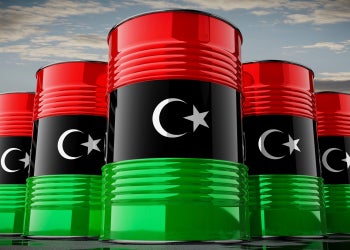
Oil company talks shape Libya licensing round
28 September 2026

Conversations with London-headquartered international oil companies (IOCs) are playing a key role in shaping plans for Libya’s next licensing round.
Representatives from Shell and BP travelled to Libya earlier this month as part of a Libyan British Business Council (LBBC) delegation.
During the trip, the oil companies’ representatives met with officials from Libya’s National Oil Corporation (NOC).
Peter Millett, chair of the LBBC and a former British ambassador to Libya, told MEED: “NOC is considering its next licensing round and an important part of that process is talking to IOCs like BP and Shell about what kind of terms would make blocks appealing to them.
“They are asking these oil companies what they can do differently in order to get more investment.”
Libya’s NOC chairman is Masoud Suleman, who was formally appointed in October last year after serving as acting chairman since January 2025.
Shortly after he became acting chairman, the NOC announced the results of its most recent licensing round, which was launched in March 2025 and was the country’s first in 17 years.
A total of five blocks out of 22 available were ultimately awarded in the 2025 licensing round.
One of the blocks, known as Block S4, was awarded to US-based Chevron, and the production-sharing agreement (PSA) for the block was signed in August.
Investment drive
Millett said Libya is seeking large investments from oil companies in order to boost national production.
“The way that Masoud Suleman is running NOC is impressive and technocratic,” he said. “One of his focuses is making his organisation into a partner that IOCs want to work with.”
“NOC has the ambition to produce more oil and export more oil, but they need investment in order to do this.
“They received some money from the central bank for a budget, but it is just a fraction of what they need.
“There’s a huge requirement to invest in infrastructure, such as processing facilities and pipelines, so they’re looking to outside companies to bring them investment and technology.”
Amid the US and Israel’s ongoing conflict with Iran and the ongoing war between Russia and Ukraine, oil assets in North Africa have become increasingly appealing to IOCs.
Disruptions to oil and gas exports through the Strait of Hormuz have severely affected a range of countries, including Qatar, the UAE, Saudi Arabia, Iraq and Kuwait.
Millett believes Libya’s proximity to consumer markets could help it secure investment to develop its oil and gas sector.
“Oil companies appear to be becoming increasingly willing to provide this investment in the current climate, because it is relatively easy to transport Libyan crude to customers,” he said.
“The only strait that you might need to go through is the Strait of Gibraltar, and this is easy compared to the problems that countries like Iraq and Kuwait are having shipping their crude through the Strait of Hormuz at the moment.”
Security challenges
While Libya’s location offers significant benefits in terms of ease of exports, operating in the country comes with security challenges.
Over recent weeks, both the Mellitah oil and gas complex and the Zawiya refinery in the west of the country have been disrupted by the actions of armed groups.
On top of this, a key pipeline was shut down by militants, temporarily cutting national production by 130,000 barrels a day.
While Libya has significant potential to expand its oil and gas sector, IOCs will likely watch for signs of deteriorating security before committing to large investment projects.
https://image.digitalinsightresearch.in/uploads/NewsArticle/20050217/main.jpg