
Aramco officially awards Jafurah third expansion phase contract
2 October 2024

Register for MEED's 14-day trial access
Saudi Aramco has officially awarded the main contract for engineering, procurement and construction (EPC) works on the third expansion phase of its Jafurah unconventional gas development in Saudi Arabia.
A consortium of Spanish contractor Tecnicas Reunidas and China’s Sinopec Group has been awarded the main EPC contract for the Jafurah third expansion phase, according to sources.
Aramco issued the letter of award to the Tecnicas Reunidas/Sinopec consortium on 25 September, sources told MEED.
Tecnicas Reunidas announced in July that it had received a non-binding letter of intent from Aramco for the main EPC contract for the Jafurah third expansion phase.
In a filing with the Madrid Stock Exchange on 22 July, the Spanish contractor estimated the contract’s value at $2.24bn.
In its disclosure, Tecnicas Reunidas added that it is the leader of its consortium with Sinopec, holding a 60% stake, implying that its share of the Aramco contract could be worth $1.34bn.
The Jafurah third expansion phase project aims to increase the gas production and processing capacity of the Jafurah unconventional gas development, located in the kingdom’s Eastern Province, through the addition of new facilities.
The EPC scope of work entails building three gas compression plants, each capable of processing 200 million cubic feet a day (cf/d).
The scope of work also includes building a 230kv substation to power the new gas compression plants and installing other utilities units, piping systems and safety equipment.
In July, Tecnicas Reunidas said it expects EPC work on the Jafurah third expansion phase to be completed in 44 months, with up to 400 engineers deployed on the project.
The Spanish/Chinese consortium began executing EPC works on the project in July, soon after receiving the letter of intent from Aramco, as per sources.
The other bidders for the project’s EPC contract were India-headquartered Larsen & Toubro Energy Hydrocarbon and Japan’s JGC Corporation.
Jafurah unconventional gas programme
Aramco has registered swift progress this year with the successive, multibillion-dollar expansion phases of its programme to produce and process gas from the massive Jafurah unconventional development in Saudi Arabia.
Aramco officially awarded contracts on 30 June for the Jafurah second expansion phase, which aims to raise its processing potential to up to 2 billion cf/d of raw gas produced from the Jafurah field.
Aramco awarded 16 contracts worth about $12.4bn for EPC works and drilling services for the second expansion phase.
The Tecnicas Reunidas and Sinopec consortium’s announcement that Aramco had selected them for EPC works on the third expansion phase came within weeks of contract awards for the second expansion phase.
Also in July, Aramco issued the main EPC tender for the fourth expansion phase. Contractors are preparing bids for the project, which has a scope of work similar to the third expansion phase and is, hence, understood to be of comparable value.
ALSO READ: Robust Aramco spending lifts Saudi upstream market
In parallel, EPC works are also progressing on the first phase of the programme, for which Aramco awarded $10bn-worth of subsurface and EPC contracts in November 2021.
Located in Saudi Arabia’s Eastern Province, the Jafurah basin hosts the largest liquid-rich shale gas play in the Middle East, with an estimated 200 trillion cubic feet of gas in place. This shale play covers an area of 17,000 square kilometres.
Production and processing of gas from this giant unconventional reserve is crucial for Aramco to achieve its ambition of increasing gas production by 60% by 2030, with 2021 as its baseline.
In February 2020, Aramco received a capital expenditure grant of $110bn from the Saudi government for the long-term phased development of the Jafurah unconventional gas resource base.
With its 2030 target locked, industry sources believe Aramco has already drawn up plans for six expansion phases to develop the Jafurah basin. The next two phases, they say, could also be tendered between now and the second half of 2025.

Register for MEED's guest program now to access this article.
Exclusive from Meed
-
 Bahrain retenders Hawar desalination works
25 September 2026
-
 Dubai property bubble risk rises as price growth stalls
25 September 2026
-
 UAE vehicle manufacturing push moves into production
25 September 2026
-
 SAR prepares phosphate rail second section contract award
25 September 2026
-
 Meraas awards $272m Nad Al-Sheba Gardens villas deal
25 September 2026
All of this is only 1% of what MEED.com has to offer
Subscribe now and unlock all the 153,671 articles on MEED.com
- All the latest news, data, and market intelligence across MENA at your fingerprints
- First-hand updates and inside information on projects, clients and competitors that matter to you
- 20 years' archive of information, data, and news for you to access at your convenience
- Strategize to succeed and minimise risks with timely analysis of current and future market trends
Related Articles
-
Bahrain retenders Hawar desalination works
25 September 2026
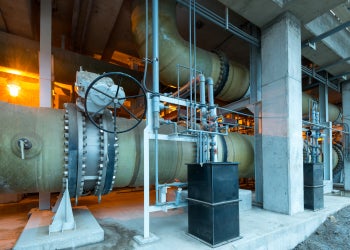
Bahrain’s Electricity & Water Authority (EWA) has retendered a contract to develop a seawater intake and outfall system for a planned seawater reverse osmosis (SWRO) desalination plant on Hawar Island.
The scope includes constructing a seawater intake facility with a capacity of 1,515 cubic metres an hour and a seawater outfall structure with a diffuser system.
The bid deadline is 21 October.
The original tender received just two bids from Noble Development (UAE) and Al-Hassanain Company (Bahrain). These were opened in December 2025.
The reissued tender is expected to attract bids from Al-Hassanain Company, Noble Development, UK-based engineering consultancy HR Wallingford, Bahrain Mechanical & Diving Services and Ocean Diving & Marine Services (Bahrain).
As previously reported, the marine works project is linked to two other contracts: one covering the main Hawar desalination plant and another involving the construction of two ground storage tanks and the installation of water transmission pumps.
Malaysia-based Sparco Engineering recently won the engineering, procurement and construction contract for the desalination plant project after submitting the lowest bid last year.
The plant is designed to produce 1 million imperial gallons a day (MIGD) of potable water.
The Hawar Islands form an archipelago of 16 desert islands and islets located approximately 26 kilometres southeast of Ras Al-Bar in Bahrain. The desalination plant is intended to support water supply requirements on the islands.
The third package linked with the SWRO project was tendered last November, with Greece-headquartered Ergotem submitting the lowest bid of $1.92m.
This contract covers the construction of two steel ground storage tanks with a capacity of 1 million gallons each, pumping stations, motors, pipelines and associated facilities.
As of August, the contract had not yet been awarded.
It is understood that Sparco Engineering will be required to ensure that the plant’s design and construction align technically and operationally with these two projects so that all three components function together as one integrated system.
https://image.digitalinsightresearch.in/uploads/NewsArticle/19993971/main.jpg -
Dubai property bubble risk rises as price growth stalls
25 September 2026
Register for MEED’s 14-day trial access
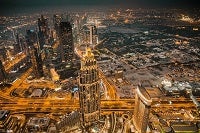
Dubai’s residential property market remains in elevated bubble-risk territory after a sharp slowdown in price growth, according to UBS.
The emirate’s housing boom came to an abrupt halt at the onset of the regional conflict, the Swiss bank said in its Global Real Estate Bubble Index 2026 report. Inflation-adjusted house prices have fallen back to mid-2025 levels, after real growth of more than 10% in 2025.
Dubai scored 1.16 on the index, up on last year, placing it fourth among the 23 cities covered. Only Zurich and Tokyo, at 1.69 and 1.54 respectively, are classed as high risk. Miami, Seoul, Geneva and Lisbon join Dubai in the elevated category, which covers scores between 1.0 and 1.5.
Real prices in Dubai rose by 0.4% in the year to Q2 2026, while real rents fell by 4%. UBS said bubble risk remained elevated despite some easing since March.
Ownership costs
UBS said existing tenants were likely to take advantage of the pause in price growth and, in some cases, price concessions to buy homes. Despite elevated mortgage rates, Dubai remains one of the few markets where ownership is relatively attractive given the high cost of renting, according to the bank.
A skilled service worker in Dubai needs about five years of average income to buy a 60-square-metre apartment near the city centre, compared with about 15 years in Hong Kong and 11 years in London. It takes 16 years of rent to pay for an equivalent apartment, one of the lowest ratios in the study. UBS attributed the low price-to-rent ratios in Dubai, Sao Paulo and the US cities surveyed to less regulated rental markets and higher interest rates, as well as elevated risk premiums in Dubai and Sao Paulo.
The bank said uncertainty over whether the inflow of high-income earners would recover was weighing on the premium segment. It added that Dubai’s structural advantages, including its strategic location and its appeal as an international business hub, remained intact, and that an improvement in the geopolitical environment was likely to support a rapid recovery in market sentiment and price expectations.
Supply is a further source of uncertainty. Some developments have stalled, and others may be delivered later than planned, although UBS said the market remained exposed to heightened volatility because of persistent concerns about structural oversupply.
Global slowdown
Across the cities analysed, real residential prices rose by an average of 0.5% in the year, down from 1.4% in mid-2025. Seoul recorded the strongest real growth, at 11%, while Toronto and Vancouver fell by about 10%.
The report also points to Gulf capital supporting other markets. UBS said interest from Middle Eastern buyers could further lift prices in Geneva, and that investors from the Middle East, the US and Asia had supported London’s prime segment.
https://image.digitalinsightresearch.in/uploads/NewsArticle/19987757/main.jpg -
UAE vehicle manufacturing push moves into production
25 September 2026
Register for MEED’s 14-day trial access
Chinese-linked carmaker Rox has begun vehicle production at Khalifa Economic Zones Abu Dhabi (Kezad). The start-up represents the most significant output so far from the UAE’s efforts to build an automotive manufacturing industry.
The first three Rox Adamas vehicles, carrying the Made in the Emirates mark, came off the production line at the company’s new Abu Dhabi facility in early September. The 10,000-square-metre plant is expected to reach an initial capacity of 20,000 vehicles a year by 2027, rising to 300,000 vehicles a year by 2030.
The facility can sub-assemble more than 80 types of vehicle components and also carries out complete vehicle assembly, calibration, rain and road testing, and final inspection. Rox moved its global headquarters to the UAE last year and plans to supply local and export markets.
The project forms part of Rox’s partnership with the Abu Dhabi Investment Office (Adio) and is supported by the UAE Ministry of Industry & Advanced Technology. Kezad Group signed the lease agreement for the facility in May.
Programme targets
The Rox plant is the first major output of a state-led strategy that has gathered pace over the past 18 months. Adio launched its automotive programme at the Make it in the Emirates forum in May 2025, with the aim of creating a hub for vehicle manufacturing and assembly, research and development, restoration, auctions and luxury cars.
The programme is projected to contribute AED100bn ($27.2bn) to Abu Dhabi’s GDP by 2045, attract more than AED8bn ($2.2bn) in foreign direct investment and create 7,000 skilled jobs. Adio has also introduced an automotive artificial intelligence curriculum with universities to develop Emirati talent in the sector.
In October last year, Adio and AD Ports Group agreed to work with Netherlands-based Stellantis to develop the emirate’s automotive ecosystem. The memorandum of understanding covers expansion into Middle East and Africa markets, an ecosystem for autonomous taxi services, and research into next-generation mobility technologies.
Under the agreement, Stellantis will explore investment opportunities in Abu Dhabi, while Adio and AD Ports Group will provide market intelligence and logistics support. The announcements did not include a commitment to build a production facility.
Kezad already hosts smaller electric vehicle (EV) operations. In 2024, UAE-headquartered NWTN signed a lease for a Kezad facility with capacity to assemble 5,000-10,000 semi-knocked-down EVs a year, with plans to expand to 50,000 units in a second phase.
Trading hub
Dubai has focused on vehicle trade rather than manufacturing. In November last year, Dubai Municipality signed a partnership agreement with DP World’s Economic Zones division to establish and manage the Dubai Auto Market, a 22 million-square-foot complex with more than 1,500 showrooms that is designed to handle over 800,000 new and used vehicles a year.
Enabling works are under way, carried out by local contractor Rad International Road Construction, with US-based Aecom serving as project consultant. Sheikh Maktoum Bin Mohammed Bin Rashid Al-Maktoum, first deputy ruler of Dubai, said at the launch that the project would foster a cluster of light industries for vehicle assembly and trade.
The market builds on an established base. Jebel Ali Free Zone hosts more than 940 automotive and spare-parts companies, including Ford, General Motors, Honda, Hyundai, Nissan and Volkswagen. In 2022, M Glory Group laid the foundation stone for a AED1.5bn ($408m) EV plant at Dubai Industrial City, with a planned capacity of 55,000 cars a year.
Regional competition
The UAE is not alone in pursuing automotive manufacturing. In Saudi Arabia, the Public Investment Fund (PIF) owns 70% of Hyundai Motor Manufacturing Middle East, which will roll out its first vehicle by Q4 2026 and targets annual production of 50,000 vehicles. Ceer, the kingdom’s first EV manufacturer, intends to roll its first vehicle off the production line in late 2026.
Saudi Arabia’s National Industrial Strategy aims to attract three to four manufacturers capable of producing more than 300,000 vehicles a year within a single automotive cluster. In Qatar, JTA International Investment Holding said last month that it was working with the UK’s Watt Electric Vehicle Company to set up a factory.
The two leading Gulf economies are taking different approaches. Saudi Arabia has relied on direct PIF shareholdings in manufacturers. In the UAE, investment offices, port groups and economic zone operators have led the effort, using land, logistics and incentives to attract privately owned carmakers.
Scaling up is the next test. Rox’s plan to increase output fifteen-fold between 2027 and 2030 will show whether Abu Dhabi’s model can support volume manufacturing. Achieving it would give the UAE production capacity comparable to the level Saudi Arabia is targeting across its entire automotive cluster.
https://image.digitalinsightresearch.in/uploads/NewsArticle/19986887/main.jpeg -
SAR prepares phosphate rail second section contract award
25 September 2026
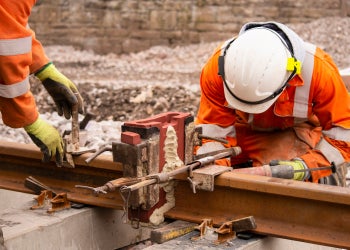
Saudi Arabian Railways (SAR) is preparing to formally award another multibillion-riyal contract to double the tracks on the existing phosphate transport railway network connecting the Waad Al-Shamal mines to Ras Al-Khair in the kingdom’s Eastern Province.
The contract covers construction works on the second section of the railway line, spanning more than 150 kilometres (km).
The scope of work includes civil works, alignment modifications, track and loop construction, and associated infrastructure such as bridges and culverts, as well as enhancements to signalling and telecommunications systems.
SAR floated the tender in February, and bids were submitted in April.
SAR is making significant progress on its Phosphate 3 rail programme. Last month, MEED exclusively reported that SAR had awarded an estimated SR4bn-plus ($1.1bn) contract to add another track to the first section of the existing phosphate transport railway network.
The contract was awarded to local firm Alomaier Trading & Contracting Company.
The scope includes track doubling, alignment modifications, utility bridges, culvert widening and hydrological structures, as well as the conversion of the AZ1 siding into a mainline track. It also covers support works for signalling and telecommunications systems.
The existing railway runs from the Waad Al-Shamal mines to Ras Al-Khair. The first-section works will cover about 100km, connecting the AZ1/Nariyah Yard to Ras Al-Khair.
Switzerland-based engineering firm ARX is the project consultant.
Formerly known as the North-South Railway, the North Train is a 1,550km freight line running from the phosphate and bauxite mines in the far north of the kingdom to the Al-Baithah junction. From there, it diverges into a line south to Riyadh and another line east to downstream fertiliser production and alumina refining facilities at Ras Al-Khair on the Gulf coast.
Adding a second track and freight yards will significantly increase the network’s cargo-carrying capacity and support growth in industrial production. Project implementation is expected to take four years.
State-owned SAR is also considering increasing the localisation of railway materials and equipment, including developing a cement sleeper manufacturing facility.
https://image.digitalinsightresearch.in/uploads/NewsArticle/19983928/main.jpg -
Meraas awards $272m Nad Al-Sheba Gardens villas deal
25 September 2026
Dubai-based real estate developer Meraas Holding, part of Dubai Holding, has awarded a AED1bn ($272m) contract for the construction of the seventh phase of the Nad Al-Sheba Gardens community.
The contract, which covers the delivery of 272 villas and townhouses, was awarded to local firm GCC Contracting.
The scope of work includes 130 villas, 142 three-bedroom townhouses, and associated utilities and infrastructure.
Construction has started, and the project is slated for completion in 2028.
Last year, Meraas awarded a AED690m ($188m) contract for the construction of the fourth phase of the Nad Al-Sheba Gardens community in Dubai.
Meraas awarded the contract to local firm Bhatia General Contracting.
The scope of that contract covers the construction of 92 townhouses, 96 villas and two pool houses.
In December last year, Meraas announced the eleventh and final phase of its Nad Al-Sheba Gardens residential community. This phase includes the development of 210 new villas and townhouses, as well as a school, located in the northwest corner of the development.
According to UK analytics firm GlobalData, the UAE’s construction industry will register annual growth of 3.9% between 2025 and 2027, supported by investments in infrastructure, renewable energy, oil and gas, housing, industrial and tourism projects.
The residential construction sector is expected to record an average annual growth rate of 2.7% between 2025 and 2028, supported by private investment in residential housing, along with government initiatives to meet rising demand.
https://image.digitalinsightresearch.in/uploads/NewsArticle/19983032/main.png