
Jordan enters $2bn water talks with Meridiam and Suez
22 August 2024
Register for MEED's 14-day trial access
Jordanian Prime Minister Bisher Khasawneh has said that a team comprising French companies Meridiam and Suez has been chosen to implement the country's multibillion-dollar national water project.
"The Special Procurement Committee has chosen Meridiam-Suez, the [sole] bidder for the national water carrier project, after an updated bid met all technical and financial requirements," the Jordan News Agency reported on 19 August, citing Khasawneh.
"The panel will now proceed with purchase procedures and enter into negotiations with the firm[s] for [the] implementation of the vital project," Khasawneh said.
Estimated to cost $2bn-$3bn, the Aqaba-Amman water desalination and conveyance build, operate and transfer project is Jordan’s single largest planned infrastructure scheme to date. It will pipe desalinated water from the southern Red Sea coast to the country’s northern regions.
The desalination component of the project will have the capacity to treat 835,000 cubic metres a day (cm/d) of water, although it is understood that the scope of the contract that will be awarded to the French consortium has a capacity of 300,000 cm/d.
The milestone reflects confidence on the part of major international investment groups in Jordan's economy, the prime minister said. He added that the evaluation was made after the cabinet authorised assessment by the procurement committee last week.
MEED reported in January that Jordan’s Water & Irrigation Ministry (MWI) received a single bid for the contract to develop and operate the planned Aqaba-Amman water desalination and conveyance project.
According to a source close to the project at the time, a team comprising France’s Meridiam and Vinci and Egypt’s Orascom submitted a bid for the contract in December.
The MWI prequalified five firms or teams to bid for the estimated $2bn contract. The other four prequalified bidders were:
- Acwa Power (Saudi Arabia)
- Huta Marine Works (Saudi Arabia) / Ajlan & Brothers (Saudi Arabia) / Almar Water Solutions (Spain)
- Marubeni Corporation (Japan)
- Naqel Water Solutions (Suez / CCC)
In November, the EU signed a €50m ($53m) grant contribution to the project with the European Investment Bank (EIB), in addition to adopting an additional €47m EU contribution.
This grant complements a new concessional loan of €100m from the EIB. All funding falls under the EU’s Economic and Investment Plan for the Southern Neighbourhood.
The latest contributions follow a €200m financing for the project signed by the EIB in December 2022, representing the first formal commitment of international support.
The MWI issued the request for proposals for the contract in March 2022 and initially gave qualified bidders until 6 September that year to submit proposals.
The bid submission date was revised several times until a final bid deadline of 5 December 2023 was set.
“The project could face some financing challenges,” said one source close to the project, citing its scale.
The conveyance segment of the project includes the construction of a seawater intake pump station, reservoir, pipeline, booster pump stations and freshwater collection pipes.
The project is expected to use clean energy, in line with the government’s commitment to reduce greenhouse gas emissions.
US-headquartered CDM Smith is the main project consultant and is supported by Beirut-headquartered Dar Al-Handasah and Netherlands-based KPMG.

Register for MEED's guest program now to access this article.
Exclusive from Meed
-
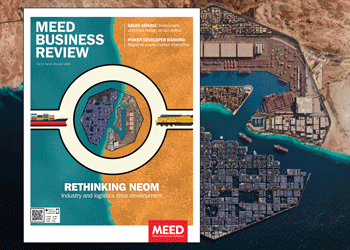 Neom’s industrial pivot gathers pace
1 October 2026
-
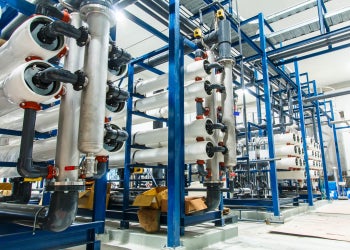 Contractor wins Dammam airport water infrastructure deal
1 October 2026
-
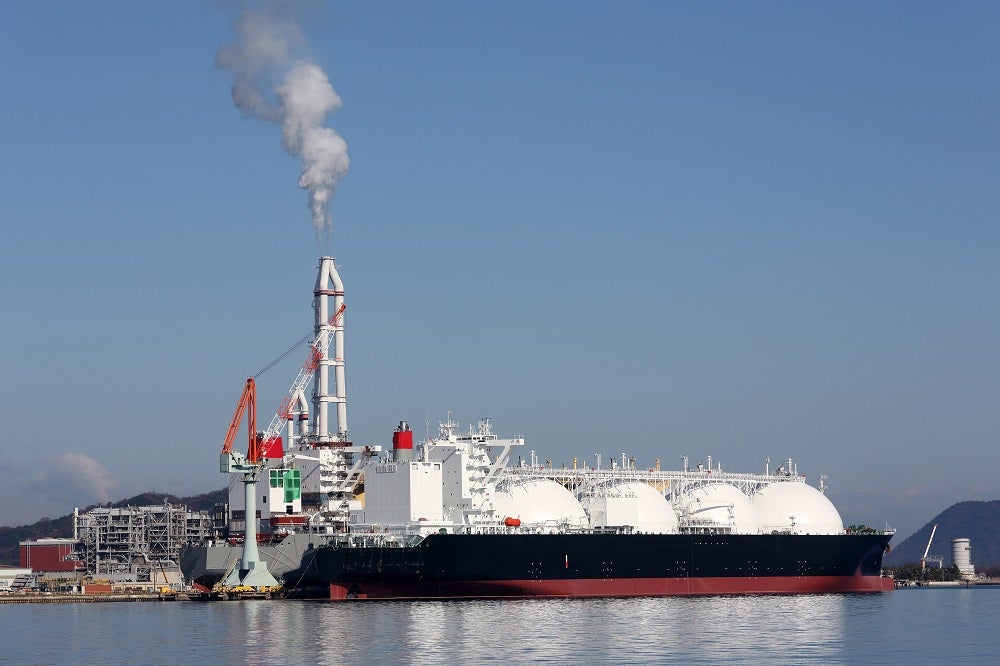 Kuwait tenders LNG project
1 October 2026
-
 Riyadh approaches contractors for 2km tower
1 October 2026
-
 Aldar and Arada to pursue Abu Dhabi projects
1 October 2026
All of this is only 1% of what MEED.com has to offer
Subscribe now and unlock all the 153,671 articles on MEED.com
- All the latest news, data, and market intelligence across MENA at your fingerprints
- First-hand updates and inside information on projects, clients and competitors that matter to you
- 20 years' archive of information, data, and news for you to access at your convenience
- Strategize to succeed and minimise risks with timely analysis of current and future market trends

Related Articles
-
Neom’s industrial pivot gathers pace
1 October 2026
 Commentary
Colin Foreman
EditorReprioritisation has been the buzzword in Saudi Arabia over the past two years and nowhere has that been more evident than at Neom.
 The slowdown of development at The Line and the postponement of the 2029 Asian Winter Games at Trojena have dominated international headlines. As these projects scale back, Oxagon’s industrial and logistics base has become the $500bn gigaproject’s flagship development. There are tangible results: in August, the $8.5bn Neom Green Hydrogen project was commissioned, marking Neom’s most significant completion to date.
 Construction activity elsewhere at Oxagon supports this trend. The AI data-centre campus being developed by Humain and DataVolt has broken ground on its first 100MW phase, backed by $5bn of investment and targeted for service in 2028. Neom has issued an expression of interest for a rail line linking the Port of Neom to Saudi Arabia Railways’ North-South network, tenders are out for an industrial wastewater plant and the upgrade of Highway 55, and the port itself is advancing towards a 2030 capacity target of 1.5 million TEUs.
The regional conflict that began in February has strengthened the business case by giving Oxagon’s Red Sea port added strategic weight as a second maritime gateway outside the Strait of Hormuz, at a time when Riyadh has committed to directing about 80% of the Public Investment Fund’s portfolio into domestic investment.
These developments reflect a kingdom recalibrating rather than retreating
Elsewhere, Saudi Arabia’s wider projects market is holding steady despite conflict-related disruption, with contract awards reaching $68bn so far this year. The regional power market is also diversifying, with Aljomaih, EDF and Kepco all more than tripling net capacity in recent years as Acwa retains its lead.
These developments reflect a kingdom recalibrating rather than retreating, with priority given to projects capable of delivering commercial returns.
 READ THE OCTOBER 2026 MEED BUSINESS REVIEW – click here to view PDF
Industry and logistics drive development at Neom; Saudi Arabia’s investment priorities realign amid conflict; MEED’s 2026 power developer ranking.
Distributed to senior decision-makers in the region and around the world, the October 2026 edition of MEED Business Review includes:
> AGENDA: Oxagon takes centre stage at Neom> MARKET FOCUS: Saudi projects hold steady> INDUSTRY REPORT: MEED’s 2026 GCC power developer ranking> LEADERSHIP: The future city does not need to hang above the groundTo see previous issues of MEED Business Review, please click herehttps://image.digitalinsightresearch.in/uploads/NewsArticle/20178338/main.gif -
Contractor wins Dammam airport water infrastructure deal
1 October 2026
Saudi Arabia-based Alkhorayef Water & Power Technologies has won an SR80m ($21.3m) contract to rehabilitate water and wastewater infrastructure at King Fahd International airport in Dammam in the kingdom’s Eastern Province.
The contract was awarded by Dammam Airports Company (DACO), and work is scheduled to be completed within 18 months, the firm said in a disclosure to the Saudi Exchange (Tadawul) on 29 September.
The scope covers the design, construction, supply, installation, replacement, rehabilitation and integration of water and wastewater infrastructure.
It includes pumps, storage tanks and reservoirs, reverse osmosis facilities, piping and tie-ins, as well as electrical and instrumentation works.
The award comes as DACO advances a wider programme of investment at King Fahd International airport.
DACO signed more than SR1.2bn ($320m) in agreements in June covering airport infrastructure, including a new power station, a medium-voltage distribution network and upgrades to the existing electrical grid.
In September, it also appointed WSP Middle East, the regional arm of Canadian engineering firm WSP, to develop the airport’s expansion under its masterplan.
The expansion is intended to increase annual passenger capacity to more than 19.3 million by 2030, with a longer-term target of 32 million passengers.
https://image.digitalinsightresearch.in/uploads/NewsArticle/20169118/main.jpg -
Kuwait tenders LNG project
1 October 2026

State-owned Kuwait Integrated Petroleum Industries Company (Kipic) has tendered a project to develop a reliquefaction unit at the Al-Zour liquefied natural gas (LNG) import terminal.
The project focuses on developing a boil-off gas (BOG) unit at the terminal, with bids due on 22 December.
A meeting for contractors to discuss the project is scheduled for 18 October.
The project scope includes engineering, procurement and construction works, along with pre-commissioning, commissioning and performance testing services.
The list of prequalified companies is:
- Fluor (US)
- GS Engineering & Construction (South Korea)
- Tecnicas Reunidas (Spain)
- Larsen & Toubro (India)
- Hyundai Engineering (South Korea)
- CTCI Corporation (Taiwan)
- Daewoo Engineering & Construction (South Korea)
- Hyundai Engineering & Construction (South Korea)
- Saipem (Italy)
- Samsung Engineering (South Korea)
- Sinopec Engineering (China)
- JGC Holdings (Japan)
- KBR (US)
- China National Petroleum Corporation (China)
- Technip (France)
A BOG unit at an LNG facility captures, compresses and processes natural gas vapours that evaporate from cryogenic storage tanks, enabling the gas to be recycled back into the system rather than flared.
In April, MEED revealed that contractors expected the project to be worth about $200m.
https://image.digitalinsightresearch.in/uploads/NewsArticle/20168625/main2005.jpg -
Riyadh approaches contractors for 2km tower
1 October 2026
Register for MEED’s 14-day trial access
Saudi Arabia’s Public Investment Fund (PIF) has reached out to contractors as part of a market-sounding exercise for the construction of the proposed 2-kilometre megatall tower project.
MEED understands that a PIF subsidiary, the Tower District Real Estate Development Company, is undertaking the process.
It is understood that several experienced international contractors, as well as some prominent local contractors, have been approached.
The latest development follows PIF receiving offers in June last year from firms seeking a contract to provide project management consultancy (PMC) services for a new central business district (CBD) on the outskirts of Riyadh, which includes the proposed 2km tower.
The PMC role covers both the tower and the surrounding district.
Firms understood to have been invited to bid include US-based Aecom, Jacobs, Parsons and Turner, as well as the UK’s Mace.
UK-based Foster & Partners is working as the architect for the tower after winning a design competition launched in late 2022.
Record breaker
The proposed tower would be more than double the height of the world’s tallest building, Dubai’s Burj Khalifa, which stands 828 metres tall. It is expected to be at least several hundred metres taller than the 1,000-metre-plus tower under construction in Jeddah.
Contractors that have priced megatall towers in the region say a 2km-tall structure could cost about $5bn to construct, depending on the final design.
The 2km tower and the surrounding CBD – known as Project Rise – sit within a larger masterplanned development to the north of Riyadh called the North Pole.
MEED’s October 2026 report on Saudi Arabia includes:
> COMMENT: Saudi projects hold steady
> GOVERNMENT: Riyadh looks to reset its regional defence outlook
> ECONOMY: Conflict bolsters case for Saudi economic diversification
> BANKING: Saudi lenders readjust to lower lending and deposit climate
> UPSTREAM: Aramco upstream spending gathers pace
> DOWNSTREAM: Sabic steps up Saudi petchems investment
> POWER: Saudi Arabia’s power award activity slows
> WATER: Saudi water sector hits sharp slowdown
> CONSTRUCTION: Saudi construction defies the headwinds
> TRANSPORT: Saudi infrastructure pushes forward amid conflict
> DATABANK: Saudi data indicates project spending shiftTo see previous issues of MEED Business Review, please click herehttps://image.digitalinsightresearch.in/uploads/NewsArticle/20156496/main.jpg -
 Singapore’s Temasek plans Middle East expansion
1 October 2026
Singapore’s Temasek plans to open offices in Riyadh and Abu Dhabi early next year as it targets investment and partnership opportunities in Saudi Arabia, the UAE, Qatar and the wider region.
The state-owned investor had a net portfolio value of S$518bn ($401bn) as of 31 March 2026.
It said the new offices will serve as regional hubs for Temasek and its portfolio companies, with some businesses expected to co-locate to work more closely with partners and pursue deals alongside the group. The openings are subject to regulatory approvals.
Temasek said it will also step up engagement with institutions in Qatar, although it has not announced plans to establish an office there.
The company said the expansion reflects its confidence in the region’s long-term fundamentals and the economic transformation being driven by national diversification programmes.
It added that a presence in Riyadh and Abu Dhabi will also support investment activity beyond the region by improving access to opportunities across the wider Middle East, Central Asia and Africa.
Several Temasek-owned or Temasek-backed companies are already active in the GCC, providing a platform for the group’s planned expansion.
These include Singapore-headquartered engineering and consultancy firm Surbana Jurong, which has been involved in masterplanning and advisory work on major regional developments, alongside other portfolio companies with interests spanning infrastructure, logistics, financial services and technology.
According to data from regional project tracker MEED Projects, Surbana Jurong is involved in several major projects in Saudi Arabia, including King Abdulaziz International airport (KAIA) in Jeddah, Jeddah Islamic Port, Red Sea Global’s Amaala masterplan, the Trojena dams scheme, Oxagon, King Salman International airport and Saudi Arabia Railway’s North-South Phosphate Railway 3.
The firm has also worked on projects in the wider region, including the West Link project, Urban Loop, Musaffah Innovation District masterplan, Etihad Rail’s high-speed rail programme and Abu Dhabi airport’s Midfield Terminal.
Surbana Jurong has also secured masterplanning contracts from Abu Dhabi’s Department of Municipalities & Transport and Abu Dhabi Ports.
https://image.digitalinsightresearch.in/uploads/NewsArticle/20157511/main.jpg