
Syria’s reconstruction agenda stalls
21 June 2024
 Commentary
John Bambridge
Analysis editor
In the past year, the economic prognosis for Syria has deteriorated as the initial political step in the reacceptance of Damascus into the Arab League has failed to translate into substantial gains, with reconstruction efforts stalling and the economy floundering amid a lack of investor interest.
The situation in Syria has been further complicated by the outbreak of the war in Gaza and the accompanying conflict in the Israel-Lebanon-Syria border region. Since the conflict began, Israel has intensified its bombing of targets in Syria in pursuit of the local branch of Hezbollah or other Iran-backed ‘axis of resistance’ groups in the country. This activity came to a head on 1 April, when Israel bombed the Iranian embassy in Damascus as it hosted a meeting of Iranian military personnel – a diplomatic violation that led to Tehran launching an unprecedented retaliatory strike on Israel.
The upshot for Syria from this rising maelstrom of regional violence has been to downgrade it again from a high-risk but opportune investment landscape back to an unacceptably risky conflict zone. For the Gulf states that have re-embraced Syria, a further sticking point is Damascus’ reluctance to crack down on the shadow economy that has sprung up around the export of the amphetamine-like drug Captagon across the region.
This illicit trade is now a multibillion-dollar industry that by some accounts makes up much of Syria’s diminished GDP. It has also come at the cost of normal trade, which has been caught up in the customs crackdown on Syrian goods.
The trickle of aid coming from regional partners is meanwhile simply inadequate to do much to revive the country’s withered agricultural and industrial sectors, and is unlikely to entice Damascus to disassemble its lucrative narco-state.
Western governments and institutions are loathe to get involved with the Assad government on any level, as this would involve facing up to the strategic failure of their support for regime change in the country. The US, which doggedly maintains a military presence on Syrian soil, is deepening its sanctions on Damascus.
More generally, Syria’s territorial fragmentation and insecurity sit as barriers to the government’s resumption of a legitimate, tax-based revenue model. The end result is a lack of funds, support and stability for any reconstruction agenda.
The situation leaves Syria needing a more dramatic reversal in its geopolitical fortunes than re-entry into the Arab League alone can provide.
 MEED's July 2024 special report on Syria includes:
> GOVERNMENT: Gaza conflict reignites violence across Syria
> ECONOMY: Regional diplomacy fails Syrian economy


Register for MEED's guest program now to access this article.
Exclusive from Meed
-
 Kuwait refinery project on track for year-end completion
23 September 2026
-
 UAE to develop integrated waste-to-resource pilot
23 September 2026
-
 Contractors prepare Oxagon Highway 55 bids
23 September 2026
-
 Lebanon sets October deadline for power generation projects
23 September 2026
-
 Jedco maps next phase of Jeddah airport expansion
22 September 2026
All of this is only 1% of what MEED.com has to offer
Subscribe now and unlock all the 153,671 articles on MEED.com
- All the latest news, data, and market intelligence across MENA at your fingerprints
- First-hand updates and inside information on projects, clients and competitors that matter to you
- 20 years' archive of information, data, and news for you to access at your convenience
- Strategize to succeed and minimise risks with timely analysis of current and future market trends

Related Articles
-
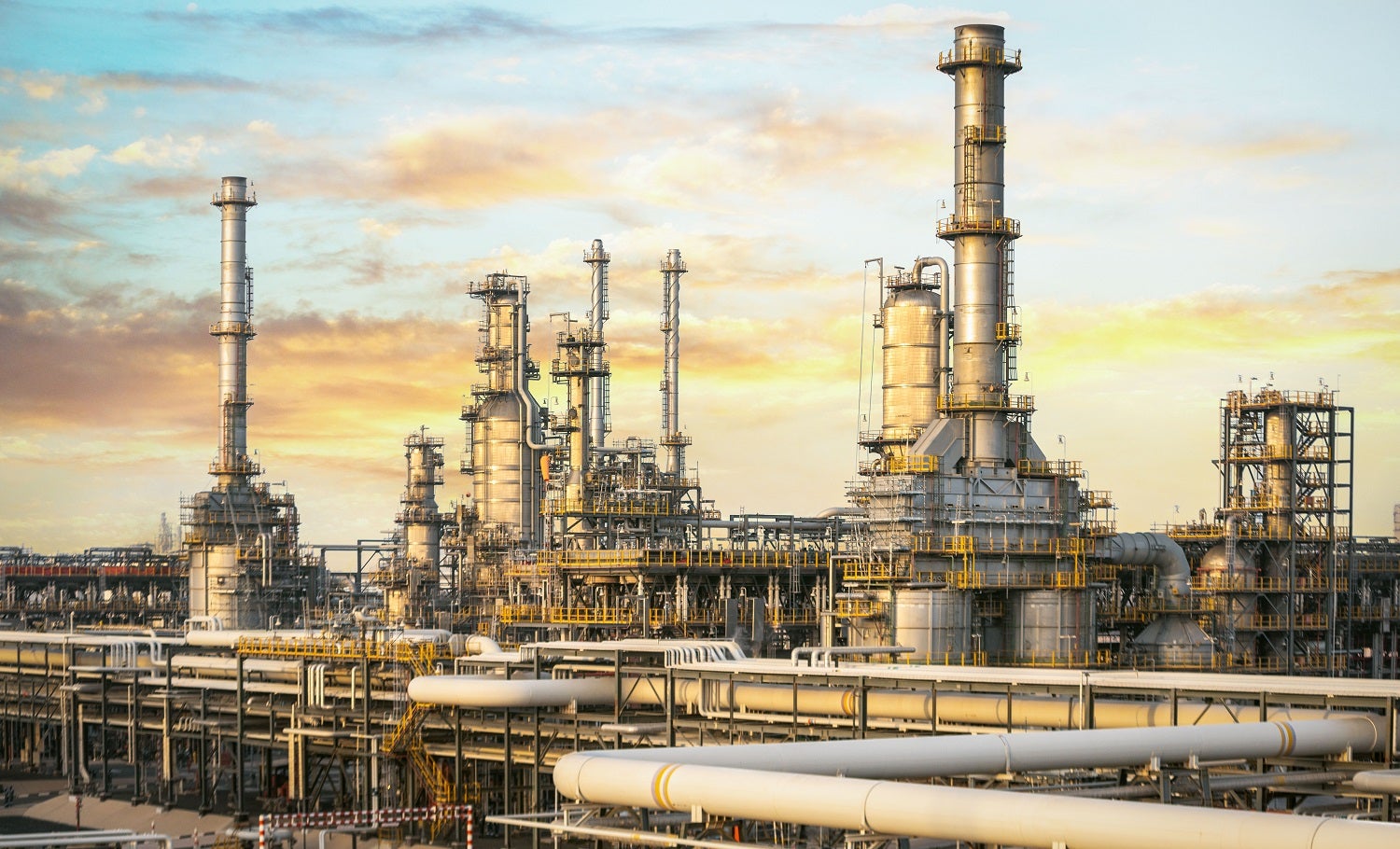
Kuwait refinery project on track for year-end completion
23 September 2026
A $65m project to replace a substation at the Mina Al-Ahmadi (MAA) refinery is on schedule to be mechanically complete before the end of the year, according to industry sources.
The project is being executed by India’s Larsen & Toubro (L&T), which was awarded the contract in October 2024.
One source said: “This project is approaching completion and is currently on schedule to be completed before the end of the year, although it could still see delays related to the ongoing regional conflict.”
The client is state-owned downstream operator Kuwait National Petroleum Company (KNPC).
Kuwait’s Ministry of Electricity, Water & Renewable Energy (MEW) is also involved in the project and will provide final approvals and sign-off.
The scope of the project includes:
- Construction of a substation
- Installation of transformers
- Installation of medium-voltage switchgear
- Installation of low-voltage auxiliary systems
- Installation of network protection systems
- Installation of disconnecting switches
- Installation of surge arrestors
- Installation of feeder breakers and cubicles
- Installation of low-voltage A/C and D/C equipment
- Installation of battery banks and battery chargers
- Installation of related relay and control panel boards
- Installation of fire alarm and fire protection equipment
- Installation of a SCADA system
- Installation of cables
- Civil works
- Associated facilities
The current project to replace a substation at the MAA refinery closely resembles another project tendered by KNPC more than a decade ago, which L&T also won.
On 18 May 2015, KNPC signed a contract with L&T to build a new 240MW substation at the MAA refinery, valued at KD21.866m.
The new substation, known as M20, was designed to replace an existing substation that was considered old and obsolete.
Mohammed Al-Mutairi, who was KNPC’s chief executive at the time, said the substation building would be explosion-proof and use state-of-the-art control systems.
He said the station’s capacity would increase from 180MW to 240MW, supplying most of the refinery’s electricity needs.
Given the similarities between the two projects, L&T has been able to reuse some designs, creating efficiencies, according to industry sources.
https://image.digitalinsightresearch.in/uploads/NewsArticle/19911319/main.jpg -
UAE to develop integrated waste-to-resource pilot
23 September 2026
Emirates Biotech and United Arab Emirates University (UAEU) have launched a pilot project in Al-Ain that could provide a model for larger waste-to-resource facilities.
The project involves developing the UAE’s first integrated organic-waste valorisation pilot plant, which will test whether food waste and compostable packaging can be processed together to recover resources and reduce waste sent to landfill.
Located near the UAEU campus, the 40kg-a-day facility will process organic waste to produce renewable biogas and nutrient-rich compost. The project is intended to generate technical and operating data that could support the development of larger-scale facilities.
Emirates Biotech and UAEU will design, build and operate the pilot plant as part of a two-year research project running from August 2026 to August 2028. Installation and commissioning are expected to be completed by August 2027.
The plant will combine anaerobic digestion and composting. Anaerobic digestion will convert the organic waste into renewable biogas, while the resulting digestate will be composted to produce nutrient-rich compost.
A laboratory-scale assessment will also examine the potential to convert the biogas into renewable hydrogen.
Food waste accounts for nearly 40% of daily municipal solid waste in the UAE, according to Emirates Biotech, and much of it is currently disposed of in landfills.
The pilot will therefore assess the technical and operational feasibility of recovering value from two waste streams through a single integrated process.
If successfully scaled, Emirates Biotech says an integrated organic-waste valorisation plant could reduce CO₂ emissions by 89% compared with landfilling.
The project is expected to provide a scalable and modular model for converting food waste and compostable packaging into renewable biogas and compost, with the findings intended to inform the development of larger waste-to-resource facilities.
https://image.digitalinsightresearch.in/uploads/NewsArticle/19908972/main.jpg -
Contractors prepare Oxagon Highway 55 bids
23 September 2026
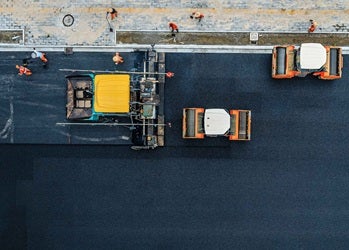
Contractors are preparing to submit bids on 28 September for a design-and-build contract for permanent upgrade works on Highway 55 in the kingdom’s Oxagon region.
The first phase of the project includes constructing 14 kilometres of road, with two lanes in each direction. It also includes one bridge and three interchanges.
The project duration is 22 months.
Highway 55 connects the Red Sea coast with the mainland in northwestern Saudi Arabia. It is currently the only road providing north-south connectivity between Duba and the Neom region.
MEED reported exclusively in August 2025 that contractors had submitted responses to an expression of interest notice that Neom had issued earlier that month.
The project is expected to support cargo movement from Duba Port to other parts of the kingdom and the wider region.
Last year, Neom tested a pilot initiative by handling a shipment that travelled from Cairo via the Port of Safaga, across the Red Sea to the Port of Neom, and then inland to Erbil, Iraq.
In a statement, Neom said: “The shipment travelled through an intermodal corridor spanning over 900 kilometres, marking a significant milestone in the kingdom’s transformation into a regional and global logistics hub.”
The Port of Neom is located on the Red Sea near the Arar border, a key entry point into Iraq.
https://image.digitalinsightresearch.in/uploads/NewsArticle/19907876/main.jpg -
Lebanon sets October deadline for power generation projects
23 September 2026
Lebanon’s Electricity Regulatory Authority (ERA) has extended the deadline for private sector companies to submit expressions of interest (EoIs) for several upcoming power generation projects.
The new deadline is 15 October. The original deadline was 30 September.
The regulator said the extension follows “requests received from interested applicants for additional time to finalise and submit the required documentation”.
The EoI covers up to five grid-connected solar photovoltaic projects with a combined installed capacity of 350 megawatts-peak. The projects are also expected to include battery energy storage systems with a combined capacity of 1,000 megawatt-hours.
The regulator is also seeking proposals for distributed dual-fired thermal power plants with net capacities ranging from 20MW to 100MW. The plants are expected to run on natural gas as the primary fuel and heavy fuel oil as a backup.
The ERA invited companies to submit EoIs at the beginning of August.
On 11 August, the ERA issued its first set of clarifications following queries regarding the EoI. The clarifications confirmed that “proposed dual-fired plants should be gas-ready”, with natural-gas infrastructure planned but no implementation timeline yet available.
The ERA also said key power purchase agreement (PPA) terms, including duration, tariff structure and indexation mechanisms, will be determined “during a future procurement process”.
Electricity reforms
The EoI comes as the government advances wider reforms to Lebanon’s electricity sector. On 4 September, the Higher Council for Privatisation and Partnership discussed steps to transform the state utility Electricite du Liban (EDL) into a company, including creating a new entity, transferring its assets, and taking measures to protect employees’ rights during the transition.
The government said the restructuring aims to improve the financial sustainability of the electricity sector, recover costs and improve electricity supply.
On 18 September, the council discussed a draft decree to establish the new EDL company, evaluate its assets and separate its activities. However, it deferred a decision for further study.
The ERA was established earlier this year, more than two decades after it was envisaged under Law No. 462/2002 but not implemented due to political delays. The Energy & Water Ministry and EDL previously oversaw the electricity sector.
Lebanon’s electricity sector continues to face insufficient generation capacity, fuel supply constraints, ageing generation assets and limited grid flexibility. These challenges have led to prolonged electricity shortages and increased reliance on private diesel generation and distributed solar systems, prompting the government to seek additional private investment in new generation capacity.
According to the EoI document, the projects are expected to be structured as independent power producer (IPP) schemes. The competent public authority will determine any future contractual arrangements, including PPAs, under the applicable legal framework.
The ERA said the EoI is open to private investors, IPP operators, engineering, procurement and construction contractors, equipment suppliers and consortiums. It aims to assess market interest, identify potential generation projects, and evaluate the technical and financial capabilities of prospective developers.
Respondents must provide information on their technical and financial capabilities, proposed project locations, grid connection plans and relevant project experience.
https://image.digitalinsightresearch.in/uploads/NewsArticle/19906210/main.jpg -
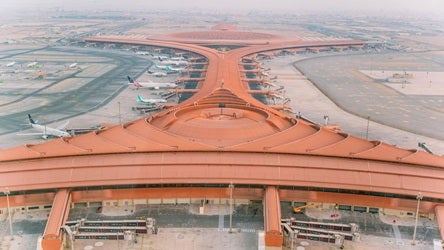
Jedco maps next phase of Jeddah airport expansion
22 September 2026
Register for MEED’s 14-day trial access
Jeddah Airports Company (Jedco) has outlined plans for the next phase of expansion at King Abdulaziz International airport (KAIA) in Jeddah.
The programme comprises six upcoming contractor packages spanning airside works, terminal upgrades and utilities as Jedco advances its long-term expansion plans.
The opportunities include airfield rehabilitation; a five-year construction framework covering multiple workstreams and facility types; a Terminal 3A (T3A) package; Terminal 1 (T1) optimisation; a fuel farm; and Concourse C works.
The packages cover terminal buildings and ancillary facilities, runways, taxiways and aprons, hangars, fuel systems, airside facilities, supporting infrastructure and utility networks.
Tendering and award activity will be staggered over the next two years. Airfield rehabilitation is targeted for Q3 2026. The construction framework is scheduled for Q4 2026 and will run for five years.
The T3A package is planned for Q1 2027 and will be delivered under an early contractor involvement contract. Local contractors are encouraged to bid as part of a joint venture with an experienced international partner.
T1 optimisation is planned for Q4 2027, the fuel farm for Q2 2027, and Concourse C – currently the latest of the six milestones – for Q2 2028.
The new packages add detail to Jedco’s wider expansion plans disclosed in 2023, when it was reported that the company would invest SR115bn ($31bn) to increase KAIA’s capacity to 114 million passengers a year, with an overall completion target of 2031.
Jedco has recently awarded several significant contracts linked to the airport’s upgrade programme.
In November 2024, a joint venture of local Algihaz Contracting and Turkey’s TAV was awarded a contract to rehabilitate the South Terminal to serve Umrah and Hajj pilgrims, with Singapore’s Surbana Jurong acting as consultant.
Earlier that year, Jedco also awarded France’s Alstom a contract to increase the capacity of the Innovia automated people mover at Terminal 1, including new cars and upgrades to signalling, communications and controls.
Surbana Jurong is expected to play a leading role in future KAIA expansion plans and is currently providing technical advisory and project management consultancy for more than 100 capital projects for Jedco, valued at over SR6bn ($1.6bn).
These upgrades are expected to boost KAIA’s annual capacity in line with Saudi Arabia’s Vision 2030 and National Aviation Strategy, enhancing the experience for domestic travellers and millions of Hajj and Umrah pilgrims.
https://image.digitalinsightresearch.in/uploads/NewsArticle/19877992/main.jpg