
Opening up property sales in Saudi Arabia
29 May 2024
 The June 2024 Agenda package also includes:
> Riyadh reins in spending
> PPP offers budget and efficiency routes
> Aramco explores PPP pathway

One way that many of Saudi Arabia’s project developers can fund their projects is through property sales.
This business model has been used to great effect in other regional markets, most notably Dubai, where major projects such as the Palm Jumeirah, Downtown Dubai and the Burj Khalifa have all been developed using inflows of cash from property sales – much of which has been to foreign investors.
The challenge for Saudi Arabia is that its renewed drive for investment comes at a testing time for the kingdom’s property market. The total number of real estate transaction volumes across all asset classes in the country decreased by 17% in 2023 to about 177,000, according to a report by property consultancy Knight Frank.
The total value of deals also fell by 9% to SR197.7bn in 2023, mainly due to a 16% fall in the number of residential transactions, which accounted for 58.7% of all real estate deals by value.
The firm says the contraction appears to be due to reduced affordability and evolving market dynamics, as the kingdom has achieved record house price growth. Borrowing has also become more expensive, especially outside Riyadh, where lower average monthly earnings make the transition to property ownership more challenging.
Growth could be boosted by a foreign ownership law
The capital is the only sub-market in the country that has defied the trend, as transaction volumes increased by 7% compared to 2022. Riyadh is receiving a rising number of expatriate workers and an influx of workers from other parts of the kingdom as project activity ramps up in the city.
Government targets
Real estate is already a vital element of the Saudi economy, contributing about 7% of GDP in 2021, and the government aims to increase this to 10% by 2030. The objective is to increase homeownership by Saudi nationals to 70% by 2030, from 63.74% in 2023.
Much of the growth has now been realised. When the homeownership targets were introduced in 2016, the percentage was just 47%.
The growth could be boosted by a foreign ownership law. In 2003, Dubai demonstrated the power of unleashing pent-up demand for property, and there has been speculation over the past year that Riyadh could introduce new legislation.
At the Saudi Cityscape property exhibition in Riyadh in September 2023, project developers, including gigaproject companies, discussed the imminent implementation of a new law. If those expectations are realised, then real estate could be an even more important driver for project activity in the kingdom.
By Colin Foreman and Yasir Iqbal
 MEED's April 2024 special report on Saudi Arabia includes:
> GVT & ECONOMY: Saudi Arabia seeks diversification amid regional tensions
> BANKING: Saudi lenders gear up for corporate growth
> UPSTREAM: Aramco spending drawdown to jolt oil projects
> DOWNSTREAM: Master Gas System spending stimulates Saudi downstream sector
> POWER: Riyadh to sustain power spending
> WATER: Growth inevitable for the Saudi water sector
> CONSTRUCTION: Saudi gigaprojects propel construction sector
> TRANSPORT: Saudi Arabia’s transport sector offers prospects

Register for MEED's guest program now to access this article.
Exclusive from Meed
-
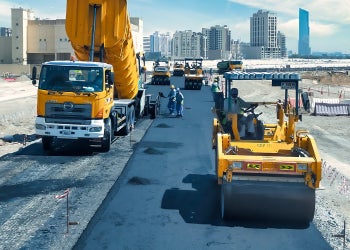 Contractors prepare bids for more Qiddiya infrastructure
8 October 2026
-
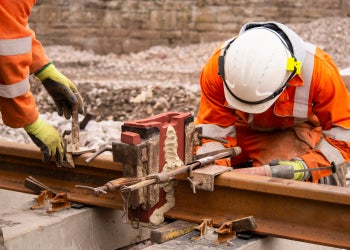 Chinese contractors begin Jordan rail construction
8 October 2026
-
-
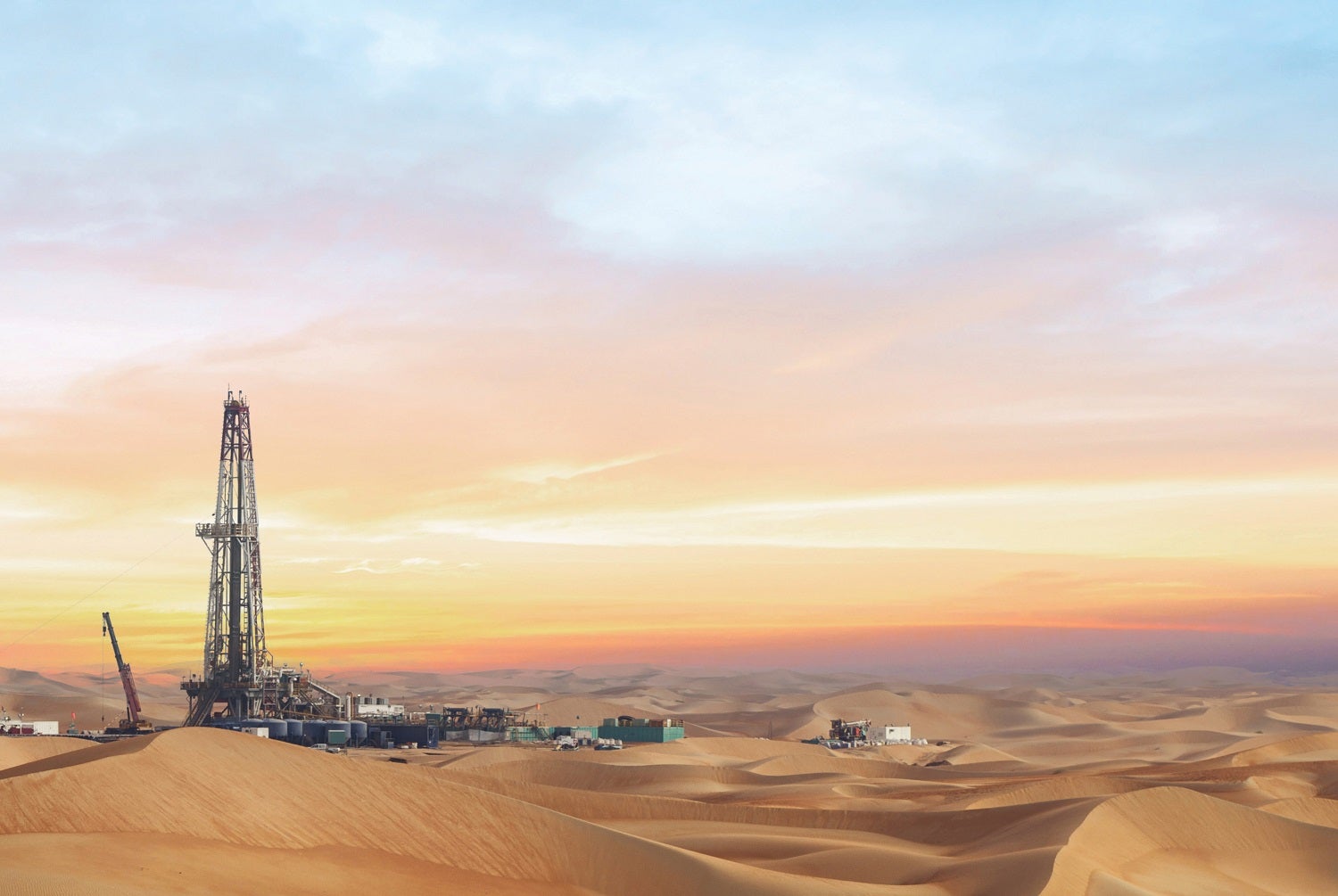 Drilling resumes at Iraq’s Akkas field
8 October 2026
-
 Neom extends bid deadline for Oxagon wastewater plant
8 October 2026
All of this is only 1% of what MEED.com has to offer
Subscribe now and unlock all the 153,671 articles on MEED.com
- All the latest news, data, and market intelligence across MENA at your fingerprints
- First-hand updates and inside information on projects, clients and competitors that matter to you
- 20 years' archive of information, data, and news for you to access at your convenience
- Strategize to succeed and minimise risks with timely analysis of current and future market trends

Related Articles
-
Contractors prepare bids for more Qiddiya infrastructure
8 October 2026
Saudi gigaproject developer Qiddiya Investment Company (QIC) has tendered a design-and-build contract covering infrastructure works at District 0 in Qiddiya City.
The scope includes the design, supply, construction, testing, commissioning and defects liability period for Road I in District 17, Road Q in District 19 and the District 18 Ring Road.
In total, the package covers approximately 17.4 kilometres of roads, including 1.4km of bridge structures.
Contractors have until 14 October to submit proposals.
Beirut-headquartered Dar Al-Handasah is the lead design consultant for districts 17 and 19, with a remit that also includes potable water and recycled water storage tanks and pumping stations.
US-based Jacobs is the lead design consultant for the District 18 Ring Road.
The tender is the third infrastructure package for Qiddiya’s District 0. The first two packages, tendered in March, remain under procurement, as MEED exclusively reported.
MEED understands that bid evaluation for these packages is in its final stages and that awards are expected shortly.
QIC is also advancing plans to develop additional assets at Qiddiya City.
Last month, MEED exclusively reported that QIC had awarded an estimated $500m-$600m contract to build an e-games arena, known as the Fortress Arena.
The scope of work includes the construction of an auditorium with a capacity of about 5,100 seats, as well as commercial areas, hospitality facilities and other associated infrastructure.
The Fortress Arena is one of several major projects within the wider Qiddiya development.
Other projects include the Dragon Ball theme park, Prince Mohammed Bin Salman Stadium, a horse-racing venue, a performing arts centre, the Speed Park, the National Tennis Centre, Six Flags Qiddiya City and Aquarabia water park.
The project is a key part of Riyadh’s strategy to boost leisure tourism in the kingdom. According to UK analytics firm GlobalData, leisure tourism in Saudi Arabia has grown significantly in recent years.
MEED’s October 2026 report on Saudi Arabia includes:
> COMMENT: Saudi projects hold steady
> GOVERNMENT: Riyadh looks to reset its regional defence outlook
> ECONOMY: Conflict bolsters case for Saudi economic diversification
> BANKING: Saudi lenders readjust to lower lending and deposit climate
> UPSTREAM: Aramco upstream spending gathers pace
> DOWNSTREAM: Sabic steps up Saudi petchems investment
> POWER: Saudi Arabia’s power award activity slows
> WATER: Saudi water sector hits sharp slowdown
> CONSTRUCTION: Saudi construction defies the headwinds
> TRANSPORT: Saudi infrastructure pushes forward amid conflict
> DATABANK: Saudi data indicates project spending shiftTo see previous issues of MEED Business Review, please click herehttps://image.digitalinsightresearch.in/uploads/NewsArticle/20384978/main.jpg -
Chinese contractors begin Jordan rail construction
8 October 2026
Beijing-headquartered firms China Civil Engineering Construction Corporation (CCECC) and China First Highway Engineering Company (CFHEC) have started construction work on the Aqaba-Al-Shidiyeh-Maan Railway project in Jordan.
The 403-kilometre rail network is divided into six packages. CCECC is executing packages one to four, while CFHEC is undertaking packages five and six.
The scope of work covers constructing railway tracks, about 55 bridges, six tunnels and related structures.
The project aims to link Aqaba with key mining and production sites and the Maan logistics zone, establishing an integrated system for transporting bulk cargo and containers between ports, production centres and inland logistics facilities.
The network is expected to carry around 16 million tonnes of phosphate and potash each year from production sites to Aqaba’s ports.
In April 2025, a French-Swiss joint venture of Egis and Arx was awarded the project’s design consultancy contract.
The estimated $2.5bn project is being developed by the Jordan-UAE Railway Company, which is jointly owned by Abu Dhabi’s L’imad Holding and Jordanian entities including the Jordan Phosphate Mines Company, the Government Investments Management Company, the Social Security Investment Fund and the Arab Potash Company.
Jordanian and UAE officials attended a groundbreaking ceremony held earlier this week to mark the formal start of construction work.
 READ THE OCTOBER 2026 MEED BUSINESS REVIEW – click here to view PDF
Industry and logistics drive development at Neom; Saudi Arabia’s investment priorities realign amid conflict; MEED’s 2026 power developer ranking.
Distributed to senior decision-makers in the region and around the world, the October 2026 edition of MEED Business Review includes:
> AGENDA: Oxagon takes centre stage at Neom> MARKET FOCUS: Saudi projects hold steady> INDUSTRY REPORT: MEED’s 2026 GCC power developer ranking> LEADERSHIP: The future city does not need to hang above the groundTo see previous issues of MEED Business Review, please click herehttps://image.digitalinsightresearch.in/uploads/NewsArticle/20371915/main.jpg -
Iraq discusses starting operations at $3.78bn refinery project
8 October 2026
Iraq’s Minister of Oil, Basem Muhammad Khudair Al-Abadi, has met with Japanese officials to discuss plans to commission the fluid catalytic cracking (FCC) unit at the Basra refinery upgrade project, according to a ministry statement.
The meeting was attended by the Japanese Embassy’s executive officer as well as representatives from the Japan International Cooperation Agency (Jica) and Japan-based JGC, which is the main contractor on the project.
According to the ministry, discussions focused on direct implementation steps and coordination between Iraqi authorities and the Japanese partners to bring the unit online using Japanese refining technologies.
Iraq’s South Refineries Company (SRC) sent JGC notice of the main contract award for the Basra refinery upgrade project’s FCC package in August 2020.
JGC was awarded the contract in consortium with South Korea’s Hyundai E&C.
The official contract signing ceremony was held in Baghdad on 1 October 2020.
The contract awarded to JGC, which uses the engineering, procurement, construction and commissioning model, was worth $3.78bn.
Project delays
The project has faced issues related to the ongoing regional conflict, which started when the US and Israel attacked Iran on 28 February.
JGC evacuated its personnel from the site in the southern oil hub of Basra following the start of the regional war, stopping work on the project, which was in its final stages of construction.
In August, JGC signed an agreement to restart work.
The project will produce around 5 million litres a day of gasoline and 7 million litres a day of diesel.
The FCC package is part of a broader project to upgrade the Basra refinery.
Oil Ministry officials said in late 2025 that the Basra refinery upgrade project aims to slash Iraq’s fuel import bill and convert heavy refining residues into high-value petroleum products.
The project site is located about 12 kilometres east of Iraq’s southern city of Basra.
The wider upgrade project is installing new facilities on land adjacent to the existing Basra refinery, including a vacuum distillation unit and a diesel desulphurisation unit.
In April 2021, France’s Axens won a contract to provide four process technologies to SRC for the Basra refinery upgrade project.
The technologies that SRC selected are:
- Diesel hydrotreatment unit (Prime-D)
- Vacuum gasoil (VGO) hydrotreating unit
- VGO fluid catalytic cracker unit
- Oligomerisation unit (polynaphtha)
In addition, Axens is providing catalysts and adsorbents and proprietary equipment, training and technical services.
READ THE OCTOBER 2026 MEED BUSINESS REVIEW – click here to view PDFIndustry and logistics drive development at Neom; Saudi Arabia’s investment priorities realign amid conflict; MEED’s 2026 power developer ranking.
Distributed to senior decision-makers in the region and around the world, the October 2026 edition of MEED Business Review includes:
> AGENDA: Oxagon takes centre stage at Neom> MARKET FOCUS: Saudi projects hold steady> INDUSTRY REPORT: MEED’s 2026 GCC power developer ranking> LEADERSHIP: The future city does not need to hang above the groundTo see previous issues of MEED Business Review, please click herehttps://image.digitalinsightresearch.in/uploads/NewsArticle/20366574/main.png -
Drilling resumes at Iraq’s Akkas field
8 October 2026
Drilling has resumed as part of the project to further develop Iraq’s Akkas gas field, according to industry sources.
In March, MEED reported that development of the field had been disrupted by security issues related to the US and Israel’s war with Iran.
Activity at the project site had been significantly reduced due to security concerns, which led to the evacuation of most non-Iraqi workers.
Now, the project is progressing and drilling at the field is ongoing, sources said.
One source said: “Many of the major issues that stopped drilling at the site have been dealt with in various ways, and the development of the field is proceeding.”
Iraq held a ceremony in January to mark the start of drilling operations under the current phase of development. In July of the previous year, the Iraqi Oil Ministry announced a contract with US-based oilfield services provider SLB to develop the field. Under the agreement, SLB is drilling wells to raise initial output to 100 million cubic feet a day (cf/d), with a long-term production target of 400 million cf/d.
The contract with SLB replaced a previous deal with Ukraine-based Ukrzemresurs, which has been terminated.
It also covers the construction of surface infrastructure and pipelines to connect Akkas to central processing units.
The gas produced at Akkas will fuel the Anbar combined-cycle power plant, which the Electricity Ministry is building.
Akkas gas field development
Located in western Anbar province, Akkas holds an estimated 5.6 trillion cubic feet of proven natural gas reserves. The field was discovered in 1992 and entered initial production in 1993, but efforts to develop it commercially have faced repeated delays.
Development rights were originally awarded to a consortium of South Korea’s Kogas and Kazakhstan’s KazMunaiGas (KMG) during Iraq’s third licensing round in 2010. After KMG withdrew, Kogas took over as sole operator under revised contractual terms before work was subsequently halted.
In April 2024, the Oil Ministry signed an agreement with Ukraine’s Ukrzemresurs targeting 100 million cf/d within two years and 400 million cf/d within four years. However, the deal faced strong domestic political resistance.
Iraq’s parliamentary Oil and Gas Committee opposed the award, with committee member Ali Al-Mashkour telling Shafaq News Agency: “This contract involves a great waste of Iraq’s wealth, and there will be a waste of Iraq’s oil, and this confirms that Iraq is once again failing to choose reputable companies to work with in the most important economic field in the country.”
He added: “We will work to uncover and expose the suspicions in this contract during the next stage, especially since this contract was made by some representatives for specific interests, which we will reveal soon with evidence.”
The deal was subsequently terminated, paving the way for the current contract with SLB.
The development of Akkas is central to Baghdad’s broader ambition to transition from a net gas importer into an exporter. Iraq remains heavily dependent on gas imports from Iran to meet domestic electricity demand. Both the US and Saudi Arabia have backed Iraq’s efforts to develop non-associated gas fields to reduce its economic and energy dependence on Tehran.
READ THE OCTOBER 2026 MEED BUSINESS REVIEW – click here to view PDFIndustry and logistics drive development at Neom; Saudi Arabia’s investment priorities realign amid conflict; MEED’s 2026 power developer ranking.
Distributed to senior decision-makers in the region and around the world, the October 2026 edition of MEED Business Review includes:
> AGENDA: Oxagon takes centre stage at Neom> MARKET FOCUS: Saudi projects hold steady> INDUSTRY REPORT: MEED’s 2026 GCC power developer ranking> LEADERSHIP: The future city does not need to hang above the groundTo see previous issues of MEED Business Review, please click herehttps://image.digitalinsightresearch.in/uploads/NewsArticle/20366494/main5816.jpg -
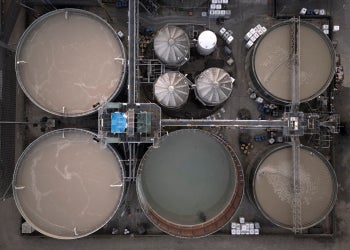
Neom extends bid deadline for Oxagon wastewater plant
8 October 2026
Neom has extended the bid submission deadline for a contract to build a wastewater treatment plant for Oxagon, its industrial cluster.
According to a source, the new deadline is 25 October. The original deadline was 2 October.
Enowa, Neom’s energy and water utility, is tendering the contract.
The industrial wastewater treatment package will have an initial capacity of 35,000 cubic metres a day (cm/d), supplied in modular trains of 5,000 cm/d each. A separate sanitary wastewater treatment package will have a capacity of 1,000 cm/d.
The contract is structured as a design-build-operate project and covers the supply, installation and commissioning of industrial and sanitary wastewater treatment packages, as well as three years of operation and maintenance.
According to sources, local contractor Alfanar, Beijing-based PowerChina and France-based Veolia are among the companies preparing bids.
The project follows an earlier tender for the Oxagon Village Water Recycling Plant, which was cancelled despite contractors submitting bids in 2024.
MEED reported at the time that PowerChina, Alfanar and Cairo-headquartered Orascom had submitted bids for that project.
The earlier scheme included truck-receiving facilities, pretreatment, biological treatment using food chain reactor technology, tertiary treatment, sludge handling and recycled-water storage.
The latest procurement appears to take a reworked approach to wastewater treatment at Oxagon Industrial Quarter. It replaces the previous engineering, procurement and construction scheme with an interim modular and demountable facility.
The plant is designed to provide “interim wastewater treatment” capacity for Oxagon Industrial Quarter as industrial development progresses.
As MEED understands, this includes treatment systems that can be installed and subsequently removed or relocated as requirements at Oxagon evolve. The plant can be expanded to a maximum capacity of 45,000 cm/d.
The tender documents also state that Neom may consider export credit agency (ECA) financing for the project. The strength of bidders’ ECA financing proposals will form part of the commercial evaluation.
READ THE OCTOBER 2026 MEED BUSINESS REVIEW – click here to view PDFIndustry and logistics drive development at Neom; Saudi Arabia’s investment priorities realign amid conflict; MEED’s 2026 power developer ranking.
Distributed to senior decision-makers in the region and around the world, the October 2026 edition of MEED Business Review includes:
> AGENDA: Oxagon takes centre stage at Neom> MARKET FOCUS: Saudi projects hold steady> INDUSTRY REPORT: MEED’s 2026 GCC power developer ranking> LEADERSHIP: The future city does not need to hang above the groundTo see previous issues of MEED Business Review, please click herehttps://image.digitalinsightresearch.in/uploads/NewsArticle/20347018/main.jpg