
PPP offers budget and efficiency routes
7 May 2024

The procurement of the multi-utility packages for the Red Sea and Amaala developments, as well as for the staff accommodation packages at Neom, used a public-private partnership (PPP) model, opening up an alternative route for Saudi Arabia to finance and ensure the efficiency of its gigaprojects.
In the case of the Red Sea and Amaala schemes, bundling the utility elements of these greenfield projects – including renewable energy generation, cooling, water desalination and treatment and waste recycling – makes sense for both the procuring entity and the utility developers and investors.
Instead of dealing with several developers or suppliers, the client – which does not necessarily specialise in providing utility services – only has to deal with the selected developer, which then manages the contractors and operations and maintenance companies.
Complex infrastructure takes a long time to procure. This is a fact, particularly when quality is a focal point"
Cost and operational efficiencies are also incentives, given that each component of the project is relatively small and may require a bigger budget if they were to be procured as separate contracts.
PPPs serve both as a solution and challenge to perceived budget and liquidity issues that are facing the official gigaprojects as they enter the execution phase, not to mention their tight delivery timelines.
Neom, for instance, is pursuing both PPP and conventional procurement models for the renewable energy and water desalination facilities it requires for the SR1.9tn ($500bn) development.
“Complex infrastructure takes a long time to procure. This is a fact, particularly when quality is a focal point," note Jason Gouveia and Joanna McGuire, senior associates at UK-headquartered legal consultancy Ashurst.
"There will, therefore, always exist a natural tension between urgency and procurement duration in the context of PPP deals, and it is important to keep a tight handle on the efficiency of the procurement process.”
This requires procurers and their advisers to carry out feasibility assessments before going to market, and to address any issues that bidders and their lenders are likely to raise as part of their due diligence on a PPP project, they add.
The kingdom's gigaprojects are contending with 200 other infrastructure schemes that are being planned by various ministries through the National Centre for Privatisation & PPP (NCP), the state PPP procuring authority.
Among the schemes in the NCP’s pipeline are airports, seaports, roads and healthcare facilities, which all cater to Saudi Arabia’s growing infrastructure needs as the population and economy expand.
This pipeline will only grow, as it is anticipated that the procurement models for some aspects of the gigaprojects will be changed in response to budgetary cuts, and more lenient execution timelines may also be adopted, potentially extending the deadlines from 2030 to 2040.
Liquidity squeeze
Some experts cite the overall liquidity of local banks and the willingness of international lenders to participate in future projects in response to the growing PPP pipeline.
“The liquidity levels of local banks are not readily ascertainable. However, given the rate of progress on projects within the kingdom, which assumes committed financing is in place, it seems that local banks, together with the support of their international counterparts and institutional investors, are able to meet the liquidity demands of projects,” say Gouveia and McGuire.
The pair adds that an efficient, robust and safe monetary policy is key to attracting international banks to the Saudi PPP market.
“On the projects we are advising on, international lenders and development investment funds are a common feature, as the international lending market seeks to diversify their books of debt.
“Depending on the complexity and capital intensity of a PPP project, there may be no other option but for the lending market to be a syndication of local and international lenders, to ensure that capital requirements are met.”
Lenders are also most likely to target the more lucrative projects – such as the gigaprojects and those schemes initiated by the Saudi sovereign wealth vehicle, the Public Investment Fund (PIF) – over others in the PPP ecosystem.
“Given that the capacity of the market is naturally limited in terms of resourcing, there is a potential danger that the NCP's PPP programme may find itself suffering in comparison to those other market segments,” the two lawyers warn.
A senior PPP transaction expert does not entirely agree, noting that PPPs account for only a small percentage of the pipeline of gigaprojects.
The impact of the budget shift and the scope for the gigaprojects to move parts of their projects to a PPP model remains limited.
He agrees, however, that developers do tend to prefer to be associated with the gigaprojects over the NCP projects.
Within the gigaprojects sphere, concerns about who ultimately bears the payment risk in a PPP project become relevant. Ashurst’s Gouveia and McGuire say it is always preferable for the entity with the greater financial wherewithal to bear the burden of payment.
"Often, there may be certain governmental-level letters of comfort or support provided by the finance ministry that are added as a supplementary means of payment protections and credit support," they explain.

 MEED's April 2024 special report on Saudi Arabia includes:
> GVT & ECONOMY: Saudi Arabia seeks diversification amid regional tensions
> BANKING: Saudi lenders gear up for corporate growth
> UPSTREAM: Aramco spending drawdown to jolt oil projects
> DOWNSTREAM: Master Gas System spending stimulates Saudi downstream sector
> POWER: Riyadh to sustain power spending
> WATER: Growth inevitable for the Saudi water sector
> CONSTRUCTION: Saudi gigaprojects propel construction sector
> TRANSPORT: Saudi Arabia’s transport sector offers prospects

Register for MEED's guest program now to access this article.
Exclusive from Meed
-
 Kuwait awards $381m oil project
23 September 2026
-
 Kuwait refinery project on track for year-end completion
23 September 2026
-
 Contractor wins $208m Almoosa hospital MEP contract
23 September 2026
-
 UAE to develop integrated waste-to-resource pilot
23 September 2026
-
 Contractors prepare Oxagon Highway 55 bids
23 September 2026
All of this is only 1% of what MEED.com has to offer
Subscribe now and unlock all the 153,671 articles on MEED.com
- All the latest news, data, and market intelligence across MENA at your fingerprints
- First-hand updates and inside information on projects, clients and competitors that matter to you
- 20 years' archive of information, data, and news for you to access at your convenience
- Strategize to succeed and minimise risks with timely analysis of current and future market trends
Related Articles
-
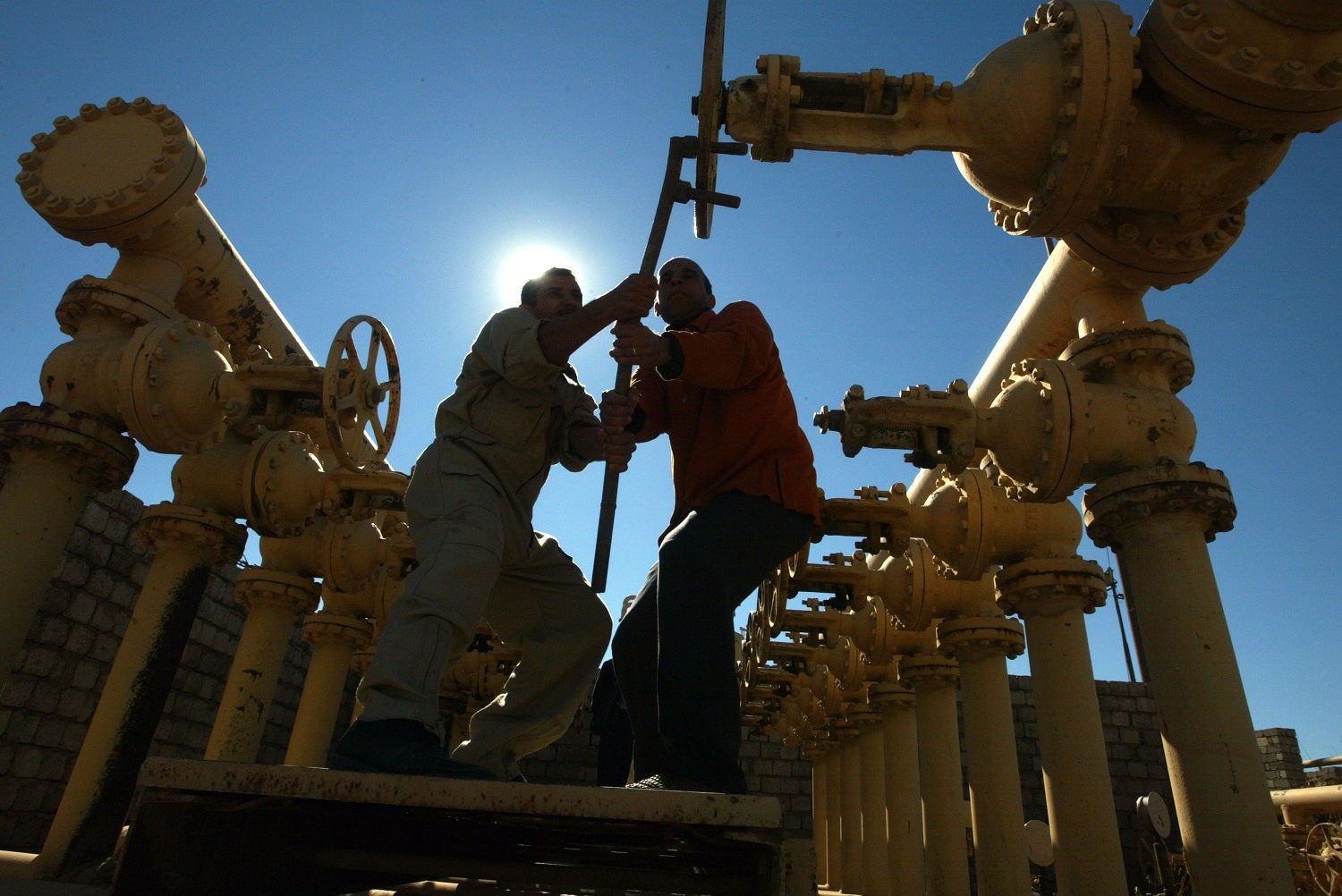
Kuwait awards $381m oil project
23 September 2026
Register for MEED’s 14-day trial access
State-owned upstream operator Kuwait Oil Company (KOC) has awarded an oil project contract worth KD117m ($381m) to India’s Megha Engineering & Infrastructure (Meil).
The Supreme Purchasing Committee for Kuwait Petroleum Corporation (KPC) approved the contract last month, paving the way for the official award.
The project focuses on a water separation unit at the Al-Rawdatain facility in Kuwait.
The water separation facility will be developed at Gathering Centre 25 (GC-25), along with a pumping facility at GC-30.
The project will deliver a wide-ranging upgrade of processing and utility infrastructure, including new low-pressure separation and gas-handling equipment such as a three-phase wet separator package, a gas knock-out drum and associated low-pressure gas pipelines, as well as a high-integrity pressure protection system and a high-pressure flare.
Meil will develop the new three-phase low-pressure wet separation facility at GC-25.
The main process equipment will include two wet separator packages, each with a capacity of 150,000 barrels of liquid a day, and a low-pressure gas knock-out drum with a capacity of 53 million standard cubic feet a day, together with associated gas-handling facilities.
The facility will also incorporate an effluent water treatment and transfer system, including an effluent water balance tank equipped with microbubble flotation and induced gas flotation systems, as well as transfer pumps.
Additional GC-25 facilities will include fuel gas treatment, chemical injection, oil recovery and flare connections, along with firewater and deluge systems.
The scope also covers control and safety systems, substations, and associated civil, structural, mechanical, electrical and instrumentation works.
At GC-30, the project will focus on treated-water filtration and high-pressure injection infrastructure.
The scope includes nutshell filters and associated feed pumps with a combined capacity of approximately 500,000 barrels of water a day.
Booster and injection pumps will transfer treated effluent water to designated injection wells.
Additional facilities at GC-30 will include fuel gas treatment, sludge collection and disposal systems, oil recovery systems, control and safety systems, substations, laboratory and workshop facilities, and associated civil, structural, piping, mechanical, electrical and instrumentation works.
The project also includes transfer pipelines connecting GC-25, GC-15 and GC-30.
Meil will carry out modifications to existing tanks at GC-30, as well as process and utility tie-ins, electrical and instrumentation modifications and other infrastructure required to integrate the new facilities with KOC’s existing assets.
Meil’s responsibilities cover the project lifecycle from design and engineering through procurement, construction, testing, pre-commissioning, commissioning, start-up and performance testing.
The contract also includes operation, maintenance, repair and insurance responsibilities for the designated facilities during the applicable operations and maintenance period.
Seven companies submitted bids for the project last November.
The full list of bids was:
- Meil (India) – KD117m ($381m)
- Mechanical Engineering & Contracting Company (Kuwait) – KD130m
- Spetco (Kuwait) – KD158m
- Al-Kharafi (Kuwait) – KD164m
- China Oil HBP Science & Technology (China) – KD169m
- Alghanim International (Kuwait) – KD169m
- Jereh Oil & Gas Engineering (China) – KD191m
In October last year, KOC awarded Meil a separate contract for a project to develop a gas sweetening and recovery facility in west Kuwait.
Meil submitted the lowest bid for that tender, at KD69.2m ($225.5m), in February 2025.
https://image.digitalinsightresearch.in/uploads/NewsArticle/19911322/main.jpg -
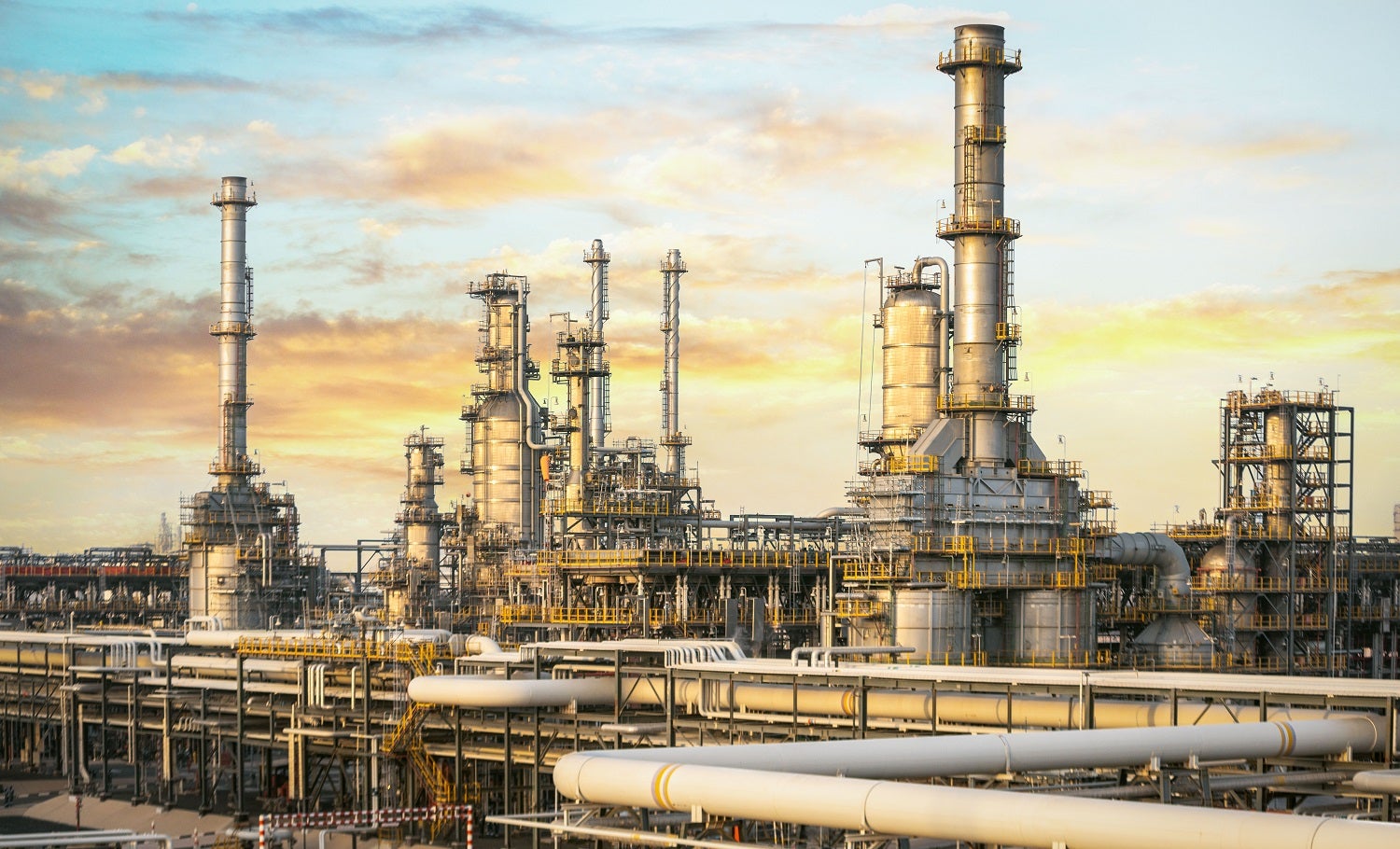
Kuwait refinery project on track for year-end completion
23 September 2026
A $65m project to replace a substation at the Mina Al-Ahmadi (MAA) refinery is on schedule to be mechanically complete before the end of the year, according to industry sources.
The project is being executed by India’s Larsen & Toubro (L&T), which was awarded the contract in October 2024.
One source said: “This project is approaching completion and is currently on schedule to be completed before the end of the year, although it could still see delays related to the ongoing regional conflict.”
The client is state-owned downstream operator Kuwait National Petroleum Company (KNPC).
Kuwait’s Ministry of Electricity, Water & Renewable Energy (MEW) is also involved in the project and will provide final approvals and sign-off.
The scope of the project includes:
- Construction of a substation
- Installation of transformers
- Installation of medium-voltage switchgear
- Installation of low-voltage auxiliary systems
- Installation of network protection systems
- Installation of disconnecting switches
- Installation of surge arrestors
- Installation of feeder breakers and cubicles
- Installation of low-voltage A/C and D/C equipment
- Installation of battery banks and battery chargers
- Installation of related relay and control panel boards
- Installation of fire alarm and fire protection equipment
- Installation of a SCADA system
- Installation of cables
- Civil works
- Associated facilities
The current project to replace a substation at the MAA refinery closely resembles another project tendered by KNPC more than a decade ago, which L&T also won.
On 18 May 2015, KNPC signed a contract with L&T to build a new 240MW substation at the MAA refinery, valued at KD21.866m.
The new substation, known as M20, was designed to replace an existing substation that was considered old and obsolete.
Mohammed Al-Mutairi, who was KNPC’s chief executive at the time, said the substation building would be explosion-proof and use state-of-the-art control systems.
He said the station’s capacity would increase from 180MW to 240MW, supplying most of the refinery’s electricity needs.
Given the similarities between the two projects, L&T has been able to reuse some designs, creating efficiencies, according to industry sources.
https://image.digitalinsightresearch.in/uploads/NewsArticle/19911319/main.jpg -
Contractor wins $208m Almoosa hospital MEP contract
23 September 2026
Register for MEED’s 14-day trial access
Riyadh-based construction firm BEC Arabia has won a SR781m ($208m) contract for the mechanical, electrical and plumbing (MEP) works at Almoosa Hospital in Al-Khobar.
Saudi Arabia’s Almoosa Health Company awarded the contract.
The hospital complex consists of two towers: a 24-storey in-patient tower with 380 beds, and an 11-storey tower with 224 clinics and 113 additional treatment spaces.
It will be built on a 45,000-square-metre site.
A podium spanning the ninth and 10th floors will connect the two towers.
The hospital will also include parking for 1,700 cars.
BEC Arabia won the SR656m ($175m) main construction contract for the hospital in November last year.
In August 2025, MEED reported that Almoosa Health Company had announced it had secured a sharia-compliant credit facility worth SR650m ($173m) from Banque Saudi Fransi.
In a statement published on the Saudi stock exchange (Tadawul), the company said the seven-year facility would be used to support its expansion and growth strategy.
Lebanon’s Dar, US-based Perkins&Will and French design firm Pierre-Yves Rochon designed the project.
https://image.digitalinsightresearch.in/uploads/NewsArticle/19910889/main.jpg -
UAE to develop integrated waste-to-resource pilot
23 September 2026
Emirates Biotech and United Arab Emirates University (UAEU) have launched a pilot project in Al-Ain that could provide a model for larger waste-to-resource facilities.
The project involves developing the UAE’s first integrated organic-waste valorisation pilot plant, which will test whether food waste and compostable packaging can be processed together to recover resources and reduce waste sent to landfill.
Located near the UAEU campus, the 40kg-a-day facility will process organic waste to produce renewable biogas and nutrient-rich compost. The project is intended to generate technical and operating data that could support the development of larger-scale facilities.
Emirates Biotech and UAEU will design, build and operate the pilot plant as part of a two-year research project running from August 2026 to August 2028. Installation and commissioning are expected to be completed by August 2027.
The plant will combine anaerobic digestion and composting. Anaerobic digestion will convert the organic waste into renewable biogas, while the resulting digestate will be composted to produce nutrient-rich compost.
A laboratory-scale assessment will also examine the potential to convert the biogas into renewable hydrogen.
Food waste accounts for nearly 40% of daily municipal solid waste in the UAE, according to Emirates Biotech, and much of it is currently disposed of in landfills.
The pilot will therefore assess the technical and operational feasibility of recovering value from two waste streams through a single integrated process.
If successfully scaled, Emirates Biotech says an integrated organic-waste valorisation plant could reduce CO₂ emissions by 89% compared with landfilling.
The project is expected to provide a scalable and modular model for converting food waste and compostable packaging into renewable biogas and compost, with the findings intended to inform the development of larger waste-to-resource facilities.
https://image.digitalinsightresearch.in/uploads/NewsArticle/19908972/main.jpg -
Contractors prepare Oxagon Highway 55 bids
23 September 2026
Contractors are preparing to submit bids on 28 September for a design-and-build contract for permanent upgrade works on Highway 55 in the kingdom’s Oxagon region.
The first phase of the project includes constructing 14 kilometres of road, with two lanes in each direction. It also includes one bridge and three interchanges.
The project duration is 22 months.
Highway 55 connects the Red Sea coast with the mainland in northwestern Saudi Arabia. It is currently the only road providing north-south connectivity between Duba and the Neom region.
MEED reported exclusively in August 2025 that contractors had submitted responses to an expression of interest notice that Neom had issued earlier that month.
The project is expected to support cargo movement from Duba Port to other parts of the kingdom and the wider region.
Last year, Neom tested a pilot initiative by handling a shipment that travelled from Cairo via the Port of Safaga, across the Red Sea to the Port of Neom, and then inland to Erbil, Iraq.
In a statement, Neom said: “The shipment travelled through an intermodal corridor spanning over 900 kilometres, marking a significant milestone in the kingdom’s transformation into a regional and global logistics hub.”
The Port of Neom is located on the Red Sea near the Arar border, a key entry point into Iraq.
https://image.digitalinsightresearch.in/uploads/NewsArticle/19907876/main.jpg