
$70bn infrastructure schemes underpin UAE economic expansion
8 October 2025

The UAE has embarked on a phase of concentrated infrastructure expansion, driven by the urgent need to support economic growth. Fuelled by national ambitions to broaden connectivity and a boom in real estate and tourism, the country will offer significant opportunities for infrastructure-led construction firms in the years ahead.
According to data from regional projects tracker MEED Projects, the UAE has invested heavily in public infrastructure over the past two years. A standout trend in last year’s projects market was investment in the transport sector, with contract awards nearly doubling to $12.3bn from $6.6bn in 2023.
Dubai and Abu Dhabi boast robust transport project pipelines exceeding $70bn in total. Of that, roughly $24bn-worth are in bidding stages – offering substantial short- to medium-term opportunities for contractors.
The most significant transport projects include the expansion of Al Maktoum International airport, the high-speed rail link connecting Dubai and Abu Dhabi, and Dubai Metro’s new Gold Line.
Abu Dhabi
Arguably the most strategically important initiative is the UAE high‑speed rail project linking Dubai and Abu Dhabi. Recent developments in which contractors have formed joint ventures to bid on design-and-build work packages mark a major shift from planning towards procurement and delivery. As tendering proceeds, major international rail firms and finance providers will be mobilised.
This project will demand complex systems integration, signalling, track works and station architecture – presenting a long run of opportunities for both global engineering, procurement and construction (EPC) firms and capable local contractors experienced in rail civil works and system installation.
Abu Dhabi has also signalled a recalibration aimed at accelerating infrastructure delivery in the capital. In April, investment entities ADQ, International Holding Company and Modon Holding formed Gridora to support private and public-private partnerships in delivering infrastructure across the emirate.
Gridora is intended to catalyse private sector participation in infrastructure. This aligns with broader government goals to diversify funding and leverage private sector expertise on large-scale projects.
In May, Abu Dhabi Projects & Infrastructure Centre (Adpic) signed a memorandum of understanding (MoU) with Gridora to co-deliver transport infrastructure projects in the UAE capital. The MoU establishes a working committee to explore opportunities and identify pilot schemes that Gridora might undertake. These include Adpic’s plans to deliver infrastructure projects in Abu Dhabi valued at over AED 35bn ($9.5bn).
Other major upcoming transport projects in Abu Dhabi include Tram Line 4 and the second phase of the Mid Island Parkway Project (MIPP). Tram Line 4 will run through Yas Island and residential areas of Al-Raha, connecting them to Zayed International airport. The project was unveiled by Abu Dhabi Transport Company during GlobalRail 2025 in October.
The main construction tender for MIPP phase 2 is expected to be issued by the end of this year. This phase involves building approximately 11 kilometres of highways, including three- to five-lane roads connecting Um Yifeenah, Al-Jubail, Al-Sammaliyyah and Sas Al‑Nakhl islands to Khalifa City and the E10 highway.
Dubai
Last year, Dubai awarded about $7bn in contracts to improve transport infrastructure, including the AED 20.5bn ($5.5bn) main contract for the Dubai Metro Blue Line, signed in December.
The emirate has now turned its focus to enabling infrastructure that supports its long-term strategy to sustain tourism, trade and real estate expansion. The start of construction at Al-Maktoum International airport exemplifies this strategy.
Earlier this year, Dubai awarded multimillion-dollar contracts to the local Binladin Contracting Group and Tristar E&C for the new runway and enabling works on the main terminal, respectively.
Several billion dollars’ worth of contracts are expected imminently, as authorities evaluate bids for the concourse substructures and the automated people mover system at the airport.
On the urban transit front, the Dubai Metro Gold Line is expected to unlock new growth corridors and bolster the emirate’s real estate momentum. In June, the Roads & Transport Authority (RTA) received proposals from firms, with US-based Aecom emerging as the lowest bidder for the five stages of consultancy work on the project.
The Gold Line will start at Al-Ghubaiba in Bur Dubai. It will run parallel to – and alleviate pressure on – the existing Red Line, before heading inland to Business Bay, Meydan, Global Village and residential developments in Dubailand.
This year, Dubai has also invested heavily in its road network. Contract awards year-to-date have already reached $1.216 bn, surpassing the full-year total for 2024 ($774m) and nearly matching the entire 2023 figure.
If current trends hold, 2025 could exceed previous peaks of $1.621bn in 2017 and $1.644bn in 2008.
This acceleration stems not only from maintenance and refurbishment needs but also from ambitious new arterial projects, junction upgrades and mobility enhancements across the city – designed to ease congestion and connect new master-planned communities.
MEED's November 2025 special report on the UAE also includes:
> GOVERNMENT: Public spending ties the UAE closer together
> ECONOMY: UAE growth expansion beats expectations
> CONSTRUCTION: UAE construction faces delivery pressures
> DOWNSTREAM: Taziz fulfils Abu Dhabi’s chemical ambitions at pace

Register for MEED's guest program now to access this article.
Exclusive from Meed
-
 Dubai inflation slows to 5.3% in July
24 August 2026
-
 Libya oil project on track for 2027 completion
24 August 2026
-
 Tunisia extends bid deadline for gas pipeline project
24 August 2026
-
 Contractors confirm $683m Oman power plant contract
21 August 2026
-
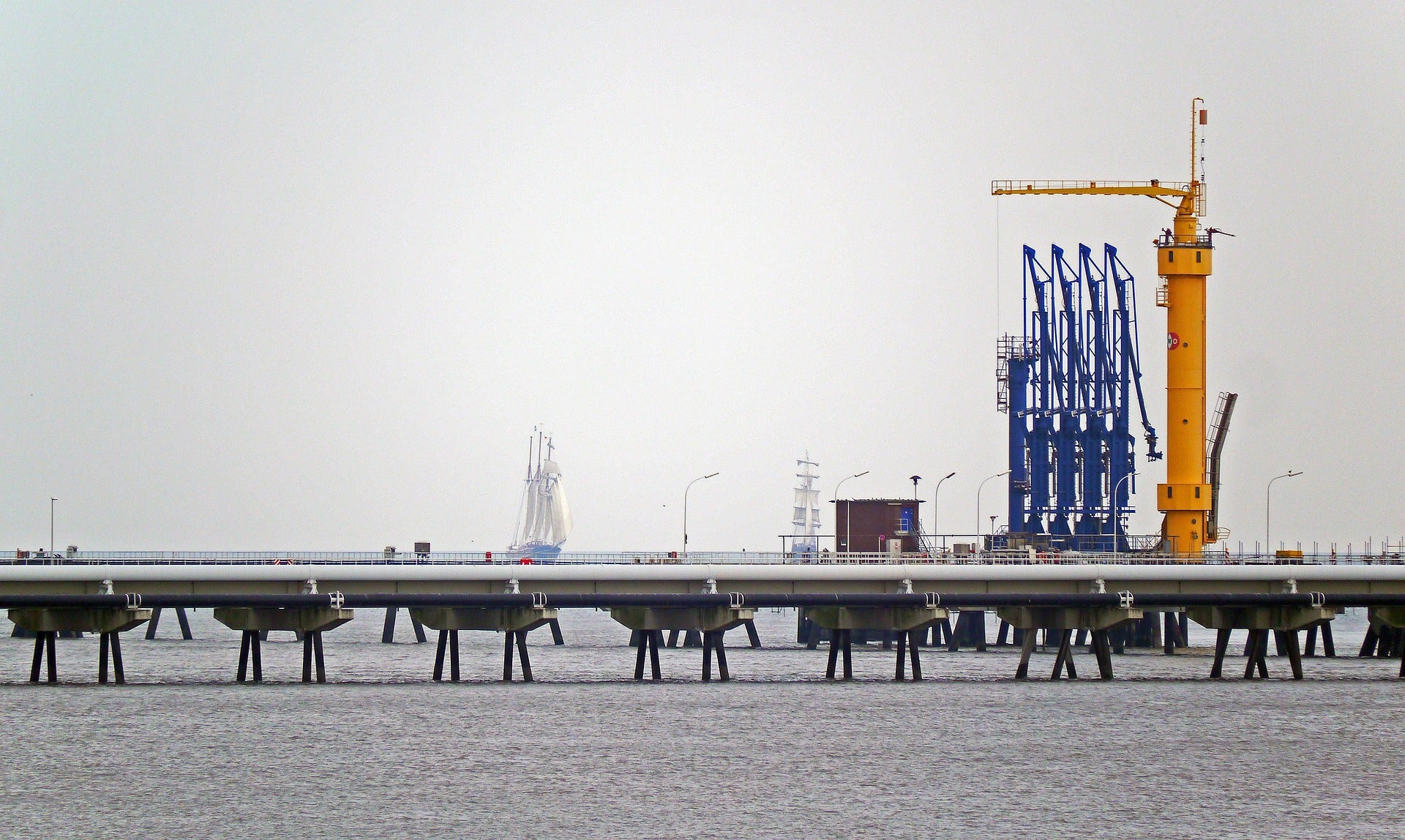 Adnoc plans new offshore-to-onshore oil transport pipeline
20 August 2026
All of this is only 1% of what MEED.com has to offer
Subscribe now and unlock all the 153,671 articles on MEED.com
- All the latest news, data, and market intelligence across MENA at your fingerprints
- First-hand updates and inside information on projects, clients and competitors that matter to you
- 20 years' archive of information, data, and news for you to access at your convenience
- Strategize to succeed and minimise risks with timely analysis of current and future market trends
Related Articles
-
Dubai inflation slows to 5.3% in July
24 August 2026
Dubai’s annual inflation rate slowed to 5.3% in July, down from 5.7% in June, as a decline in transport costs eased pressure on consumer prices, according to Emirates NBD.
The bank said the slowdown supported its view that price growth peaked at mid-year, and it expects inflation to continue easing through the rest of 2026. Monthly price growth slowed to 0.1% in July, from 0.4% in June, the weakest pace since February.
Transport was the clearest sign of the moderation. Annual price growth in the category slowed to 11.9% in July, from 18.1% in June, as transport costs fell 3.7% over the month. Fuel and lubricant inflation eased to 24.1% year on year, from 48.3%, tracking a decline in local petrol prices.
Petrol remains the main swing factor in the emirate’s inflation. Transport contributed 1.1 percentage points to headline inflation in July, down from 1.7 percentage points in June. Emirates NBD said the relief may prove temporary, with Super 98 petrol prices climbing 5.9% in August to leave them 33.8% higher than a year earlier. The bank expects headline inflation to edge higher in the August figures before easing again later in the year.
The UAE deregulated petrol and diesel prices in 2015 and reviews them monthly against global prices, meaning changes in global fuel costs pass through to consumers quickly. Transport, which includes fuel, accounts for 9% of Dubai’s consumer price index basket.
Housing remained the largest contributor to inflation even as its impulse faded. Housing and utilities, which account for about two-fifths of the basket, added 2.8 percentage points to headline inflation. Annual price growth in the category slowed to 7.0%, from 7.4% in January.
Food inflation edged up to 7.8% year on year, from 7.6% in June, which the bank attributed to lingering supply-chain disruption from the regional conflict. Inflation in restaurants and hotels accelerated to 4.5% year on year, from 1.7% in June.
Emirates NBD forecasts inflation of 2.9% by year-end but said risks to that projection were tilted to the upside, given lingering pressures in food and housing.
https://image.digitalinsightresearch.in/uploads/NewsArticle/18961735/main1839.jpg -
Libya oil project on track for 2027 completion
24 August 2026
The project to develop a workers’ camp at Libya’s Erawin oil field is on track for completion next year, according to industry sources.
The project, estimated to be worth about $50m, is being executed by the Libyan oil services company Al-Saraya Al-Hamara, headquartered in the city of Sebha.
The Libyan company was awarded the contract in February 2025.
The scope of the project includes:
- Construction of an accommodation camp
- Construction of the camp maintenance warehouse
- Construction of the camp office
- Construction of a fire brigade shelter
- Construction of a kitchen and mess hall
- Construction of a mosque
- Construction of a laundry room
- Construction of a clinic
- Construction of parking facilities
- Installation of a fire and gas system
- Installation of a power generator
- Construction of associated facilities
The client on the project is Zallaf Libya Oil & Gas Exploration & Production Company.
Zallaf Libya Oil & Gas Exploration & Production Company was established in Libya in 2013 and is wholly owned by Libya’s state-owned National Oil Corporation.
The Erawin field development project is located about 800 kilometres south of Tripoli and 100km southwest of the El-Sharara field.
Libya shipped its first cargo of crude from the Erawin oil field in November 2023.
The shipment departed from Libya’s Zawiyah port and consisted of 600,000 barrels of crude.
Australia-based Worley Parsons was appointed as the front-end engineering and design (feed) contractor for the early production facility project in 2019.
https://image.digitalinsightresearch.in/uploads/NewsArticle/18953632/main.jpg -
Tunisia extends bid deadline for gas pipeline project
24 August 2026
State-owned Tunisian Company of Electricity & Gas (Steg) has extended the bid deadline for a project to develop gas pipelines in the North African country.
Earlier this year, the project was tendered with a bid deadline of 15 July. The new deadline is 30 September 2026.
The scope of the project includes conducting studies, procuring equipment and materials, and performing construction work.
Steg has received financing from the Islamic Development Bank to fund the project.
The tender has been split into two packages.
The first pipeline runs from the Tunisian town of Mourouj, in the suburbs of Tunis, to the town of Zriba.
Along this route, the pipeline will be split into two sections.
The first extends from Mourouj to the town of Fouchana, which lies to the south of the capital.
Under existing plans, the pipeline will have a diameter of 20 inches and extend for 3.8 kilometres.
The second section will extend for 43km to Zriba and have a diameter of 24 inches.
The contract for package one has a 450-day completion period.
The project’s second package focuses on a gas pipeline extending from Zriba to the town of M’saken.
This pipeline will extend for 78km and have a diameter of 24 inches.
The contract for this package also specifies a 450-day completion period.
The procedure for the tender of both packages is an international call for tenders under the Islamic Development Bank guidelines for design, supply and installation.
The Middle East and North Africa (Mena) region is currently seeing a surge in oil and gas pipeline projects as countries attempt to diversify routes through which hydrocarbons can be transported.
The increased concerns about overreliance on a small number of transportation routes are a result of the regional conflict that started when the US and Israel attacked Iran on 28 February.
The conflict severely disrupted oil and gas flows through the Strait of Hormuz, highlighting the importance of having a diverse range of import and export routes.
https://image.digitalinsightresearch.in/uploads/NewsArticle/18953537/main.jpg -
Contractors confirm $683m Oman power plant contract
21 August 2026
Register for MEED’s 14-day trial access
China-headquartered Shandong Electric Power Construction No. 3 Company (Sepco 3) and South Korea’s Doosan Enerbility have confirmed their involvement as contractors on the 1,700MW Misfah combined-cycle gas turbine (CCGT) project in Oman.
In a statement, Sepco 3 said it signed the contract on 20 August. On 21 August, Doosan disclosed a KRW930bn ($683m) contract with Jabel Power, the project company for the Misfah plant. The contract runs from 20 August 2026 to 1 April 2029.
The same consortium signed the engineering, procurement and construction (EPC) contract for the 890MW Duqm CCGT power plant in June. At the time, Doosan disclosed a contract worth about $350m.
In May, MEED exclusively reported that the group had been appointed as the main contractor for the two power plants, subject to the official signing.
State offtaker Nama Power & Water Procurement (Nama PWP) had previously signed power-purchase agreements (PPAs) for the development and operation of the plants.
The developer’s contract was awarded to a consortium comprising Korea Western Power (Kowepo), Qatar’s Nebras Power, the UAE’s Etihad Water & Electricity (EtihadWE) and Oman’s Bhawan Infrastructure Services.
As MEED understands, construction works have already commenced on the power plant projects. A China-based procurement listing in June shows that civil works procurement was under way for the Misfah independent power producer (IPP).
The civil package F tender covered piling, reinforcement cages, concrete works and pile testing, with work scheduled to start in July and finish by November
As reported in July, Germany’s Siemens Energy will supply power generation technology and long-term service agreements for the Misfah and Duqm IPP projects.
This includes the supply of six F-class gas turbines, six generators and 20-year long-term service agreements for the equipment.
The Misfah IPP will be led by Nebras Power and located in Wilayat Bousher in Muscat Governorate. The Duqm IPP will be led by Kowepo and located in Wilayat Duqm in Al-Wusta Governorate.
According to Nama PWP, the total investment for the two projects is estimated at approximately RO1bn ($2.6bn).
Synergy Consulting is the financial adviser and lead adviser to Nama PWP for these projects.
In November, Oman’s OQ Gas Networks received final investment approval to proceed with gas supply connections for the facilities.
The Misfah IPP will receive 8.5 million cubic metres a day (cm/d) of natural gas. The Duqm IPP will be supplied with 4.5 million cm/d of natural gas.
In March 2025, the same Sepco 3 and Doosan Enerbility consortium signed an EPC contract with Saudi Electricity Company to expand Riyadh Power Plant 12 (PP12). Located about 150 kilometres northwest of Riyadh, the 1,863MW power plant is expected to be completed in 2028.
 READ THE AUGUST 2026 MEED BUSINESS REVIEW – click here to view PDF
Saudi Arabia builds for the global stage; Rising uncertainty creates fresh set of challenges in the Maghreb; Gulf banks remain robust in the face of geopolitical tensions.
Distributed to senior decision-makers in the region and around the world, the August 2026 edition of MEED Business Review includes:
> WORLD CUP: What the 2026 World Cup means for Saudi Arabia 2034> MARKET FOCUS: Maghreb fortunes diverge> INDUSTRY REPORT: GCC banks prove resilient amid turmoil> LEADERSHIP: Private capital and the GCC infrastructure inflection> INTERVIEW: Developers look beyond standalone solarTo see previous issues of MEED Business Review, please click herehttps://image.digitalinsightresearch.in/uploads/NewsArticle/18911106/main.jpg -
Adnoc plans new offshore-to-onshore oil transport pipeline
20 August 2026
Register for MEED’s 14-day trial access
Abu Dhabi National Oil Company is moving ahead with an ambitious plan to build an oil pipeline network that will transport oil from its main offshore oil processing islands in the Gulf to its onshore crude export terminal in Jebel Dhanna, Abu Dhabi.
The planned pipeline network will source crude from Zirku Island and Das Island, where Adnoc gathers and treats oil produced at Abu Dhabi’s offshore fields, among other processing hubs, and transport those volumes across 300 kilometres inland to the Jebel Dhanna terminal.
According to sources, the proposed pipelines will eventually connect to the West-East crude pipeline network currently being built from Abu Dhabi’s Jebel Dhanna to the emirate of Fujairah, and is expected to be commissioned in 2027.
The Abu Dhabi energy giant has awarded a contract for concept studies and front-end engineering and design (feed) to Abu Dhabi-based NT Energies, a joint venture of Abu Dhabi-based contractor NMDC Energy and France’s Technip Energies, sources told MEED.
NT Energies is expected to carry out the concept studies and feed on a “fast-track basis”, with the work anticipated to take seven months, sources said.
A kick-off meeting between the client and the appointed consultant took place on 6 July, sources added.
Additionally, Adnoc has appointed Australia-headquartered Worley to provide project management consultancy (PMC) services, sources further said.
West-East oil pipeline
In May, Adnoc said it was accelerating work on the West-East crude transport pipeline project from Jebel Dhanna to Fujairah, upon directions from its board.
The West-East pipeline project involves constructing a cross-country pipeline to transport crude from Adnoc’s export terminal at Jebel Dhanna to the Fujairah terminal, covering a distance of about 520km.
The pipeline will double Adnoc’s crude export capacity through Fujairah on the Indian Ocean coast and enable shipments to bypass the geopolitically volatile Strait of Hormuz.
Crude will be sourced from Adnoc’s offshore processing centres at Das, Zakum and Umm Lulu islands before being stored at new storage facilities to be built at the Jebel Dhanna terminal.
The pipeline will be segmented into three sections:
- Jebel Dhanna to Habshan main pumping station (MPS) – 115km
- Habshan MPS to Sweihan depot – 254km
- Sweihan depot to Fujairah terminal – 153km
Adnoc awarded Egyptian contractor Engineering for Petroleum & Process Industries (Enppi) an engineering, procurement and construction management (EPCm) contract for the project in February 2024.
Adnoc’s total spend on EPCm works could be as high as $3bn, MEED previously reported.
Sources have told MEED that Adnoc has, in turn, appointed state-owned China Petroleum Pipeline (CPP) and locally based Bin Asheer to carry out construction works on the three segments of the West-East pipeline network.
READ THE AUGUST 2026 MEED BUSINESS REVIEW – click here to view PDFSaudi Arabia builds for the global stage; Rising uncertainty creates fresh set of challenges in the Maghreb; Gulf banks remain robust in the face of geopolitical tensions.
Distributed to senior decision-makers in the region and around the world, the August 2026 edition of MEED Business Review includes:
> WORLD CUP: What the 2026 World Cup means for Saudi Arabia 2034> MARKET FOCUS: Maghreb fortunes diverge> INDUSTRY REPORT: GCC banks prove resilient amid turmoil> LEADERSHIP: Private capital and the GCC infrastructure inflection> INTERVIEW: Developers look beyond standalone solarTo see previous issues of MEED Business Review, please click herehttps://image.digitalinsightresearch.in/uploads/NewsArticle/18887774/main0639.jpg